#procedural generation
140 related articles

·4 min
From Claude Code to Claude Tag: How AI Programming Tools Break Out of Engineering Teams
Anthropic's Boris Cherny and Cat Wu discuss how Claude Code expanded from engineering teams company-wide, the Claude Tag platform strategy, and the launch of Claude Fable 5.
Read more →

·4 min
A Children's Drawing App Accidentally Triggered a New Cellular Automaton: From Edge Case to Algorithmic Discovery
A developer building children's app "Mr. Baby Paint" accidentally discovered an undocumented cellular automaton behavior. This article explores cellular automata, emergence, and why such accidental findings matter.
Read more →

·6 min
America's 250th Anniversary: Behind the Fireworks, Founding Ideals Still Face Serious Challenges
As the U.S. marks its 250th anniversary with France lighting the Eiffel Tower and Japan setting off fireworks, its founding ideals of liberty and democracy face ongoing threats.
Read more →

·5 min
A Programmer's Guide to Large Language Models: The Complete Path from Prompts to Agents
A tailored large-model learning path for ordinary programmers: from prompt engineering, API calls, and LangChain, to RAG, Agents, fine-tuning, and enterprise deployment—six steps to build AI application skills fast.
Read more →

·5 min
OfficeCLI: A Command-Line Tool for AI Agents to Read and Write Office Documents
OfficeCLI is a command-line office suite for AI agents, supporting reading and writing of Word, Excel, and PowerPoint files—enabling efficient Office document automation without complex glue code.
Read more →

·4 min
AI Agent for Automated WordPress SEO: A Complete Guide from Diagnosis to Execution
Learn how to use an AI Agent to fully automate WordPress SEO — covering image Alt tags, RankMath API integration, prompt configuration, and more.
Read more →

·6 min
Agent Skills Deep Dive: Concepts, Structure, and Real-World Examples
A comprehensive guide to Agent Skills: what Skills are, how they differ from Prompts, and how to design SKILL.md files. Learn modular AI Agent development through a real restaurant branding example.
Read more →

·5 min
Deep Dive into Vercel's eve Framework: How AI Agents Are Becoming an Entirely New Form of Software
Vercel's Chief of Software Andrew Qu explains the eve Agent framework's design philosophy, covering Skills modularity, Sandboxes security, and agent-readable websites—revealing the paradigm shift from instruction-driven to goal-driven software.
Read more →

·7 min
Andrew Ng Teams Up with LangChain: Core Concepts of LangGraph Agent Development
Andrew Ng and LangChain CEO Harrison Chase's AI Agents in LangGraph course covers five agent design patterns and LangGraph's graph-based framework for building cyclical AI workflows.
Read more →
·7 min
Andrew Ng Teams Up with LangChain: Core Principles of LangGraph Agent Development
Andrew Ng and LangChain CEO Harrison Chase present AI Agents in LangGraph, covering five core agent design patterns and LangGraph's graph-based framework for building cyclical agentic workflows.
Read more →

·4 min
AI's Impact on the Entry-Level Developer Job Market: Crisis or Opportunity?
Generative AI is reshaping software development, shrinking demand for junior developer roles. This article analyzes why entry-level positions are most at risk, the talent pipeline implications, and how junior developers can leverage AI tools to stay competitive.
Read more →

·5 min
UE5.8 + Claude Code: A Complete Guide to AI Agents Directly Controlling Unreal Engine
UE5.8's official MCP plugin enables Claude Code and other AI Agents to directly control Blueprints, PCG graphs, materials, and level design. Complete setup and testing guide included.
Read more →

·4 min
AI Weekly: Top Coding Model Returns, Google's New Flash Checkpoint, and the Video Generation Race
This week in AI: Anthropic's flagship coding model returns globally with new safety classifiers, Google tests a new Gemini Flash checkpoint, video generation heats up, and Figure AI robots enter BMW factories.
Read more →

·3 min
UE5.8 + Claude Code: MCP Plugin Configuration and Hands-On Tutorial
Complete guide to configuring UE5.8's native MCP plugin: enable core plugins, install Claude Code, set environment variables, generate config files, and connect AI agents to Blueprints, PCG, and materials.
Read more →

·7 min
Hermes Agent Deep Dive: An AI Agent Framework That Uses Fewer Tokens Than Open Cloud
Full comparison of Hermes Agent vs Open Cloud: lower token usage, 200+ model support, auto Skill encapsulation, WeChat/DingTalk integration. A cost-effective AI Agent alternative for long-term deployment.
Read more →

·7 min
Agent Loop Explained: The Core Runtime Mechanism and Think-Act Cycle of AI Agents
Deep dive into Agent Loop mechanics: the think-act cycle, how agents differ from LLMs, termination conditions, and design principles for building autonomous AI Agent systems.
Read more →

·8 min
MCP Server or Agent Skills? A Clear Guide to Architecture Decision-Making
MCP Server vs Agent Skills: how to choose? This article systematically outlines an AI Agent architecture decision framework across three dimensions—essential differences, applicable scenarios, and judgment criteria.
Read more →

·6 min
Agent Studio: A Unified Platform for Authoring AI Roles and Skills
Agent Studio unifies AI Agent role definition (Subagents) and Skills on one platform, enabling coordinated orchestration through a shared MCP endpoint, progressive disclosure, and moderated community publishing.
Read more →
·8 min
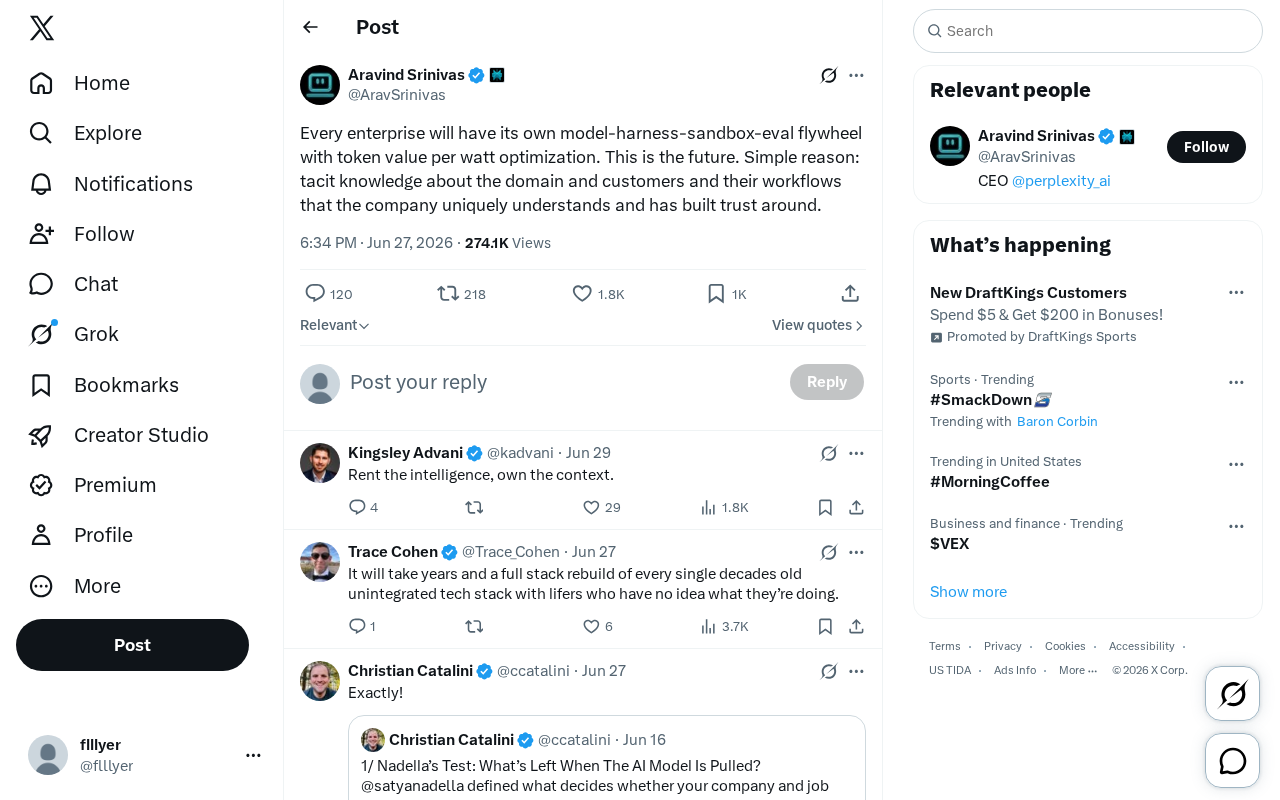
The Enterprise AI Flywheel: Building a Model-Eval Loop as a Competitive Moat
The core of enterprise AI isn't calling general models—it's building a self-reinforcing "model-harness-sandbox-eval" flywheel. This article analyzes the four components, tacit knowledge moats, and the "token value per watt" efficiency metric.
Read more →

·2 min
GLM4 Open-Source Flagship Tested: Crushes Claude and Other Commercial Models in Frontend Development
In-depth testing of Zhipu AI's GLM4 open-source flagship model, ranked #1 on Design Arena, outperforming Claude 3.5 and Gemini in frontend development at one-sixth the cost of Claude Opus.
Read more →