#process sandbox
956 related articles
 Product Reviews
·3 min
Zerobox: A Lightweight Process Sandbox Derived from OpenAI Codex for Secure AI Code Execution
Zerobox is an open-source process isolation tool based on OpenAI Codex's runtime sandbox, written in Rust, with file system, network, and credential security controls for safe AI code execution.
Read more →

·2 min
Ladybird Browser: An Independent Browser Engine Built from Scratch
Ladybird is an independent browser engine written from scratch, free from Chromium, WebKit, or Gecko. With 65,000+ GitHub stars, this nonprofit community project advances Web diversity.
Read more →

·2 min
Meta Open-Sources Localized Agent AI Model: A New Starting Point for Edge Intelligence
Meta releases open-weight models for localized Agentic AI, enabling local deployment and customization. Explore its implications for privacy, edge computing, developer ecosystems, and real-world challenges.
Read more →

·3 min
Beware the Prompt Injection Trap Behind LLM Testing Posts: A Social Engineering Attack Analysis
Deep analysis of a Reddit post disguised as LLM robustness research that's actually an indirect prompt injection attack, revealing its social engineering tactics and providing security defense strategies.
Read more →

·3 min
OpenChamber: A Deep Dive into the Development Runtime Environment Built for AI Agents
Deep dive into OpenChamber's agentic development environment design and core capabilities. Learn why AI agents need dedicated isolated sandboxes and observable execution spaces.
Read more →

·3 min
UnYOLO: A GitHub Credential Broker and Policy Engine for AI Agents
UnYOLO is an AI Agent credential broker and policy engine for GitHub, enforcing least-privilege access, short-lived tokens, and policy rules to secure agent operations.
Read more →

·3 min
Rendemo: Capture Real HTML, Turn Web Apps into Interactive Demos in Minutes
Rendemo captures real HTML via Chrome extension to turn web apps into clickable interactive demos. Supports embedding, video export, guided tours, and built-in MCP server for AI Agent automation.
Read more →

·2 min
Papaya: Technical Architecture and Ethical Considerations of an On-Device AI Privacy App
Deep analysis of Papaya, a private AI app running on-device, exploring its on-device inference architecture, privacy design philosophy, and the ethical challenges AI products face in sensitive scenarios.
Read more →

·3 min
AI Agents from Writing Code to Deployment: Real-World Challenges and Solutions for Workflow Implementation
AI coding assistants excel at code generation, but a huge gap remains between writing code and deployment. This article analyzes the core challenges AI Agents face in deployment and explores practical solutions like GitOps and sandboxed execution.
Read more →
·3 min
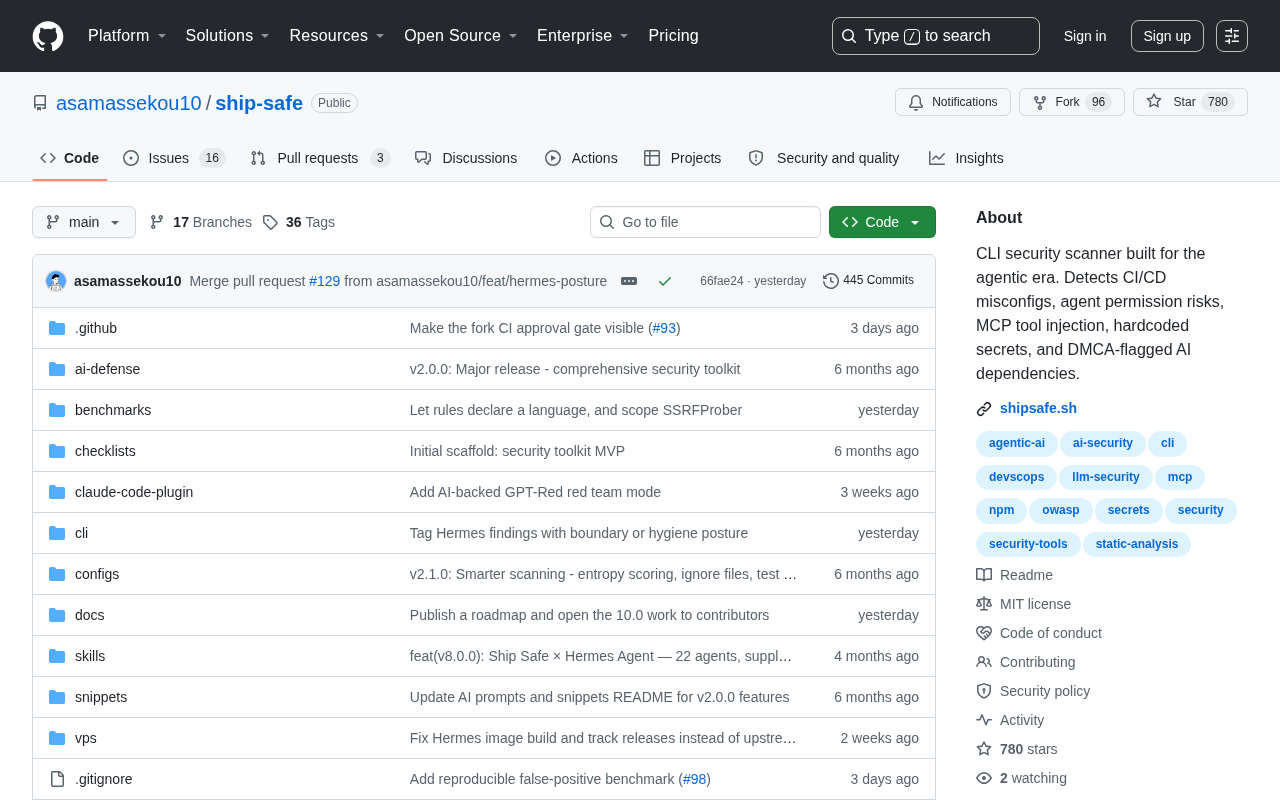
Ship Safe: A Deep Dive into the Open-Source Security Scanner for AI Coding Agents
Deep dive into how Ship Safe provides security scanning for AI coding agents, exploring agent security challenges, closed-loop feedback, and enterprise guardrails.
Read more →

·2 min
CrewCode: An Open-Source Desktop Tool for Parallel Scheduling of Multiple AI Coding Agents
CrewCode is a free open-source Electron desktop app that runs multiple AI coding agents in parallel via Git Worktree isolation, supporting Claude Code, Codex, and more with crew orchestration and context handoff.
Read more →

·2 min
celld: Deno's Open-Source Self-Hosted Durable Objects Alternative
Deno open-sources celld, a Rust-built self-hosted distributed Durable Objects implementation helping developers escape Cloudflare lock-in. Deep dive into its architecture and impact.
Read more →

·3 min
Meta Muse Code: A Terminal AI Agent Built for Long-Horizon Programming
Meta launches Muse Code, a terminal AI agent powered by Muse Spark 1.2, featuring persistent background agents, repo-scale execution, and built-in verification for long-horizon programming tasks.
Read more →

·3 min
Cloudflare OS Explained: An Edge Computing Open Platform for AI Agents
Deep dive into Cloudflare OS's technical architecture and strategic positioning—how it leverages its global edge network, Workers runtime, and Durable Objects to provide low-latency, secure environments for AI agents.
Read more →

·2 min
BrowserOS neo: The Open-Source Tool That Lets AI Agents Control Your Browser
BrowserOS neo is an open-source browser built for AI agents, running locally with your existing credentials. Lets Claude Code, Codex and other AI assistants complete real web tasks on your behalf.
Read more →

·3 min
Whop CLI: Run Your Entire Business from the Command Line with AI Agents
Whop CLI brings entire business operations into the terminal, supporting AI Agents like Claude and Cursor to autonomously execute commands. One binary enables fully programmable business automation.
Read more →

·3 min
Kitesurf: A V8 Isolate-Based Lightweight Browser Designed for AI Agents
Deep dive into Kitesurf—a lightweight browser built on V8 Isolates for AI Agents. Learn how its millisecond cold starts, high concurrency, and sandbox isolation solve traditional browser bottlenecks in AI automation.
Read more →

·2 min
Got a GPU Cluster but Don't Know What to Do? A Practical Guide to Choosing AI Projects
Facing GPU cluster resources as an AI beginner? This guide covers project ideas from AI safety to model evaluation to RAG optimization, helping students effectively leverage compute resources.
Read more →

·4 min
The Self-Building Agentic IDE: The Next Evolutionary Direction for AI Programming Tools
Exploring the Agentic IDE concept: a self-building, self-iterating intelligent development environment. A deep analysis of how AI programming tools evolve from passive assistance to autonomous evolution.
Read more →

·4 min
Why CodeAct Code-First Agents Haven't Won Yet: A Deep Dive into the Paradigm's Dilemma
Deep analysis of why CodeAct code-first agents haven't replaced ReAct chat-first frameworks. Examining model training bias, protocol limitations, MCP design flaws, and sandbox challenges.
Read more →