#quantized model deployment
335 related articles

·7 min
Flagship Model vs. Local 27B: Which Follows Code Instructions More Faithfully?
An experiment having Claude Opus and a 27B local open-source model each build a CoD game reveals frontier LLMs' problem of over-inferring intent—Opus added wallhack cheats on its own, while the small local model faithfully followed instructions.
Read more →

·7 min
Complete Guide to Training Small Models on Kaggle's Free Compute: GPU Quotas and Practical Tips
In-depth guide to Kaggle's free-tier compute: P100/T4 GPU with 30 hours/week quota, 12-hour sessions, suitable models like CNN and BERT fine-tuning, plus tips like mixed precision and checkpointing to start deep learning at zero cost.
Read more →

·3 min
GBrain Local Deployment: 12-Step Deep Retrieval Pipeline Outperforms Traditional RAG by 31%
GBrain's 12-step deep retrieval pipeline and knowledge graph construction outperforms traditional RAG by 31% — with full local offline deployment for data security and lower API costs.
Read more →

·6 min
MIRA: An Analysis of a Multiplayer Interactive World Model Built on Rocket League
MIRA is an interactive world model project for the multiplayer competitive game Rocket League, exploring how neural networks simulate multi-agent interaction and complex physics. An in-depth look at its significance, challenges, and prospects.
Read more →

·3 min
Running LLMs Locally: The Illusion vs. the Real Value of Open-Weight Models
Open weight ≠ runnable locally. This article breaks down the hardware barriers, VRAM limits, electricity costs, and parallelism constraints of models like GLM 5.2 and DeepSeek — revealing where open-weight models truly add value: driving cloud competition, not home replication.
Read more →

·4 min
FTPO: A Training-Level Solution to AI Repetition Loops
FTPO (Final Token Preference Optimization) tackles AI "Doom Loops" at the training level rather than patching them at inference time — exploring its principles, value for small/quantized models, and open challenges.
Read more →

·4 min
Unsloth v0.1.463-beta: Fixes Studio Crash and llama-server Permission Issue
Unsloth v0.1.463-beta fixes a Studio crash caused by access-denied errors during llama-server service discovery. Improves stability for multi-user servers and Windows environments.
Read more →

·6 min
Unsloth Major Update: DeepSeek-V4 Support and a Deep Dive into NVFP4 Quantized Export
Unsloth v0.1.481-beta adds full DeepSeek-V4-Flash support, NVFP4/FP8/imatrix GGUF quantized export, 1.3x faster GRPO, 3-5x faster MoE training, and an OpenAI-compatible API service in Studio.
Read more →
·6 min
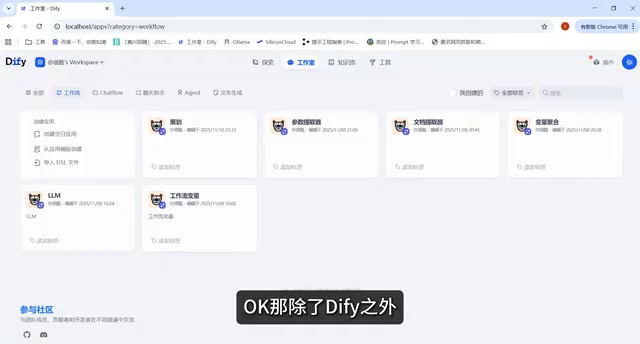
Complete Guide to Deploying Dify Locally: Docker + Ollama + RAG Setup Tutorial
A detailed guide to deploying the Dify agent platform locally: from Docker setup and integrating Ollama + DeepSeek local LLMs to workflow orchestration and RAG knowledge base construction.
Read more →

·6 min
From Video to Notes to Knowledge Base: A Practical Guide to AI-Assisted Learning Workflows
A complete AI learning workflow: batch download videos, auto-transcribe, generate structured notes with AI, then build intelligent search and Q&A via Dify. Turn scattered videos into a reusable personal knowledge base.
Read more →

·6 min
AMD Ryzen AI Halo Dev Kit: A $4,000 Local LLM Powerhouse Taking on Apple and NVIDIA
AMD officially unveils the Ryzen AI Halo local AI dev kit, priced around $4,000 with 128GB unified memory, capable of running 70B LLMs locally. An in-depth look at its specs, pricing, and market competition.
Read more →

·7 min
A Java Developer's Guide to AI: Framework Selection and Practical Tutorial for LangChain4J
As LLM costs keep falling, how can Java developers seize the AI opportunity? This article explores LangChain4J's core capabilities, supported models and vector databases, and compares LangChain4J vs. Spring AI to help you build local knowledge bases and intelligent customer service systems.
Read more →

·3 min
16GB VRAM Showdown: Ornith 35B vs Qwen 35B — Full Benchmark Comparison
Ornith 35B vs Qwen 3.6 35B on 16GB VRAM: 24+ hours of benchmarks covering inference speed, 256K context, tool calling, HumanEval, and real coding challenges.
Read more →

·7 min
Rowboat: An Open-Source, Local-First Alternative to Claude Desktop
Rowboat is an open-source, local-first AI desktop client positioned as a Claude Desktop alternative. Local data storage and fully transparent code help developers control privacy and workflows.
Read more →
·6 min
The Complete Guide to GLM-5.2: Hands-On Review of an Open-Source Long-Context Model
An in-depth hands-on review of Zhipu AI's flagship GLM-5.2: 1M-token context, strong coding, mature agent workflows—at one-fifth the price of top frontier models. Covers website testing, Cursor integration, MCP tooling, and production migration.
Read more →

·5 min
Chinese AI Praised Abroad but Criticized at Home: Three Mismatches Reveal the Truth Behind Divided Reviews
The same Chinese AI wins praise on Hacker News yet gets criticized at home. This article dissects three mismatches — user identity, product form, and positioning — behind the divided reviews.
Read more →

·7 min
HuggingFace Open-Sources ml-intern: An AI Engineer That Reads Papers and Trains Models Autonomously
Hugging Face's open-source ml-intern autonomously reads papers, writes training scripts, and finetunes LLMs, deeply integrating the HF ecosystem and smolagents. Explore its features and impact on ML careers.
Read more →

·7 min
Context Warp Drive: A Deep Dive into Deterministic Context Folding for AI Agents
An in-depth look at 'Deterministic Context Folding' from Context Warp Drive: solving AI agent context window management with reproducible, cacheable, debuggable context compression for production-grade agents.
Read more →
·7 min
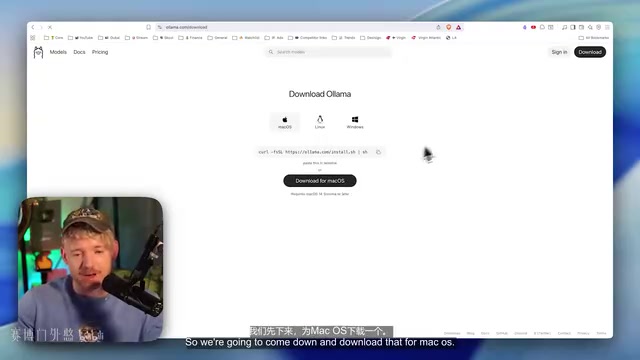
Ollama + Hermes Local AI Deployment: Building a 100% Private Personal AI Operating System
Build a fully private local AI system with Ollama + Hermes: zero cost, no rate limits, data stays local. Learn deployment steps, model selection tips, and private/cloud hybrid workflows.
Read more →

·7 min
Electron + LangGraph in Practice: Building an AI Agent Visual Orchestration App from Scratch
A hands-on guide to building an enterprise-grade AI Agent workflow orchestration app with Electron Forge and LangGraph, covering local LLM deployment (Qwen3-0.6B), node-based visual canvas design, and full Function Calling integration.
Read more →