#reversible computing
89 related articles

·3 min
Nvidia's Dilemma: How the Commoditization of the Compute Market Is Turning Against Its Creator
Nvidia's revenue keeps rising, yet its stock has fallen ~15% from its peak. A deep dive into the double-edged sword of compute commoditization—when cloud giants build their own chips, how much of Nvidia's pricing power and moat remains?
Read more →

·6 min
Jacobian-Lens in Practice: Manually Reshaping LLM Behavior with J-Space
After Anthropic released Jacobian-Lens, a developer reversed it from an interpretability tool into a behavior editor, manually tuning J-Space to reshape LLM outputs. An in-depth look at the tech, representation engineering, and AI safety risks.
Read more →

·2 min
The AI Web Novel Assembly Line: Industrialized Writing from Book Deconstruction to Auto-Updates
An in-depth breakdown of the fully automated AI writing workflow popular in web novel circles: from data-driven topic selection, book deconstruction and imitation, AI-trace removal, to one-click distribution and monetization. Efficiency tool or content bubble?
Read more →

·6 min
AI Agent Development in Go: A Hands-On Guide to ByteDance's Eino Framework and Its Seven Core Capabilities
Build production-grade AI Agents with a pure Go stack using ByteDance's Eino framework. A deep dive into seven core capabilities: multi-Agent orchestration, long-task execution, command approval, RAG, MCP, Skills, and database reporting.
Read more →

·3 min
Computer Science vs. AI & Robotics: How Should You Choose?
Computer Science or AI & Robotics—which is more stable and promising? This article analyzes major nature, job prospects, and risk hedging to help you plan wisely.
Read more →

·6 min
GPT-5.6 Now Widely Available: The Era of Three-Tier Models and Multi-Agent Orchestration Arrives
OpenAI releases GPT-5.6 (SOUL/TERRA/LUNA), with Ultra mode running four agents in parallel; Meta launches Muse Spark 1.1 with million-token context; ChatGPT desktop unifies Chat, Work, and Codex.
Read more →

·5 min
Scalping Bots, Tampered Exam Applications, Hacked Robots: The Legal Boundaries of Computer Crime in the AI Era
Scalper ticket bots, tampered exam applications, hacked robot vacuums—do these acts violate criminal law? Drawing on Luo Xiang's legal analysis, this article explores the crime of destroying computer information systems.
Read more →

·7 min
The Five Pillars of Production-Grade AI Agents: A Battle-Tested Guide from Demo to Deployment
Databricks tech lead Sandy shares a five-pillar framework for production-grade AI Agents—evaluation, observability, data foundation, orchestration, and governance—with a £85K retail banking failure case to bridge the demo-to-production gap.
Read more →

·4 min
AI Weekly: GPT-5.6 Launches in Three Tiers, Open-Source Inference Frameworks and Robot Safety Break Through Across the Board
This week in AI: OpenAI launches GPT-5.6 in three tiers (Sol/Terra/Luna) hitting 91.9% on coding benchmarks; DeepSeek and PKU open-source DSpark for 85% faster inference; Prime Intellect trains trillion-param models on just 28 H200s; Anthropic Claude enters Slack.
Read more →

·7 min
In-Depth Analysis of the GitLost Vulnerability: How GitHub AI Agents Were Tricked into Leaking Private Repositories
Security researchers disclose the GitLost attack, which uses prompt injection to trick GitHub AI agents into leaking private repository source code. An in-depth analysis of the attack principle, AI agent security risks, and developer defense recommendations.
Read more →

·3 min
New Claude Models Are Coming: Why Traditional Cybersecurity Faces a 'Naked' Crisis
As next-gen Claude models arrive, traditional cybersecurity faces a systemic crisis. Explore why human-built defenses have structural blind spots against AI-native attacks — and how the industry must respond.
Read more →

·4 min
Shellular: A New Way to Remotely Control Claude Code and Other AI Coding Assistants from Your Phone
Shellular lets developers remotely control AI coding assistants like Claude Code and Codex from their phones. A deep dive into the problem it solves, its architecture, and the real demand for mobile AI coding.
Read more →

·7 min
Building AI Agent Frameworks with TypeScript: The Core Development Paradigm for Full-Stack Developers
An in-depth look at why TypeScript is the top choice for AI Agent development: covering Zod structured output validation, LangGraph's graph state machine design, and a full learning path for front-end devs transitioning to full-stack AI.
Read more →

·6 min
GPT-5.6 Explained: Three Variants and OpenAI's First Government Review of an AI Model
OpenAI released GPT-5.6 with three variants—Soul, Terra, Luna—and for the first time notified and submitted the model to U.S. government review before full release. A deep dive into the variants, Max/Ultra upgrades, and cybersecurity defenses.
Read more →
·7 min
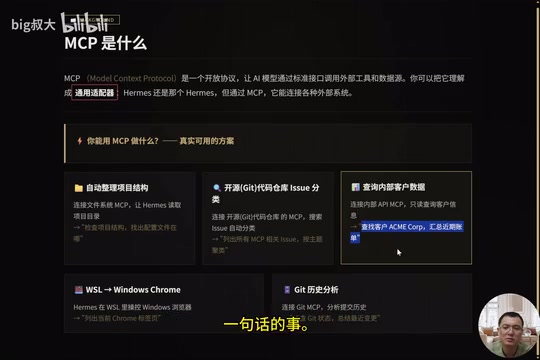
Connecting Hermes Agent to MCP: One Protocol to Unify All External Systems
Learn how to extend Hermes Agent's external system capabilities via MCP (Model Context Protocol): setup, whitelist permissions, WSL-to-Chrome bridging, and multi-server orchestration for AI Agent developers.
Read more →

·6 min
GLM 5.2 Arrives: Industry Upheaval on the Eve of AI Margin Collapse
The rise of Zhipu's GLM 5.2 is accelerating the democratization of LLM capabilities. This article analyzes the commoditization of foundation models, the logic behind margin collapse, and the opportunities and challenges facing application-layer and foundation model firms.
Read more →

·5 min
NVIDIA AI-Q Blueprint × OCI: A Practical Guide to Production Deployment of Enterprise AI Agents
Deep dive into NVIDIA AI-Q Blueprint production deployment on Oracle Cloud Infrastructure, covering NIM microservices, RAG architecture, multi-agent orchestration, and OCI GPU selection for enterprise AI agents.
Read more →

·5 min
NVIDIA AI-Q Blueprint × OCI: A Practical Guide to Production Deployment of Enterprise AI Agents
Deep dive into NVIDIA AI-Q Blueprint production deployment on Oracle Cloud Infrastructure, covering NIM microservices, RAG architecture, multi-agent orchestration, and OCI GPU selection.
Read more →

·6 min
herder: A Terminal Multiplexer for Multiple Coding Agents — Say Goodbye to Session Management Chaos
herder is a terminal multiplexer for coding agents like Claude Code and Codex, combining tmux power with mouse support, agent state awareness, and session persistence for efficient multi-agent workflows.
Read more →
Hacked Again: The Root Causes of Ameri…
·2 min
Hacked Again: The Root Causes of America's Government Cybersecurity Crisis — and the Way Forward
Why does the U.S. government keep getting hacked? This deep dive covers legacy systems, supply chain risks, Zero Trust architecture, and what breaches mean for citizens.
Read more →