#robot foundation models
438 related articles

·3 min
Millisecond-Level Time Desynchronization: The Silent Killer of Robot Perception Systems
How a one-millisecond time offset between camera and IMU causes VSLAM drift, and the architectural shift from external clocks to bus-disciplined synchronization.
Read more →

·3 min
Microduck: A Detailed Look at Open-Source Bipedal Robot Sim2Real in Practice
Microduck is an open-source bipedal robot by Pollen Robotics with excellent sim2real transfer via precise actuator modeling. Learn its tech, open-source value, and future directions.
Read more →

·2 min
ChatGPT Generates Its Most Terrifying Image: How AI Understands Human Fear
A Reddit user asked ChatGPT to generate its most unsettling image, sparking deep discussion on how AI understands horror, the Uncanny Valley effect, and machine aesthetics.
Read more →

·4 min
AI Agent Learning Roadmap: A Four-Stage Guide from Zero to Production
A complete AI Agent learning roadmap covering four stages—foundations, core frameworks, hands-on projects, and advanced mastery—to help beginners build production-ready agents in six months.
Read more →

·2 min
Open-Source Validator Tackles Data Integrity Challenges in Robot Learning Datasets
An open-source robot learning dataset integrity validator that automatically detects temporal sync issues, missing frames, and format inconsistencies to ensure data quality before training.
Read more →

·4 min
AI Agents Activate the Edge Device Market: A $15 Trillion New Blue Ocean
AI evolves from tool to productivity core as inference compute outpaces training. AMD and Galaxy Securities experts decode the $15T AI terminal market opportunity across agent hosts, AI glasses, and robots.
Read more →

·3 min
Asimov's 'The Feeling of Power': A Sci-Fi Story That Predicted AI-Driven Skill Atrophy
Revisiting Asimov's 1958 story 'The Feeling of Power' and its eerily accurate prediction of AI-driven skill atrophy as humans outsource coding, writing, and thinking to machines.
Read more →
·3 min
The Fascinating Real-World Counterparts of OpenAI Gym Reinforcement Learning Environments
Exploring how OpenAI Gym RL environments map to real-world scenarios, from CartPole to MountainCar, covering design principles and the sim-to-real transfer challenge.
Read more →

·3 min
Coze 3.0 Workflow in Practice: Build an Automated AI Agent in Three Steps
Learn to build AI Agents on Coze 3.0 in three steps: prompt engineering & API calls, RAG knowledge base construction, and multi-agent autonomous decision-making for low-code AI app development.
Read more →
·3 min
Serving Markdown Content Directly to AI Agents via Accept Headers
How HTTP Accept header content negotiation can serve Markdown to AI Agents and LLM crawlers, reducing token costs and improving information extraction efficiency.
Read more →

·3 min
Stanford CS234 Reinforcement Learning Too Hard to Self-Study? Group Learning Is the Key to Breaking Through
Addressing the high barriers, isolation, and lack of practical feedback faced by Stanford CS234 RL self-learners, with actionable advice on group learning strategies, community resources, and project-driven approaches.
Read more →

·4 min
AI Large Language Models + MCP Protocol: A Hands-On Tutorial for Fully Automated Unity Digital Twin Construction
Learn how AI LLMs paired with MCP servers can fully automate Unity digital twin construction without manual operations. Covers MCP setup, Claude Code integration, and auto-generated conveyor scenes.
Read more →
·3 min
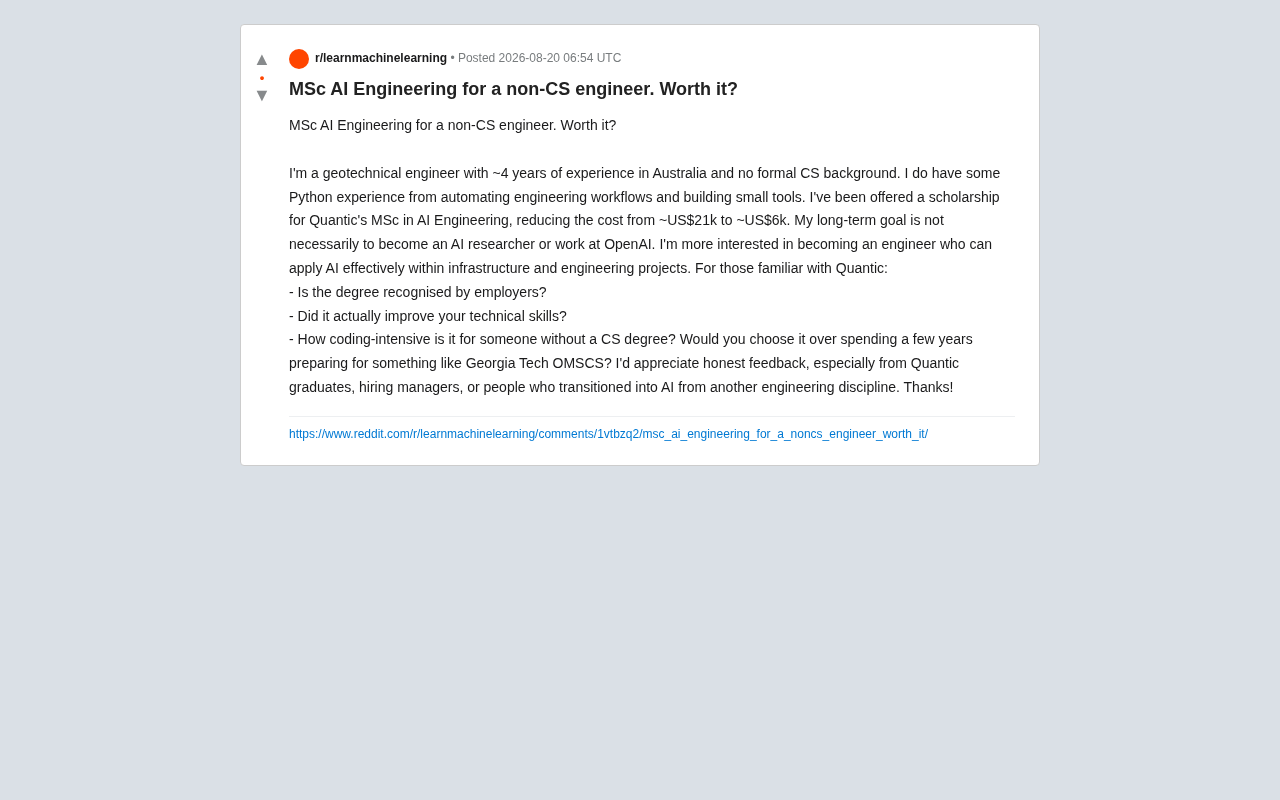
Is an AI Master's Worth It for Non-CS Engineers? Quantic vs OMSCS Deep Comparison
Should non-CS engineers pursue an AI master's? Deep comparison of Quantic AI Engineering vs Georgia Tech OMSCS, analyzing degree recognition, programming barriers, and ROI for traditional engineers transitioning to AI.
Read more →

·3 min
APAC Dataset: First-Person Stereo Vision Robot Training Data for Real-World Work Environments
APAC Egocentric Stereo dataset covers real work scenes like garages, factories, and construction sites with stereo vision, depth, and hand tracking for robot training.
Read more →

·2 min
Dropstone: An AI Runtime Platform That Remembers, Learns, and Acts
Deep dive into Product Hunt newcomer Dropstone—an AI runtime platform with memory, learning, and cross-platform action capabilities redefining AI as a digital workforce.
Read more →

·4 min
Reinforcement Learning for Suspended Payload Yaw Control: Principles, Challenges, and Implementation Strategies
An in-depth exploration of RL-based suspended payload yaw control, covering underactuated system challenges, RL advantages and limitations, and PPO/SAC implementation strategies for Sim-to-Real transfer.
Read more →

·3 min
AI-Generated TV Shows: Will Audiences Actually Pay to Watch Them?
AI-generated TV shows are moving from tech demos to consumable products. This article analyzes audience acceptance through label bias, genre fit, and content quality.
Read more →

·3 min
Using Codex as a Storyboard Artist: A Practical Guide to the End-State Backward Planning Method for AI Video
How to use ChatGPT/Codex as an AI video shot planner with end-state backward planning to solve Seedance's last-second failures. Includes 5-step workflow, cost analysis, and transferable constraint-solving methodology.
Read more →

·3 min
Even Nvidia Is in the Game: The AI Open-Source Race Enters the Full-Stack Era
Nvidia transforms from AI chip supplier to full-stack player, actively joining open-source model competitions. Deep analysis of ecosystem lock-in strategy, intensifying competition, and implications for the AI landscape.
Read more →

·4 min
Hands-On with Claude Opus 5: The New AI Flagship That Crushes Competitors on Cost-Efficiency
A $400 hands-on test of Anthropic's flagship Claude Opus 5: from 3D game generation to physics simulations, benchmarked for cost-efficiency. Not the strongest, but the best value with 30% lower costs.
Read more →