#semantic retrieval
1393 related articles

·3 min
How a Senior Data Scientist Navigates Job Hunting After Being Laid Off: A Survival Guide for the AI Job Market
A senior data scientist with a Physics PhD and 4.5 years of experience gets laid off, revealing the AI job market's shift from traditional ML to Agent engineering. Practical advice on bridging skill gaps.
Read more →

·2 min
Mysterious Codes Appear in Google Image Search: AI Hallucination Concerns Resurface
A Reddit user searching numerology got mysterious codes and nonsensical numbers from Google Images. We analyze AI hallucination causes and generative search accuracy concerns.
Read more →
·2 min
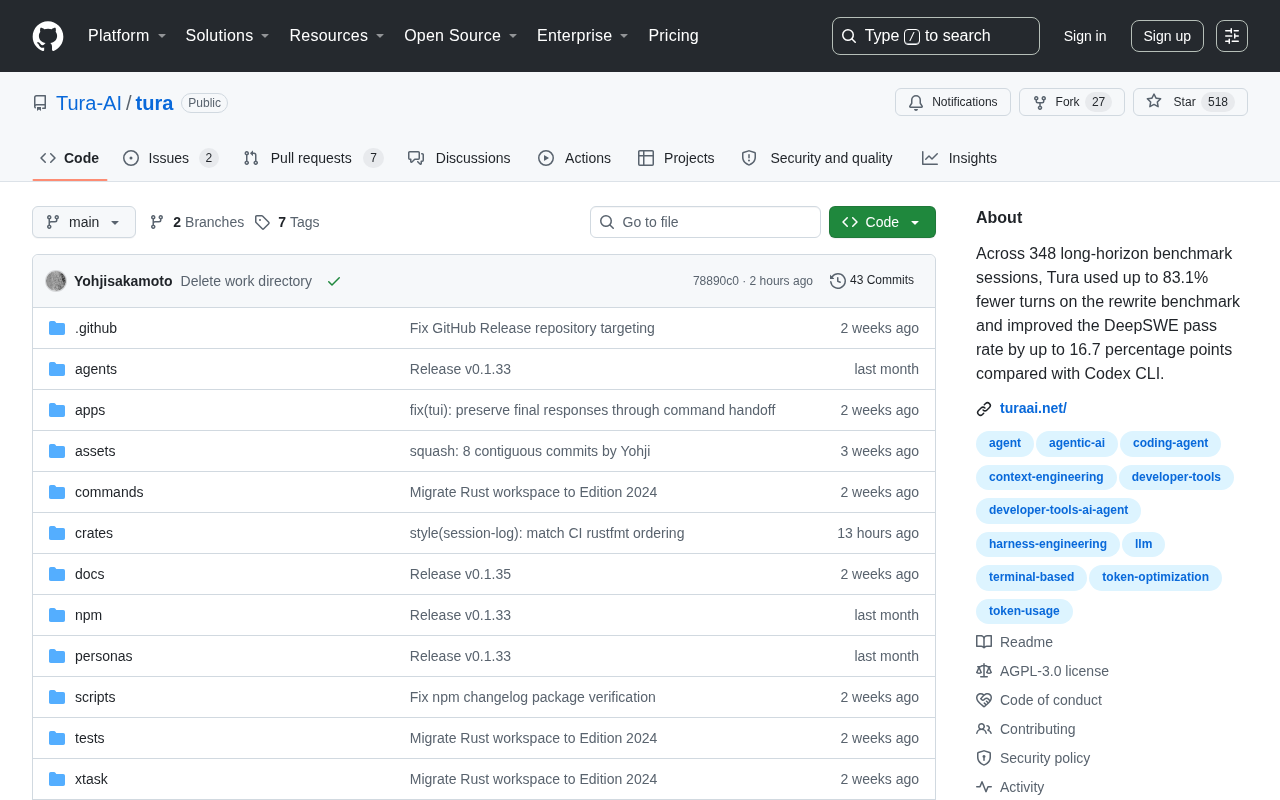
Tura: A New Approach to Saving 80% of Tokens for AI Agents
An in-depth analysis of how the Tura framework helps AI Agents reduce 80% of token consumption while improving task quality through intelligent context management and structured tool calling.
Read more →

·3 min
Website to Markdown API: Opening the Data Gateway for LLMs and RAG Systems
Deep dive into how Website to Markdown API solves LLM data ingestion challenges. Supports intelligent content extraction, JS rendering, and anti-bot measures to convert web pages and documents into AI-ready Markdown for RAG systems.
Read more →

·3 min
Why Does Gemini Keep Getting Things Wrong? A Deep Dive into AI Hallucinations and How to Deal with Them
Deep analysis of why Google Gemini and other LLMs frequently produce errors, explaining the technical mechanisms behind AI hallucinations and offering practical prompting tips for better AI usage.
Read more →

·3 min
UCP Radar: Making Your Product Data Readable by AI Shopping Assistants
UCP Radar diagnoses and fixes product feeds to boost AI shopping assistant visibility. Learn how it works and why AI visibility optimization matters for e-commerce.
Read more →

·3 min
Claude vs GPT Knowledge Cutoff Dates Explained: How to Determine AI Knowledge Boundaries
A deep dive into knowledge cutoff dates for LLMs like Claude and GPT, covering pre-training data endpoints, how to verify AI knowledge boundaries, and how RAG overcomes time limitations.
Read more →

·3 min
Zuckerberg's 'Personal Superintelligence' Vision: Early User Experiences and the Trust Dilemma
Zuckerberg proposes 24/7 personal superintelligence for billions. Reddit early adopters share real experiences building personalized AI systems, revealing both transformative potential and persistent challenges around hallucination, usability, and trust.
Read more →

·3 min
Open-Source seo-agent: A Cloudflare-Based AEO Edge Engine That Helps AI Crawlers Understand Your Website
seo-agent is an open-source AEO/SEO tool built on Cloudflare's edge network. It serves Markdown to AI crawlers, renders SPAs, and helps content sites get cited by ChatGPT, Perplexity, and other AI engines.
Read more →

·2 min
A Go Developer's Guide to Gemini: Complete Model Family Breakdown
A comprehensive Gemini model family guide for Go developers, covering Pro vs Flash selection strategies, multimodal capabilities, official Go SDK integration, and token management practices.
Read more →

·3 min
Should Perplexity Build an Obsidian-Style Note System?
Perplexity users are calling for a built-in knowledge management tool like Obsidian or Notion. This article explores why AI conversation tools need note-taking features and how AI-native notes could bridge information retrieval and knowledge crystallization.
Read more →

·4 min
Edit Distance Automata and N-gram Similarity: Core Technologies Behind Fuzzy Search in Search Engines
Deep dive into two core fuzzy search technologies: Levenshtein edit distance automata for efficient spelling tolerance and N-gram similarity for large-scale candidate recall, with principles, performance comparison, and industrial integration.
Read more →

·3 min
Beware the Prompt Injection Trap Behind LLM Testing Posts: A Social Engineering Attack Analysis
Deep analysis of a Reddit post disguised as LLM robustness research that's actually an indirect prompt injection attack, revealing its social engineering tactics and providing security defense strategies.
Read more →

·2 min
Harvey Labs: An Open-Source Benchmark Framework for Legal AI Agent Evaluation
Harvey Labs is Harvey's open-source benchmark framework for legal AI agent evaluation, assessing AI performance in contract review, case research, legal reasoning, and other real legal workflows.
Read more →

·4 min
Embedding Dimensionality Reduction: A Deep Comparison of Matryoshka Representation Learning vs. PCA
A deep comparison of two embedding dimensionality reduction approaches: Matryoshka Representation Learning (MRL) vs. PCA, analyzing trade-offs across compression quality, deployment cost, and flexibility with practical guidance.
Read more →

·3 min
A Data Analyst's Existential Crisis After Deep AI Integration: Am I Downgrading Myself?
A senior data analyst faces skill atrophy, shrinking career space, and automation anxiety after deep AI integration. Analysis of how AI's shift from Copilot to Agent impacts data roles.
Read more →

·3 min
AI Faking Creativity: When Every Office's Ideas Start Looking the Same
Does AI truly have creativity? As enterprises adopt AI office tools, marketing copy collisions and proposal similarities are increasing. This article analyzes the limits of LLM creativity and how to avoid the homogenization trap.
Read more →

·3 min
AI Rewriting Tracking: How Line-Level Provenance Precisely Distinguishes Human from Machine Text
Traditional AI detection only gives overall probability scores without locating specific passages. This article analyzes Diff-based line-level text provenance technology for precisely attributing human vs. AI text origins.
Read more →

·3 min
Agent DevTools: A Local Debugger Designed Specifically for AI Agents
Agent DevTools is an open-source local debugger for AI Agents that lets you inspect prompts, memory, retrieval, and tool calls, with good vs. bad run comparison to quickly find root causes.
Read more →

·3 min
Are Book Summary Apps a Waste of Money? An In-Depth Comparison of Blinkist and Shortform
In-depth comparison of Blinkist, Shortform, and Faroa book summary apps. Analysis of summary vs. deconstruction tools, with cognitive science-backed learning advice to help you decide if they're worth paying for.
Read more →