#shared workspace
181 related articles

·2 min
Hubbele: An Open-Source Note-Taking App Built for Both Humans and AI Agents
Hubbele is an open-source note-taking app designed for both humans and AI Agents, supporting self-hosted deployment. This article analyzes its Agent-native design philosophy and implications for the future of knowledge management.
Read more →

·4 min
OpenAI Employee Shares How to Build an AI Work Operating System with Codex
OpenAI's Jason Liu shares how he uses ChatGPT Workbench and Codex to build an AI work OS: Chief of Staff automation, persistent threads, Skills/Plugins, browser control, and app-building methodology.
Read more →

·4 min
GPT-5.6 Value Maxing Practical Guide: From Token Stacking to Output Optimization Methodology
Deep dive into OpenAI GPT-5.6 Value Maxing strategies covering Sol/Terra/Luna model selection, KV cache optimization, Prompt compression, and programmatic tool calling to help developers achieve more output with fewer Tokens.
Read more →

·3 min
ChatGPT Now Handles Documents, Spreadsheets, and Slides: A New Breakthrough in AI Office Automation
ChatGPT adds document, spreadsheet, and slide processing capabilities, supporting information consolidation, data analysis, presentation generation, and in-file editing — directly competing with Microsoft Copilot and Google Workspace AI.
Read more →

·3 min
If Digital Computers Have Consciousness, It Exists Only at the Hardware Level — Not in Software
If digital computers can produce consciousness, does it reside in software algorithms or physical hardware? Exploring causal closure, substrate independence, and implications for AI consciousness.
Read more →

·3 min
Can MVTec Merlic Handle Robot Pick-and-Place Tasks? A Comparative Selection Analysis
Analysis of MVTec Merlic's capabilities for robot pick-and-place tasks, comparing it with Halcon for hand-eye calibration and 3D pose estimation, with practical selection guidance.
Read more →

·2 min
Canvas Technology Explained: AI Moves from Chat Mode to Interactive Workspaces
A deep dive into how Canvas technology upgrades AI from traditional Q&A into interactive workspaces, covering visualization, workflow exploration, and actionable AI — plus its impact on developer workflows via GitHub Copilot.
Read more →

·2 min
Canvas Technology Explained: How AI Is Moving from Chat Mode to Interactive Workspaces
Explore how Canvas technology transforms AI from traditional Q&A into interactive workspaces, covering visualization, workflow exploration, and actionable collaboration for developers.
Read more →
·4 min
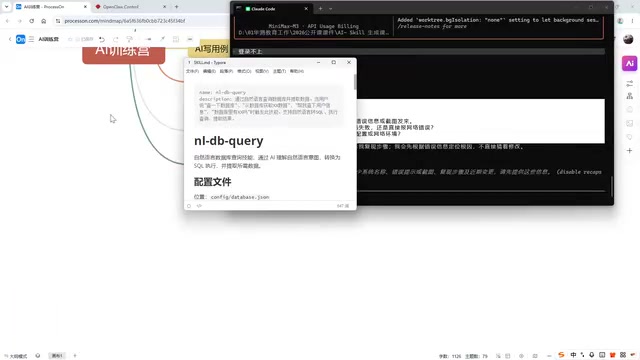
Hands-On Skill Writing and Agent Testing: A Guide to AI Testing Transformation
An in-depth look at AI testing challenges. Learn to write reusable Skill packs and master Agent testing and LLM evaluation—covering the SKILL.md six-dimensional rule, skill-creator, EvalScope, and dataset selection.
Read more →

·2 min
Hands-On with the CodeWorld Plugin: An AI Photo-Editing Tool Where You Point and It Changes
CodeWorld is a Codex-native infinite canvas plugin that lets you edit photos directly by drawing annotated leader lines. In our test, editing three spots at once only changed the marked areas while preserving overall detail—beginner-friendly, one line to install.
Read more →

·4 min
Notion Co-founder: From Note-Taking Tool to AI Agent Workspace
Notion co-founder Simon Last shares Notion's journey from note-taking tool to AI agent workspace: from first tasting GPT-4 to personal and custom agents.
Read more →
·2 min
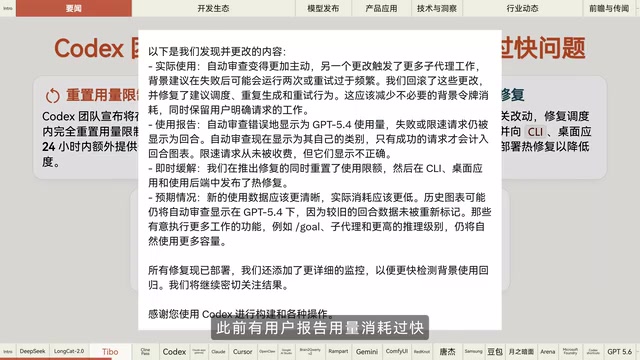
DeepSeek V4 Coming Soon, Meituan Open-Sources 1.6 Trillion Parameter LongCat 2.0
DeepSeek V4 launches mid-July with peak/off-peak pricing; Meituan open-sources trillion-parameter MoE model LongCat 2.0 with million-token context; Cursor debuts iOS app. A quick look at the latest AI industry news.
Read more →
·2 min
DeepSeek V4 Coming Soon; Meituan Open-Sources 1.6-Trillion-Parameter LongCat 2.0
DeepSeek V4 official release expected mid-July with peak/off-peak pricing; Meituan open-sources trillion-parameter MoE model LongCat 2.0 with million-token context; Cursor launches iOS app. A quick look at the latest AI industry news.
Read more →

·3 min
AI Project Memory Systems: Building a Continuously Accumulating Context Architecture in Four Stages
As models get stronger, why does the experience feel worse? The root cause is missing context. This article breaks down four stages—project descriptions, progressive disclosure, intra-memory, and three guardrails—to build a sustainable AI project memory system.
Read more →

·2 min
A Stable AI Coding Workflow: A Practical Guide That Works Across 4 Major Editors
For VS Code, Cursor, Windsurf, and JetBrains users! An editor-agnostic AI coding workflow: clean workspace, understand before acting, make small changes, review diffs—bring order to AI coding.
Read more →

·3 min
Stop Flying Blind: A Complete Practical Guide to Writing Evals for AI Agent Skills
A Google DeepMind engineer reveals that over 50,000 AI agent skills come with almost no evals. Learn how to write skill evaluations, from description tuning to test design.
Read more →

·3 min
Stop Flying Blind: A Complete Practical Guide to Writing Evals for AI Agent Skills
A Google DeepMind engineer reveals that over 50,000 AI agent skills come with almost no evals. This guide covers skill descriptions, test design, eval harnesses, and retirement strategies.
Read more →
·3 min
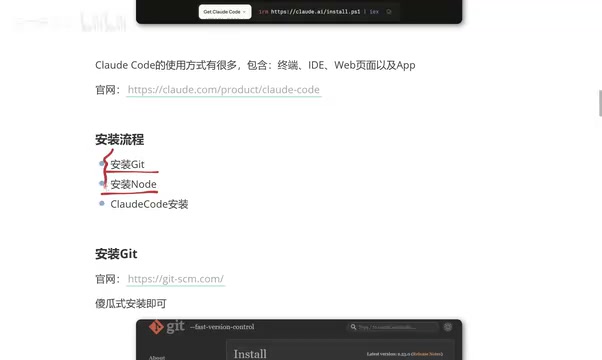
Getting Started with Claude Code: Installation, Configuration, and Three Working Modes Explained
Get started with Claude Code from scratch: detailed Windows installation, environment variable setup, China network bypass, and connecting to free Alibaba Cloud Bailian models—plus the three working modes.
Read more →
Ego-lite: An Open-Source Browser Desig…
·3 min
Ego-lite: An Open-Source Browser Designed for Humans and AI Agents to Work in Parallel
ego-lite is an open-source AI-native browser by citrolabs that lets humans and AI Agents work in parallel in the same environment. Explore its design and value.
Read more →

·4 min
jlens-gguf: Bringing Jacobian Lens Visualization and Steering to llama.cpp Local LLMs
jlens-gguf is an open-source tool bringing Anthropic's Jacobian Lens interpretability method to GGUF and llama.cpp, enabling internal observation, real-time steering, and abliteration for both dense and MoE models.
Read more →