#software testing
1985 related articles
 Product Reviews
·2 min
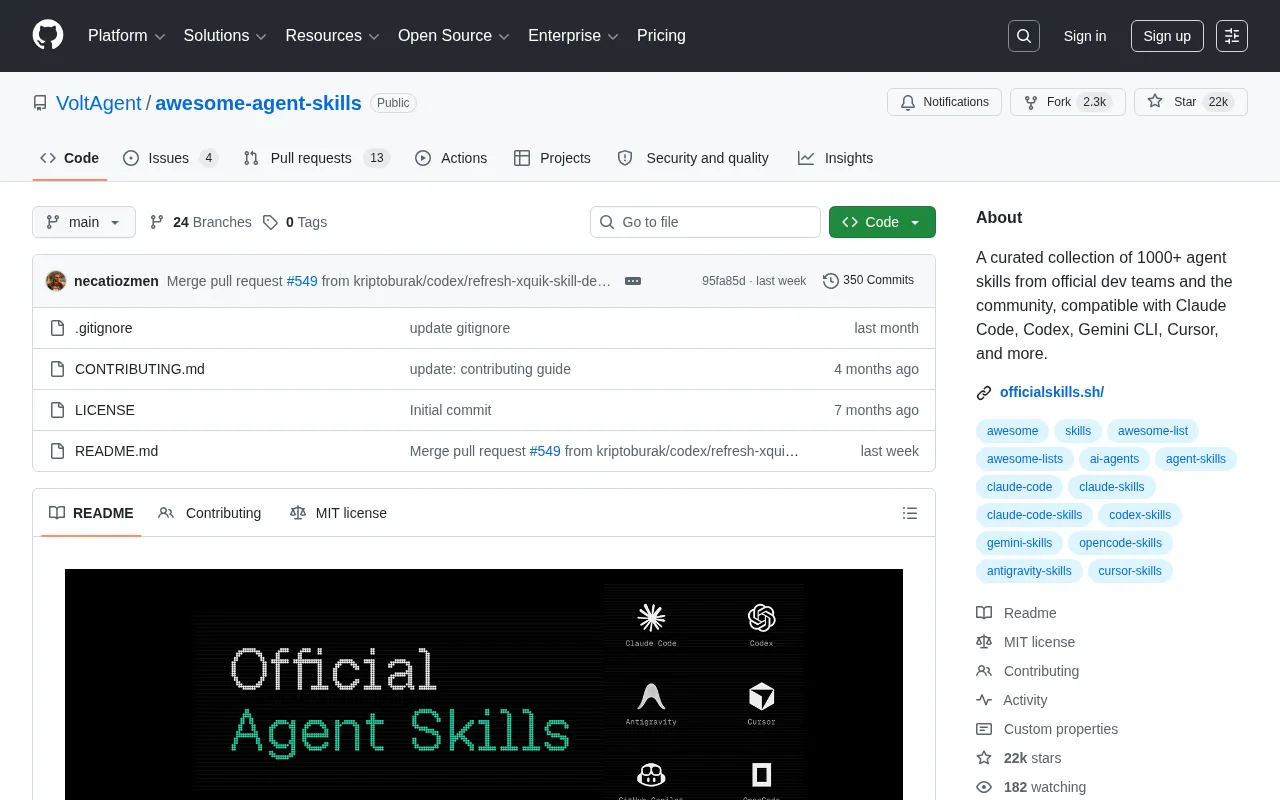
Awesome Agent Skills: Open-Source Library of 1000+ AI Agent Skills Supporting Claude Code, Cursor, and Other Major Tools
awesome-agent-skills is a 20K+ Star GitHub project with 1000+ AI agent skills supporting Claude Code, Cursor, Gemini CLI, and other major AI coding tools.
Read more →
 Product Reviews
·2 min
AgentSys Open-Source Framework: 49 Agents Automating Everything Beyond AI Coding
AgentSys is an open-source AI Agent automation framework with 20 plugins, 49 Agents, and 41 skills that integrates with Claude Code, Cursor, and other AI coding tools to automate project management, testing, deployment, and more.
Read more →
 Research
·3 min
UK AISI Evaluates GPT-5.5 Cybersecurity Capabilities: On Par with Claude Mythos but Already Publicly Available
UK AI Safety Institute (AISI) evaluates GPT-5.5 cybersecurity capabilities, finding vulnerability discovery on par with Claude Mythos. The key difference: GPT-5.5 is already publicly available, raising urgent AI safety governance concerns.
Read more →
 Product Reviews
·3 min
DeepSeek API Integration Ecosystem: Why This 37K-Star GitHub Project Took Off
Deep analysis of DeepSeek's awesome-deepseek-integration project with 37K+ GitHub stars: ecosystem strategy, developer integration solutions, and industry value across IDE plugins, chat clients, and automation workflows.
Read more →
 Research
·3 min
UK AISI Assessment Report: GPT-5.5 Cybersecurity Capabilities on Par with Claude Mythos
UK AISI releases GPT-5.5 cybersecurity assessment showing vulnerability discovery capabilities on par with Claude Mythos, but with GPT-5.5 already publicly available, raising new AI safety governance concerns.
Read more →
 Research
·2 min
UK AI Safety Institute Evaluates GPT-5.5: Cybersecurity Capabilities on Par with Claude Mythos
UK AISI evaluates GPT-5.5 cybersecurity capabilities, finding vulnerability discovery on par with Claude Mythos — but GPT-5.5 is already publicly available, raising new security concerns.
Read more →
 Tech Frontiers
·1 min
Claude Code Multi-Agent: A New Paradigm for Full-Lifecycle Automated Development
Explore Claude-Code-Multi-Agent, an open-source project that uses multiple AI agents to automate the full software development lifecycle from requirements to delivery.
Read more →
 Product Reviews
·1 min
Kilo Code: Open-Source AI Coding Agent Platform with Nearly 20K Stars
Kilo Code is an open-source Agentic Engineering Platform with nearly 19K GitHub stars, helping developers build, ship, and iterate software with autonomous AI agents.
Read more →
 Product Reviews
·3 min
Artificial: A Go-Based Framework for Orchestrating Claude Code and Multiple AI Coding Assistants
Artificial is a Go open-source multi-agent orchestration framework that unifies Claude Code, OpenAI Codex, Cursor Agent, and local models for parallel AI coding workflows.
Read more →
 Product Reviews
·2 min
OpenYak: Open-Source Local AI Agent Supporting 100+ Models with Zero Telemetry Privacy
OpenYak is an open-source local AI agent supporting Windows/macOS/Linux. Access 100+ models via OpenRouter, MCP, and Ollama with BYOK zero-telemetry privacy — a strong alternative to Claude Code and OpenAI Codex.
Read more →
 Product Reviews
·3 min
LibreChat: A Complete Guide to the Open-Source Self-Hosted Multi-Model AI Chat Platform
Deep dive into LibreChat, an open-source self-hosted AI chat platform supporting GPT, Claude, Gemini multi-model switching, MCP protocol, Agents, code interpreter, and enterprise deployment.
Read more →
 Product Reviews
·4 min
Deep Dive into Cube Studio: Tencent's Open-Source All-in-One AI Platform
Deep dive into Tencent's open-source AI platform Cube Studio, covering distributed training, large model fine-tuning and inference, Pipeline orchestration, VGPU virtualization, and Huawei Ascend support for enterprise cloud-native MLOps.
Read more →
 Product Reviews
·3 min
mcproc: A Deep Dive into the MCP-Based AI Agent Process Management Server
mcproc is a Rust-based MCP server that gives AI agents background process management capabilities. This article covers its architecture, use cases, and value in the AI toolchain ecosystem.
Read more →
 Expert Opinions
·2 min
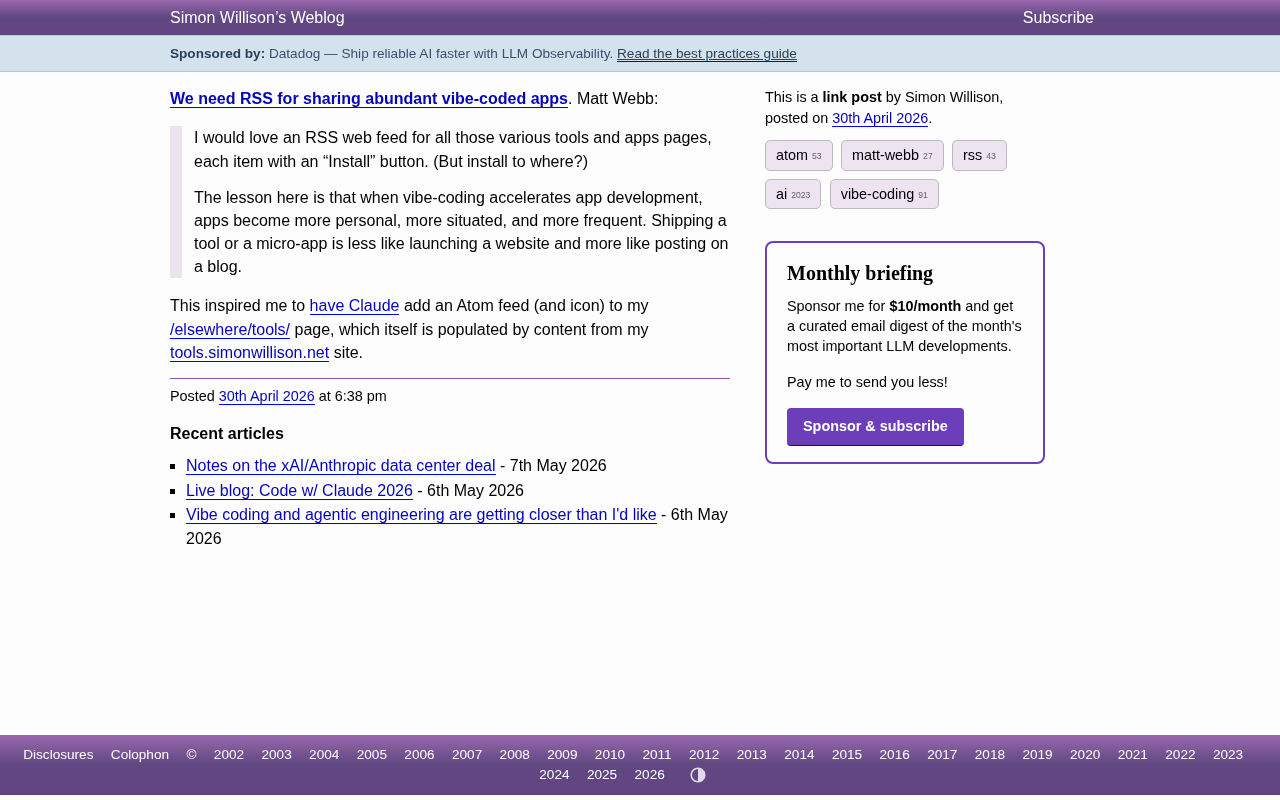
The Vibe Coding Era: Why We Need RSS to Distribute Personal AI Apps
As vibe coding makes app development as frequent as blogging, we need lightweight mechanisms like RSS to discover and share personal AI tools. Exploring the future infrastructure of AI app distribution.
Read more →
 Expert Opinions
·2 min
The Vibe Coding Era: Why We Need RSS to Share Personal Micro-Apps
AI coding makes building micro-apps as easy as blogging, but how do we share them? Matt Webb proposes RSS for distributing vibe coding output, and Simon Willison has already put it into practice.
Read more →
 Expert Opinions
·2 min
In the Vibe Coding Era, Why RSS Is the Best Solution for Sharing Personal Apps
Vibe Coding makes building apps as easy as blogging, but how are these personal micro-apps discovered? Matt Webb proposes RSS for distributing vibe-coded apps, and Simon Willison has already implemented it.
Read more →
 Tutorials
·2 min
Ollama Tutorial: Deep Dive into the 170K-Star Local LLM Framework
Deep dive into Ollama: run DeepSeek, Qwen, Kimi-K2.5 and more locally with one command. Covers installation, model ecosystem, architecture, and use cases for local LLM deployment.
Read more →
 Product Reviews
·3 min
claude-skills: 232+ Skill Plugins That Transform AI Coding Agents into Full-Stack Experts
claude-skills offers 232+ skill plugins for 12 AI coding agents including Claude Code, Cursor, and Gemini CLI. With 14K GitHub Stars, it covers engineering, marketing, product, and compliance.
Read more →
 Tech Frontiers
·2 min
LLM CLI Tool 0.32a1 Released: Fixes Tool-Calling Conversation Storage and Restoration Bug
Simon Willison releases LLM CLI tool 0.32a1 alpha, fixing a critical bug where tool-calling conversations couldn't be correctly restored from SQLite, ensuring data integrity in AI Agent workflows.
Read more →
 Expert Opinions
·2 min
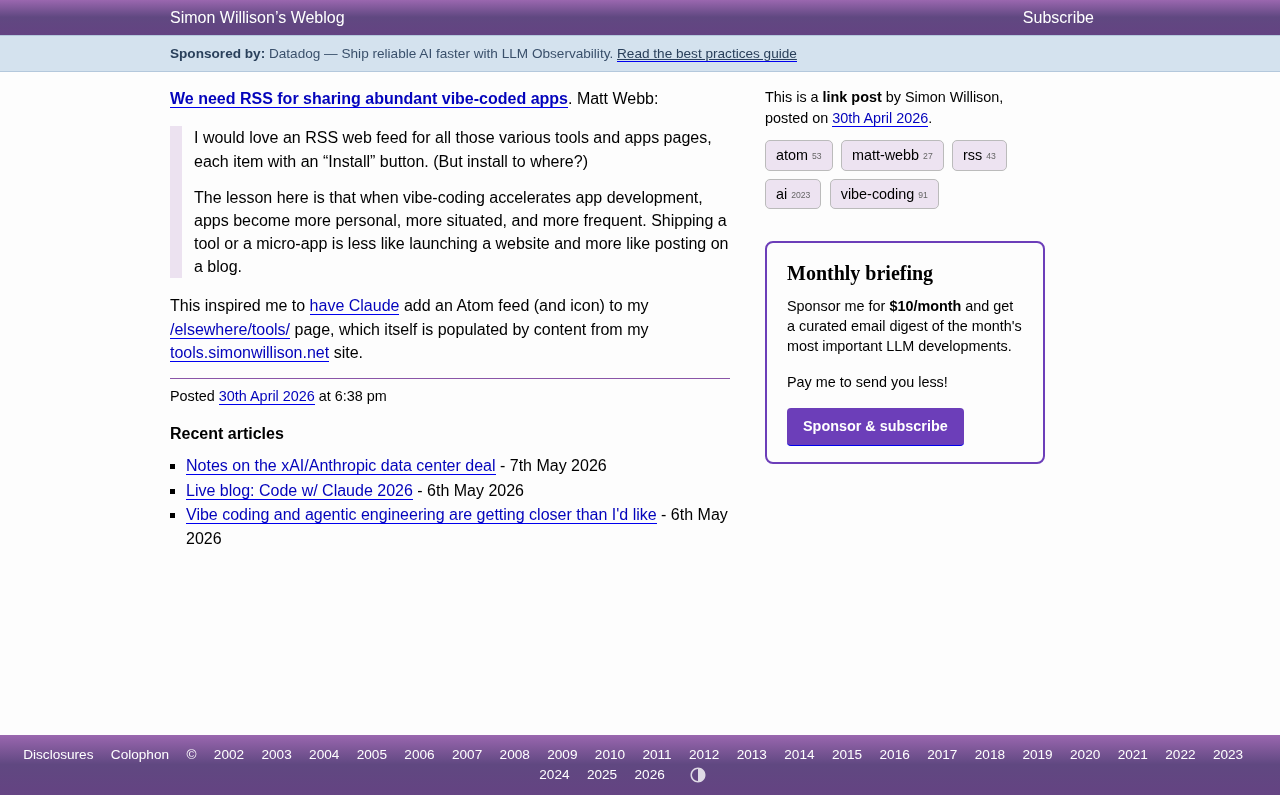
In the Vibe Coding Era, Share Your AI-Built Personal Apps via RSS
Vibe coding makes building apps as simple as blogging. Matt Webb proposes using RSS to distribute vibe-coded micro-apps, and Simon Willison puts it into practice. Exploring open protocols' new potential in the AI programming era.
Read more →