#sub-agent orchestration
180 related articles

·4 min
Four Major LangChain Updates: OpenWiki, Voice Agents, and Sub-Agent Orchestration Explained
LangChain releases four major updates: OpenWiki for auto-generating codebase docs, voice agent tutorials, Harbor evaluation integration, and deepagents programmable sub-agents.
Read more →

·2 min
Claude Code Dynamic Workflows Explained: A Hands-On Guide to Sub-Agent Orchestration and Reuse
Learn how Claude Code Dynamic Workflows orchestrate sub-agents for parallel tasks. Compare four collaboration modes, enable workflows, and save them for reuse.
Read more →

·2 min
Moving State Out of Framework Memory: A Multi-Agent Architecture Refactoring Guide
Exploring how 70% of multi-agent memory is consumed by non-reasoning state, and a refactoring approach using email threads to replace framework memory for better token efficiency, auditability, and resilience.
Read more →

·3 min
Athena: One-Click AI Orchestrator Agent for Building Ready-to-Operate E-commerce Businesses
Shoplazza launches Athena, an AI orchestrator agent that topped Product Hunt. It covers the full e-commerce chain—store setup, product sourcing, logistics, and ad campaigns—enabling solo entrepreneurs to build truly operational cross-border businesses.
Read more →
·3 min
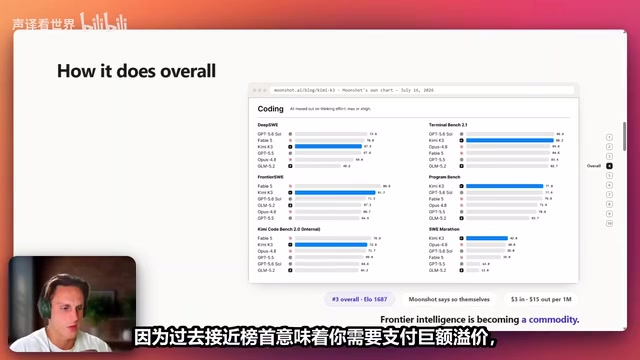
Kimi K3 Hands-On Tutorial: Claude Code Sub-Agent Configuration & GPT-5.6 Comparison Test
Complete guide to configuring Kimi K3 as a Claude Code sub-agent, including API setup, YFlow workflow building, and head-to-head comparison with GPT-5.6 and Claude Fable 5.
Read more →
·4 min
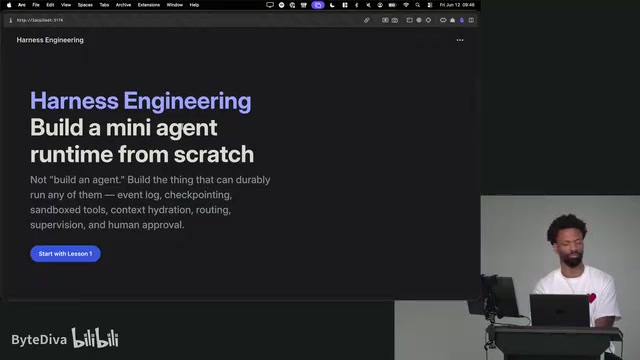
Harness Engineering: The Core Infrastructure for Taking AI Agents from Demo to Production
Deep dive into Harness Engineering: why AI Agents need memory management, durable execution, guardrails & approvals to go from demo to production.
Read more →

·4 min
Harness Engineering: The Core Infrastructure for Taking AI Agents from Demo to Production
Deep dive into Harness Engineering: why AI Agents need memory management, durable execution, guardrails & approvals to reach production. Based on Scott Moss's workshop.
Read more →

·5 min
Opus 5 Builds a No Man's Sky-Style Exploration Game in One Day: MCP and Sub-Agent Architecture Explained
A developer used Anthropic's Opus 5 model to build a No Man's Sky-style space exploration game in one day using Blender MCP and sub-agents. Deep dive into the technical architecture and industry implications.
Read more →

·4 min
GPT-5.6 Value Maxing Practical Guide: From Token Stacking to Output Optimization Methodology
Deep dive into OpenAI GPT-5.6 Value Maxing strategies covering Sol/Terra/Luna model selection, KV cache optimization, Prompt compression, and programmatic tool calling to help developers achieve more output with fewer Tokens.
Read more →

·4 min
Kimi K3 Deep Dive: 2.8 Trillion Parameter Open-Source Model Closes the Gap with Closed-Source Frontier for the First Time
Moonshot AI releases Kimi K3 open-weight model with 2.8T parameters and 1M token context. Our deep dive covers coding, 3D dev, agent capabilities, and safety concerns.
Read more →

·3 min
Why Kimi K3's Open-Source Model Has OpenAI and Anthropic Running Scared
Deep analysis of the AI industry shockwave triggered by Kimi K3: the double standard behind distillation accusations, performance comparisons with GPT-5.5, real security concerns, and how open-source models threaten closed-source giants.
Read more →

·3 min
Why Kimi K3's Open-Source Model Has OpenAI and Anthropic Running Scared
Deep dive into why Kimi K3 is rattling OpenAI and Anthropic: distillation double standards, GPT-5.5 comparisons, real security risks, and how open-source models threaten closed-source business models.
Read more →

·4 min
Burning Through 80 Billion Tokens: Why Vibe Coding Is Doomed to Fail
A creator spent 40 days and 80 billion tokens testing the real limits of Vibe Coding. This article dissects why AI programming crashes in production: complexity, context limits, and compression loss.
Read more →

·3 min
Pinterest Medic: Engineering an AI Agent for Automated Spark Failure Diagnosis
How Pinterest engineers built Medic for Apache Spark — a multi-agent auto-diagnosis tool — covering the evolution from a single ReAct agent, observability, log denoising, and end-to-end testing.
Read more →

·8 min
LangChain Crash Course: A Complete Roadmap from Zero to Agent Development
A systematic roadmap from LangChain and LangGraph to multi-agent development, covering RAG, Tool Calling, MCP, and more, helping developers break into AI app development.
Read more →

·3 min
Claude Code Getting Started: Installation, Switching to Chinese LLMs, and Git Workflow Guide
A complete guide to Claude Code: CLI installation, switching to DeepSeek and other Chinese LLMs via CC Switch, and conversational Git workflows for developers.
Read more →

·6 min
30-Minute Hands-On: Building a Working AI Agent from Scratch
Skip the dry theory and get hands-on! This article demonstrates step by step how to build a working AI Agent from scratch in 30 minutes using AI coding tools—covering the agent skeleton, tool system, memory mechanism, Flask web UI, and DeepSeek API integration.
Read more →

·3 min
LangChain v1.3 Hands-On Tutorial: Deep Dive into Agents, RAG, and Local Model Deployment
Deep dive into LangChain v1.3: compare LangChain, LangGraph, and DeepAgent paradigms, explore RAG pipelines, multi-agent systems, and local LLM deployment for enterprise AI apps.
Read more →

·4 min
5 Tips to Cut Claude Opus 5 Costs by Up to 80%
Opus 5 moving to API billing? 5 proven tips to cut token costs by up to 80%: lower Effort Level, architect-executor split, Ponytail compression, Deep Research, and Advisor Mode — while outperforming Opus 4.8.
Read more →

·4 min
UK Sovereign AI: How Cosine AI Is Punching Above Its Weight Against American Compute Dominance
Cosine AI founder reveals how the UK's first sovereign LLM is being built — from government compute grants and RL credit attribution to multi-agent orchestration and synthetic data pipelines.
Read more →