#sub-agent orchestration
184 related articles
 Deep Dives
·1 min
Gemini 3.5 Flash Deep Dive: Google's AI Agent Execution Engine
Google I/O 2025 unveils Gemini 3.5 Flash—4x faster than frontier models, outperforming its own flagship on coding and Agent benchmarks. Deep dive into its core capabilities and industry impact.
Read more →
 Deep Dives
·2 min
How to Add Deep Research Skills to AI Agent Frameworks: NVIDIA's Skill-Based Architecture Explained
Explore NVIDIA's Deep Research Skill approach for embedding deep research capabilities as skill modules into AI Agent frameworks like Claude Code and LangChain, enabling goal decomposition, multi-source retrieval, and knowledge synthesis.
Read more →
 Product Reviews
·3 min
Herdr: Multi-Agent Terminal Management Tool for Effortlessly Managing Claude Code/Codex Multitasking
Herdr is a terminal management tool designed for AI Agents, supporting visual tracking and free switching between Claude Code, Codex, Aider and more, with remote management and mobile support.
Read more →
 Tutorials
·4 min
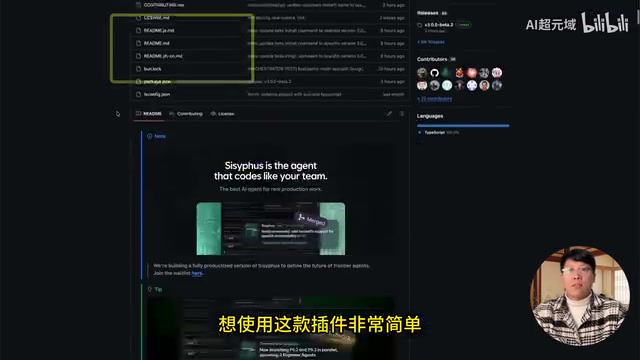
OMO Plugin in Action: Sisyphus Multi-Agent Collaboration for Building an AI Programming Team
Deep dive into the Oh My OpenCode (OMO) plugin's Sisyphus multi-agent system for intelligent AI model scheduling and collaborative development, with practical demos.
Read more →
 Product Reviews
·3 min
The Complete Guide to Mistral Wire: Free Open-Source Terminal AI Coding Assistant & Best Claude Code Alternative
Deep dive into Mistral Wire—a free open-source terminal AI coding assistant. Detailed comparison with Claude Code, covering sub-agents, parallel tasks, slash commands, installation guide & demos.
Read more →
 Tutorials
·3 min
AI Agent Context Management in Practice: A Complete Guide from Death Loops to Intelligent Truncation
Deep dive into AI Agent context management: a three-step strategy from naive truncation to intelligent memory, covering sub-Agent architecture and long session evals to solve LLM context bloat.
Read more →
 Product Reviews
·3 min
Mistral Vibe Hands-On Review: Is This $15/Month Claude Code Alternative Actually Worth It?
Hands-on review of Mistral Vibe terminal AI coding agent: sub-agent orchestration, async tasks, custom skills. At $15/month vs Claude Code's $200, is it worth it?
Read more →
 Product Reviews
·4 min
Manus Full Public Launch Review: Can an AI Agent Really Help Beginners Build a Social Media Business?
Manus AI Agent is now fully open. This hands-on review tests it through a complete social media startup scenario—from research to content production—revealing its real capabilities and limitations.
Read more →
 Tech Frontiers
·3 min
What Is Claude Managed Agents? Core Capabilities and Usage Guide for Anthropic's Hosted Agent Service
A comprehensive guide to Anthropic's Claude Managed Agents: core capabilities including Advisor Strategy, code execution, and web search, plus comparisons with third-party Agent frameworks.
Read more →
 Tutorials
·3 min
Claude Code Sub Agents in Practice: Reproducing Kiro's Spec-Driven Development Workflow in Three Minutes
Learn how Claude Code's new Sub Agents feature enables spec-driven AI development by creating three specialized agents (Architect, Planner, Engineer) to reproduce Kiro IDE's workflow with a TodoList demo.
Read more →
 Product Reviews
·3 min
2025 Comparison of Six Major Agent Development Frameworks: AutoGen/LangChain/LangGraph Selection Guide
In-depth comparison of six AI Agent frameworks—AutoGen, LangChain, LangGraph, Google ADK, OpenAI Agents, AgentScope—covering architecture, ecosystem maturity, and practical selection advice.
Read more →
 Product Reviews
·3 min
OMI OpenCode in Practice: A Detailed Guide to the Free Open-Source Multi-Agent AI Coding Framework
Deep dive into OMI OpenCode multi-agent orchestration framework with SysForce. Covers installation, practical demos, free vs. paid plans for building efficient AI coding workflows.
Read more →
 Tutorials
·4 min
Complete Guide to Agent Observability: Tracing, Evaluation, and Red Teaming in Practice
Deep dive into Microsoft Foundry's Agent observability solution covering multi-Agent tracing, AI quality evaluation, Red Teaming security testing, and automated prompt optimization to bridge the gap between expected and actual Agent behavior.
Read more →
 Deep Dives
·2 min
Cursor SDK /orchestrate Explained: Recursive Multi-Agent Collaboration for Complex Programming Tasks
Cursor SDK launches /orchestrate skill, using recursive multi-agent spawning for complex tasks with 20% Token savings and 80% faster cold starts.
Read more →
 Tutorials
·3 min
Claude Code Domestic Alternative: Low-Cost Deployment and Six Core Architecture Components Explained
Detailed guide on deploying Claude Code domestic alternatives via compatible API interfaces. Deep dive into six core systems: built-in tools, hierarchical memory, multi-Agent collaboration, and more.
Read more →
 Product Reviews
·4 min
OpenClaw4J: Deep Dive into a Java 21 + Spring AI Agent Framework
Deep dive into OpenClaw4J, an intelligent Agent framework built on Java 21 virtual threads and Spring AI, supporting tool calling, memory management, and multi-Agent collaboration for enterprise Java developers.
Read more →
 Tutorials
·3 min
Hands-On Intelligent Agent Development with LangGraph: From Getting Started to Full Project Architecture
A deep dive into intelligent Agent development with LangGraph, covering core concepts, project architecture, state management, and practical tips for building AI agents in Python.
Read more →
 Tutorials
·3 min
Hermes Agent Chinese Guide: 16 Volumes, 300K Words from Beginner to Multi-Agent Orchestration
Deep dive into hermes-agent-guide: a 16-volume, 300K-word Chinese manual covering installation, memory systems, skill ecosystems, multi-Agent orchestration, and enterprise deployment.
Read more →
 Tutorials
·3 min
Dissecting a 10K-Star Open Source Project: The Complete Practical Guide to Agent Context Engineering Skills
Deep dive into the 15K-star GitHub project Agent-Skills-for-Context-Engineering, covering context engineering fundamentals, multi-agent architecture patterns, and production-grade Agent system best practices.
Read more →
 Product Reviews
·3 min
Raptor: Transforming Claude Code into an Offensive & Defensive Security AI Agent
Raptor is an open-source project that transforms Claude Code into an offensive & defensive security AI agent through prompt engineering and multi-layer architecture, enabling red team, blue team, and security research scenarios.
Read more →