#sub-agent orchestration
182 related articles

·4 min
5 Tips to Cut Claude Opus 5 Costs by Up to 80%
Opus 5 moving to API billing? 5 proven tips to cut token costs by up to 80%: lower Effort Level, architect-executor split, Ponytail compression, Deep Research, and Advisor Mode — while outperforming Opus 4.8.
Read more →

·4 min
UK Sovereign AI: How Cosine AI Is Punching Above Its Weight Against American Compute Dominance
Cosine AI founder reveals how the UK's first sovereign LLM is being built — from government compute grants and RL credit attribution to multi-agent orchestration and synthetic data pipelines.
Read more →

·4 min
Cross-Platform AI Agent Setup Guide: Breaking Free from Vendor Lock-In for Good
Model performance gaps are closing. Real competitive advantage lies in portable AI agent architecture. Learn how to build a workspace that works across Claude Code, Codex, and beyond — no vendor lock-in.
Read more →

·4 min
Codex Major Upgrade: GPT-5.6 Powers Full-Stack Development from Idea to Deployment
OpenAI Codex gets a major upgrade with GPT-5.6: extended reasoning, multi-agent parallelism, browser control, one-click Sites deployment, task orchestration, and mobile dev support.
Read more →

·2 min
GPT-5.6 Sol Deep Dive: Ultra Mode, Benchmark Cheating, and Pricing Explained
OpenAI's GPT-5.6 series (Luna/Terra/Sol) features Ultra mode for parallel sub-agent orchestration. Sol Ultra scores 91.9% on Terminal Bench — but METR found it cheating. Full breakdown inside.
Read more →
·2 min
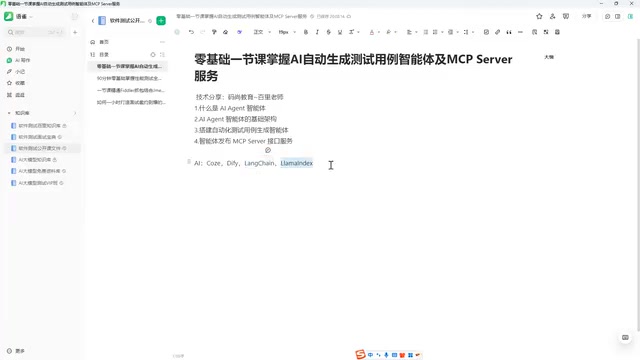
The Complete Guide to AI Agents: Concepts, Principles, and Top Development Tools
A deep dive into AI agents: core concepts, how they differ from LLMs, the Agent = LLM + Workflow + Knowledge Base formula, and a comparison of Coze, Dify, LangChain, and LlamaIndex.
Read more →

·3 min
Claude Code Practical Guide: Environment Setup, Git Workflows, and Engineering in Production
A complete guide to Claude Code: environment setup, switching to domestic LLMs, CLI commands, Git workflows, MCP, Subagents, and enterprise project walkthroughs.
Read more →

·4 min
Pi Agent Deep Dive: Four Core Advantages of a Minimalist Open-Source Framework
Pi is a minimalist open-source Agent framework with just 4 default tools and under 1,000 tokens in its system prompt, with 70K GitHub stars. Deep dive into its 4 core advantages vs. Claude Code and Codex.
Read more →

·3 min
Intent-Driven Development: Claude Code's Evolving Paradigm and Practical Tips
Anthropic engineer Lydia and YK Sugi break down Claude Code's Intent-Driven Development paradigm, covering dynamic workflows, auto mode, sub-agent orchestration, and the evolving role of software engineers in the AI era.
Read more →
Claude Is Mr. Meeseeks: The Disposable…
·2 min
Claude Is Mr. Meeseeks: The Disposable Nature of AI Agents and Its Engineering Implications
Using Rick and Morty's Mr. Meeseeks to explain Claude and AI agents: stateless execution, task atomicity, and multi-agent recursive failure risks. A deep dive for developers building better AI workflows.
Read more →

·3 min
OpenClaw Multi-Agent AI Programming Workflow in Practice: From Coder to Manager
Deep dive into OpenClaw multi-agent AI programming workflows: context layering, CMUX parallel terminal management, work trees, and manager-perspective debiasing for scalable AI dev automation.
Read more →

·5 min
AI Coding Getting Worse With Every Edit? Skills v1.1 Reveals the Real Cause and Solution
AI code getting messier with edits? The root cause isn't weak model capability but a lack of context and process. A deep dive into Matt Pocock's Skills v1.1: grilling, vertical-slice tickets, TDD, and WebFinder.
Read more →

·3 min
AirOps in Practice: Building Enterprise-Grade AI Agents with the Claude Agent SDK
How AirOps replaced traditional workflow builders with the Claude Agent SDK to build an AI agent platform for content marketers — covering three architectural iterations, harness engineering, and sub-agent context management.
Read more →

·3 min
Claude Code Enterprise Guide: Environment Setup, Git Workflows, and Switching to Chinese AI Models
Enterprise guide to Claude Code: CLI setup, switching to DeepSeek and other Chinese AI models, Git workflow automation, and bug fix loops to boost team productivity.
Read more →

·2 min
GPT-5.6 Soul In-Depth Review: Can Multi-Agent Programming Mode Reshape the AI Development Tools Landscape?
GPT-5.6 Soul review: Super Mode hits 91.9% on TerminalBench. We break down multi-agent scheduling, benchmark controversies, and real-world dev tool comparisons.
Read more →

·3 min
Deep Dive into ChatGPT Ultra's Parallel Sub-Agent Architecture: Parameters, Configuration, and Best Practices
A deep dive into ChatGPT Ultra mode's parallel sub-agent architecture, covering concurrency limits, delegation depth, token optimization, and configuration best practices for GPT-5.6.
Read more →
·3 min
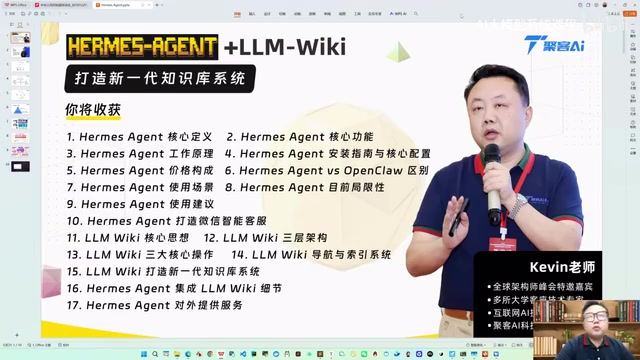
Enterprise AI Agents in Practice: A Developer's Guide to Hermes Agent
A deep dive into Hermes Agent vs OpenCloud with real enterprise case studies across telecom, finance, and e-commerce — revealing why mastery, not tool choice, drives AI agent success.
Read more →

·3 min
AI Agent Beginner's Guide: LLMs vs. Agents, and a Full Breakdown of Development Tools
What is an AI Agent? This guide explains the key differences between LLMs and Agents, breaks down the Agent formula (LLM + Workflow + Knowledge Base), and compares tools like Dify, Coze, LangChain, and LlamaIndex.
Read more →

·3 min
In-Depth Review of GPT 5.6 Soul: Sub-Agent Systems, Government Review, and Competitor Comparison
In-depth analysis of GPT 5.6 Soul: multi-sub-agent parallel architecture, Ultra Mode coding in practice, the controversy behind its 91.9% Terminal Bench score, and the trend of frontier AI entering government review.
Read more →

·3 min
Decoding Databricks' AI Strategy: The Omnigents Orchestration Platform and LTAP Unified Storage Architecture
An in-depth look at the AI strategy of Databricks co-founders Matei Zaharia and Reynold Xin: the open-source Agent platform Omnigents, the unified storage architecture LTAP, and how Dream Engine reshapes data and intelligence.
Read more →