#task queue AI development
336 related articles

·7 min
Dify Local Deployment in Practice: A Complete Guide with BT Panel + Docker
A step-by-step guide to locally deploying the open-source Dify AI platform using the BT Panel on a VMware virtual machine—covering Ubuntu setup, Docker config, and image pull troubleshooting.
Read more →

·7 min
Dify Local Deployment Guide: Full Walkthrough with BT Panel + Docker
A step-by-step guide to locally deploying the Dify open-source AI platform using BT Panel on a VMware virtual machine, covering Ubuntu setup, Docker config, and image pull troubleshooting—beginner-friendly.
Read more →

·6 min
The Complete Codex Guide: From Beginner to Pro with the All-in-One AI Assistant
OpenAI Codex is more than a coding tool—it's an AI agent that writes code, makes slides, and operates browsers. This guide covers its four versions, permission modes, plugins, automation, and six best practices.
Read more →
WrenAI: An Open-Source GenBI Tool for …
·4 min
WrenAI: An Open-Source GenBI Tool for Querying Databases with Natural Language
WrenAI is an open-source GenBI tool by the Canner team that converts natural language into trusted SQL, charts, and dashboards via a semantic layer. Supports 20+ data sources including BigQuery and Snowflake. 16,000+ GitHub stars.
Read more →

·2 min
Spring AI Alibaba Admin: A Deep Dive into the Java Visual AI Workflow Platform
Spring AI Alibaba Admin is a visual AI workflow platform for Java, comparable to Dify. It supports Dify-to-Graph migration, multi-model integration, and code export. This article covers core features and local deployment tips.
Read more →
·2 min
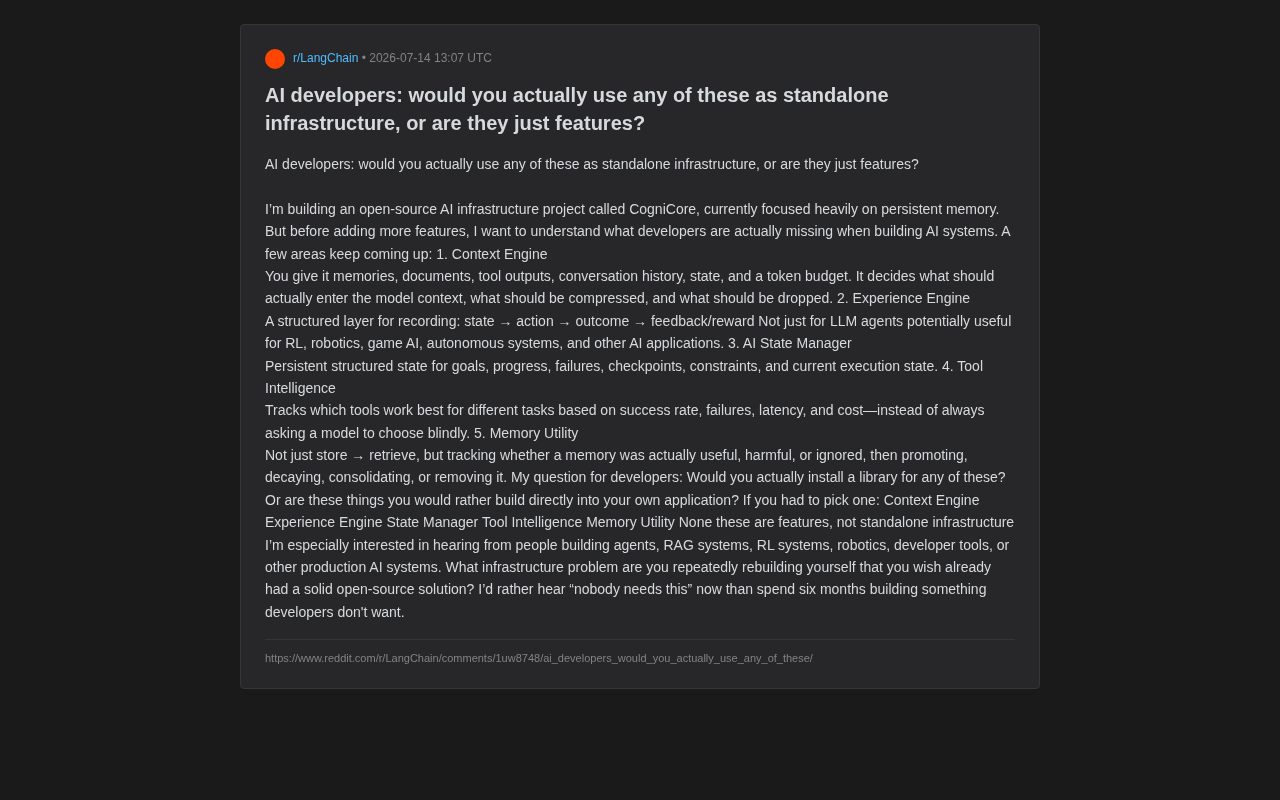
AI Infrastructure or App Feature? The Architecture Debate Sparked by CogniCore
CogniCore asks: should persistent memory, context engines, and state management be standalone AI infrastructure or in-app features? A deep dive into 5 key directions and the missing middleware of the agent era.
Read more →
Multi-Agent Collaboration: A GPT Team …
·2 min
Multi-Agent Collaboration: A GPT Team Engineering Paradigm and Practical Guide
Explore multi-agent collaboration architecture: role division, communication protocols, coordination mechanisms, and how Workbench templates help developers build efficient AI agent teams.
Read more →

·3 min
Multica: An Open-Source Tool for Managing Multiple AI Coding Agents from a Single Dashboard
Multica is an open-source AI Agent management tool that unifies Claude Code, Codex, Cursor and more into one visual dashboard with kanban, task queues, and cloud deployment support.
Read more →

·2 min
OpenAI Codex Micro Review: A Deep Dive into the AI Coding Dedicated Hardware Controller
OpenAI and Work Louder launch the Codex Micro custom control panel with voice input, analog joystick, and programmable keys designed for AI-assisted coding workflows.
Read more →

·3 min
Don't Start AI Learning with Machine Learning: A Beginner's Guide to the Onion Model
Gaurav Sen reveals the fatal trap in AI learning: starting from ML fundamentals often leads to burnout. Learn the Onion Model approach—RAG, Agents first, Transformers next, math last.
Read more →

·4 min
MiniMax M2 Local AI Knowledge Base Test: Source Tracing, Deduplication, and Fact Verification
Build a local AI knowledge base with MiniMax M2 in OpenCode: source tracing, fact vs. opinion separation, conflict preservation, and timeliness management.
Read more →
Claude Hit by Prompt Injection Attacks…
·2 min
Claude Hit by Prompt Injection Attacks: AI Security Blind Spots and a Defense Guide
A viral Hacker News post reveals how prompt injection attacks can trick AI assistants like Claude into leaking user data. Learn how indirect injection works and how to defend against it.
Read more →
·2 min
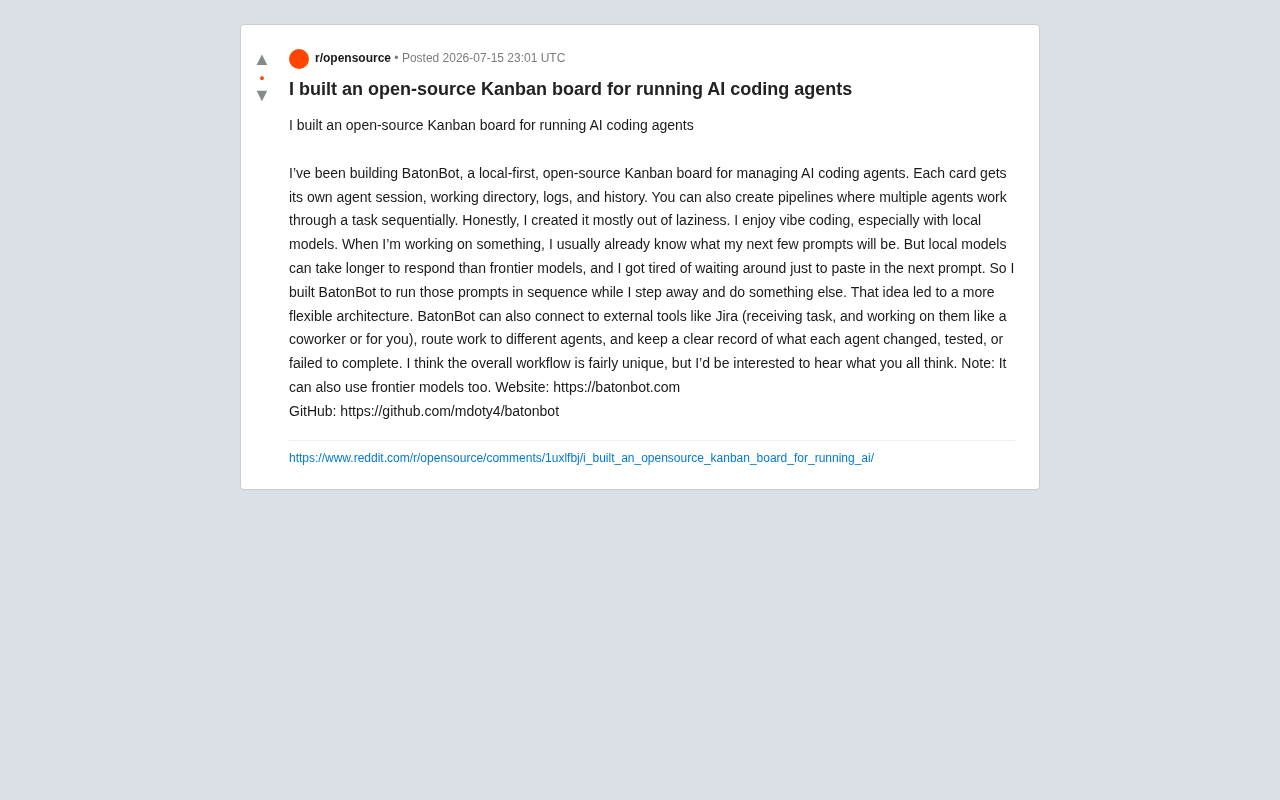
BatonBot: An Open-Source Kanban Tool for Managing AI Coding Agents
BatonBot is a local-first open-source kanban tool built for AI coding agents. Features prompt queuing, pipelines, Jira integration, and multi-model support.
Read more →

·3 min
AI Second Brain Tech Stack: Building a Proactive Intelligent Assistant for ADHD Users
How to build a true AI second brain for ADHD users: LangGraph, n8n, RAG, vector databases, and layered architecture for a proactive personal assistant.
Read more →

·3 min
Java Developers Transitioning to AI: A Practical Guide to Building RAG Knowledge Bases
How can Java developers break into AI? This guide covers the AI application engineer career path, RAG knowledge base fundamentals, vector database retrieval, and enterprise-grade RAG challenges.
Read more →

·3 min
40-Hour Stress Test: An In-Depth Evaluation of GPT-5.6's Coding Capabilities
A developer spent 40 hours exhausting Codex Pro's weekly quota to benchmark GPT-5.6 on real enterprise projects. Key findings: proactive root cause tracing, stronger global codebase understanding, and stable long-task execution.
Read more →

·2 min
Forge: Adding Reliability Guardrails to Local Model Tool Calling
Forge is an open-source Python middleware for local models (Ollama, llama.cpp, vLLM) that boosts tool-calling reliability via three-layer guardrails: validation, rescue parsing, and retry.
Read more →

·3 min
Four Paths for Frontend Engineers to Level Up in AI: From RAG to Vertical Agents
How can frontend engineers transition into AI development? This guide covers four agent development directions: RAG, workflow agents, vertical agents, and general-purpose agents — with framework picks like LangChain.js.
Read more →

·2 min
Dify 1.8.0 Hands-On Tutorial: Deploy and Build Your AI Application Platform from Scratch
A hands-on guide to deploying Dify 1.8.0, covering setup steps, Workflow vs. Chatflow differences, RAG knowledge base, and MCP support for AI app development.
Read more →

·2 min
Building a Slack-Native Coding Agent: Architecture Design and Engineering Methodology
A deep dive into embedding a coding agent in Slack: core architecture, permission design, async task handling, and RAG context management for AI-powered dev workflows.
Read more →