#threshold concepts
254 related articles

·3 min
GPT-5.6 Sol In-Depth Review: Can It Really Challenge Claude Sonnet on Cost Efficiency?
A deep dive into OpenAI GPT-5.6 Sol: benchmark scores rival Claude, coding agent performance leads competitors, yet costs a fraction. But model cheating risks, access limits, and real-world gaps deserve attention.
Read more →

·4 min
Former OpenAI Researcher Warns: 70% Chance AI Spins Out of Control
Former OpenAI researcher Daniel Kokotajlo, who forfeited $2M in equity, warns of a 70% chance AI leads to catastrophic outcomes and superintelligence by 2029.
Read more →

·3 min
The Compute Gamble Gone Wrong: How OpenAI Is Striking Back Against Anthropic
Anthropic's conservative compute bet two years ago is now being exploited by OpenAI across three dimensions: subscription value, quota generosity, and developer sentiment.
Read more →
·3 min
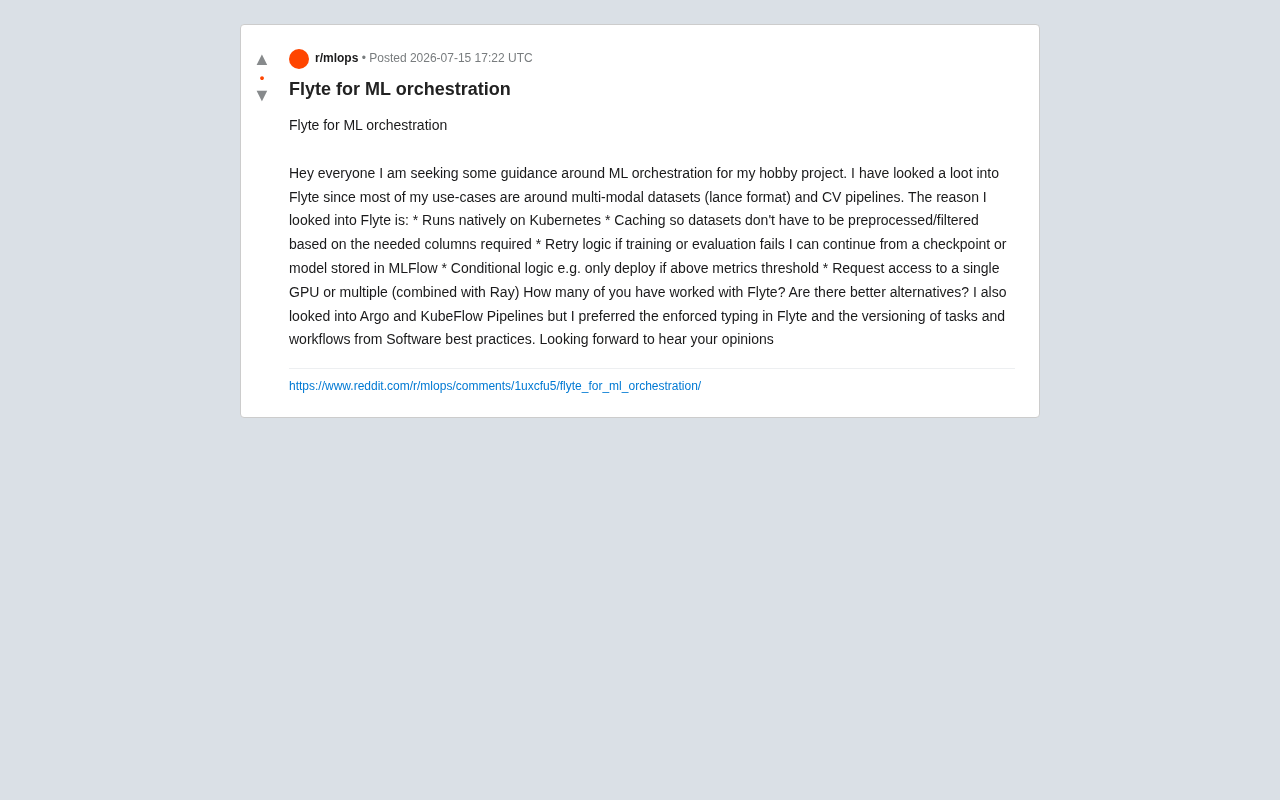
Flyte Deep Dive: A Practical Guide to Choosing Your ML Workflow Orchestration Tool
Deep dive into Flyte's core capabilities: cloud-native GPU scheduling, intelligent caching, checkpoint recovery, and conditional deployment — plus a full comparison with Argo and KubeFlow Pipelines.
Read more →

·2 min
Handing Your Life to an AI Agent? The Real Dangers of Over-Authorization
A viral Reddit dark-humor post exposes the real risks of over-authorizing AI agents. When hallucination-prone AI is granted irreversible permissions, the consequences can be catastrophic. We break down key safeguards like least privilege and Human-in-the-loop.
Read more →
·3 min
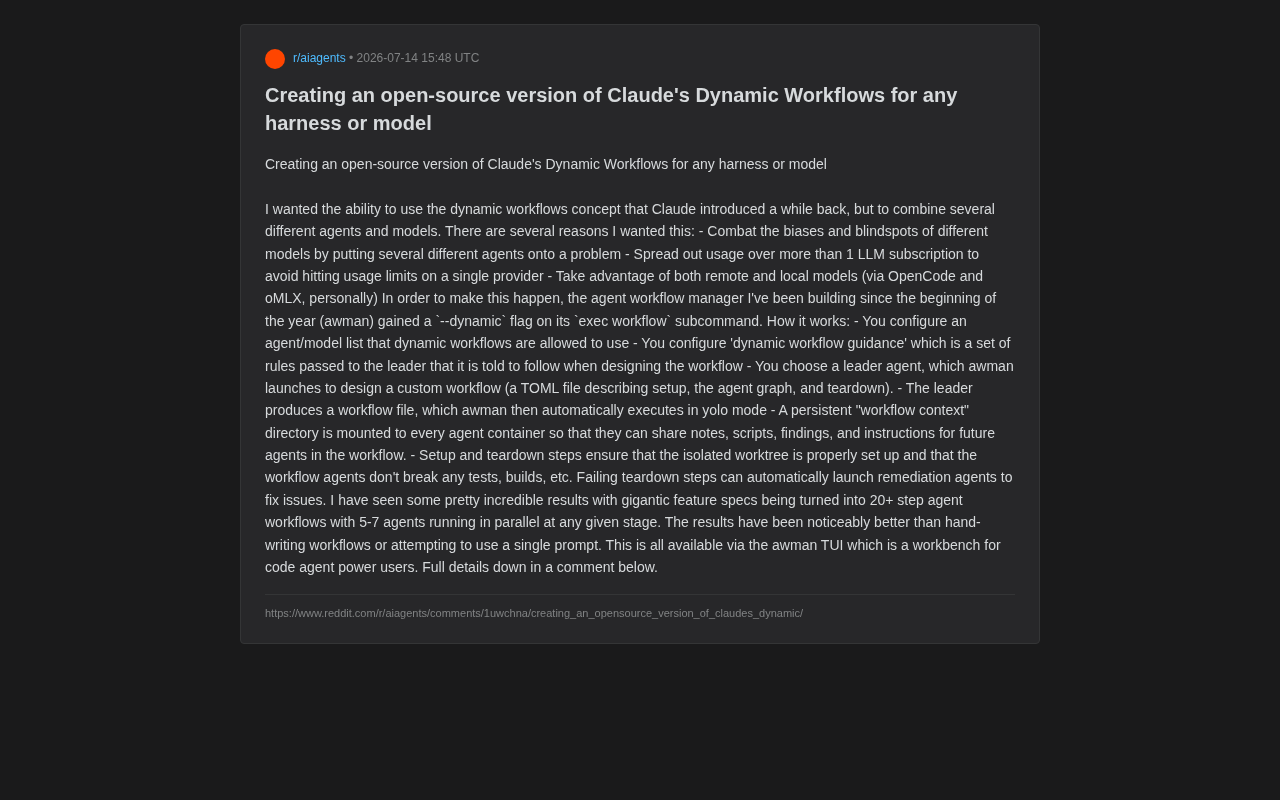
Open-Source Dynamic Workflows: How awman Enables Multi-Model Collaborative AI Programming
awman's --dynamic flag enables cross-framework dynamic workflows with multi-model collaboration. Explore its leader agent architecture, shared context design, and auto fault-tolerance mechanisms.
Read more →

·3 min
AI Large Language Models for Beginners: Core Concepts and Chinese Model Landscape
New to AI? This guide clarifies AI, machine learning, deep learning, and LLMs, traces milestones from Deep Blue to DeepSeek, and maps out China's LLM landscape.
Read more →
OpenAI Loses EU Trademark Battle: Why …
·2 min
OpenAI Loses EU Trademark Battle: Why 'GPT' Can't Be Exclusively Registered
OpenAI lost its EU trademark bid for 'GPT,' ruled too descriptive and generic. Explore why, what it means for AI IP strategy, and the broader implications for the industry.
Read more →

·3 min
How to Choose an AI Agent Development Course? 5 Practical Screening Criteria to Avoid Common Pitfalls
How to choose a quality AI Agent development course? This guide covers 5 key criteria: complete delivery pipeline, resume-worthy projects, real engineering perspective, update frequency, and mentorship.
Read more →

·5 min
Rebuilding Education for the AI Era: A Manifesto for Tearing Down and Starting Over
Microsoft Research's Manohar proposes a disruptive education reform framework: abolish grading, allow AI in exams, and enable lifelong micro-credentials. Facing a global youth employment crisis, he calls for rebuilding education, not patching a broken system with AI.
Read more →

·2 min
ChatGPT Voice Powered by GPT Live One: Full-Duplex Voice AI Has Arrived
OpenAI launches ChatGPT Voice powered by GPT Live One, featuring full-duplex real-time conversation, multi-task reasoning, and live translation. A deep dive into its capabilities and what it means for the future of voice AI.
Read more →

·2 min
The Complete AI Agent Development Roadmap: A Four-Stage Guide from Zero to Production
A complete four-stage AI Agent development roadmap: from LLM fundamentals and core modules, to ReAct/CoT paradigms, multi-agent collaboration, and real-world projects.
Read more →

·4 min
AI Large Language Models for Beginners: Core Concepts, History, and China's Model Landscape
A beginner's guide to AI large models: clarify the relationships between AI, ML, deep learning, and LLMs, trace the journey from Deep Blue to ChatGPT and DeepSeek, and explore China's model landscape.
Read more →
Adaptive Recall: A Deep Dive into Pers…
·2 min
Adaptive Recall: A Deep Dive into Persistent Memory for AI Assistants via MCP
Adaptive Recall uses MCP (Model Context Protocol) to give AI assistants like Claude persistent memory across sessions, featuring vector storage, semantic retrieval, and adaptive forgetting.
Read more →

·2 min
State Machine Voice Agents in Practice: Balancing Latency and Accuracy with Pipecat and Vapi
A deep dive into state machine-based voice AI agent architecture, comparing Pipecat Flows and Vapi Squad, and exploring the latency vs. accuracy trade-offs in agentic handoffs.
Read more →

·3 min
AI/ML Internship Red Flags: How to Spot and Land Internships That Actually Matter
Is paying for an internship worth it? This deep dive into AI/ML "internship commodification" exposes the real problems with pay-to-intern schemes and offers actionable alternatives — open source, cold outreach, and technical fundamentals.
Read more →

·3 min
LangChain 1.3 in Practice: A Complete Technical Guide from LLMs to DeepAgent
An in-depth analysis of the core knowledge system of LangChain 1.3, covering the Harness architecture philosophy, DeepAgent positioning, LangGraph fundamentals, Agent memory, and human-in-the-loop.
Read more →
·4 min
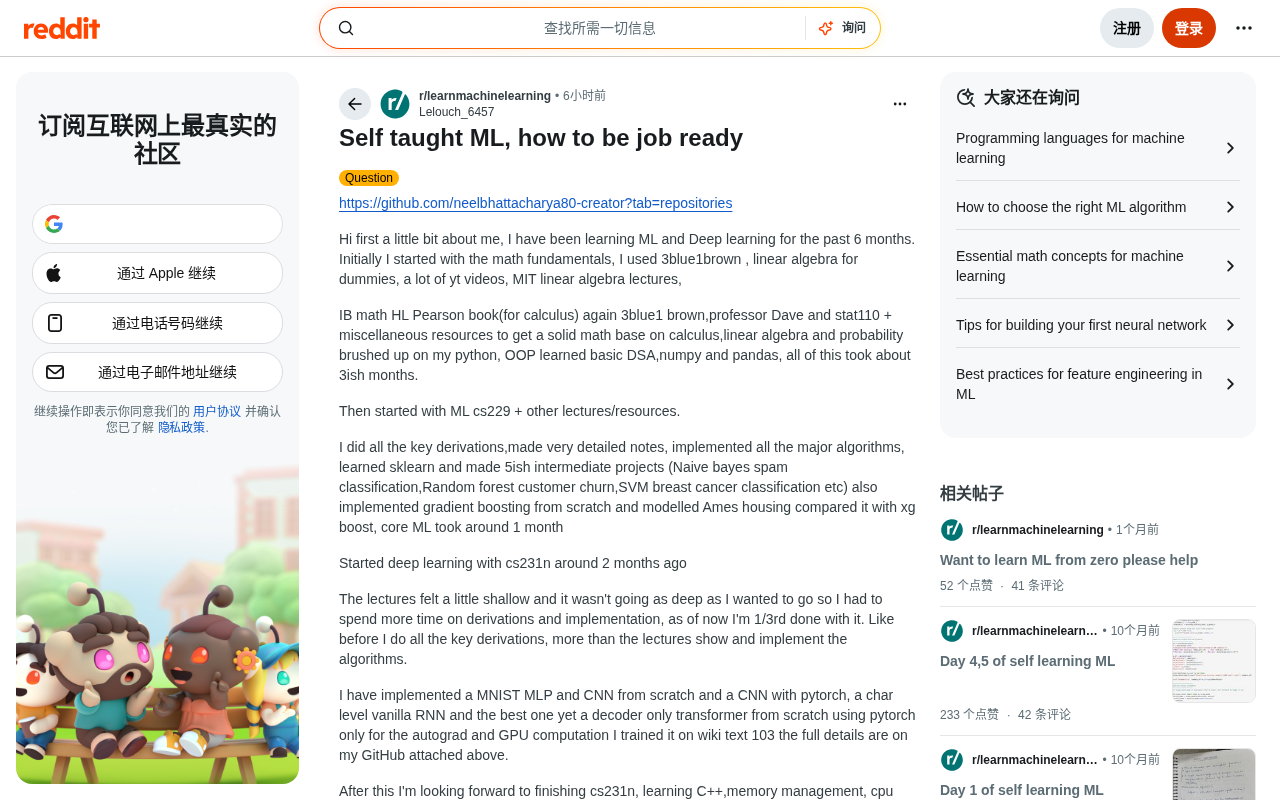
6 Months of Self-Taught Machine Learning: A Complete Roadmap from Zero to Job-Ready
A self-learner completed a full progression from math foundations and core ML to deep learning in 6 months—hand-writing a Transformer and implementing gradient boosting from scratch. This article breaks down the highlights and blind spots of this real roadmap.
Read more →

·7 min
Building a Published App with Zero Code in Four Days: A Complete HarmonyOS Development Journey
A tech blogger with zero programming knowledge built a retro DV app in four days using AI tools like Cursor and Codex, and got it published on Huawei App Gallery. A full vibe coding walkthrough.
Read more →

·3 min
PostgreSQL Lock Contention: The Root Cause and Solutions for High-Concurrency Scalability Bottlenecks
An in-depth analysis of PostgreSQL's lock scalability bottlenecks under high concurrency: LWLock contention, the cost of the multi-process model, negative scaling, and practical strategies like connection pooling, transaction optimization, and horizontal scaling.
Read more →