#vector index library
196 related articles

·7 min
Getting Started with AI Agents: A Deep Dive into the Perception-Decision-Action Loop
A clear, in-depth guide to how AI Agents work: the paradigm shift from traditional programs, the perception-decision-action loop, and the four pillars—LLMs, tool calling, memory, and RAG.
Read more →

·5 min
Security Swarm Evaluation in Practice: Validating AI Security Tools with Real Vulnerabilities
A deep dive into Security Swarm's evaluation methodology: building test sets from real, recent vulnerabilities to avoid training data contamination and validate its ability to find more bugs at lower cost.
Read more →

·5 min
5 Things You Must Do Before Deploying AI Agents to Production (With a Banking POC Case Study)
Over 60% of AI Agent projects die between demo and production. This article breaks down Databricks lead Sandy's five-pillar methodology and a bank POC case study to help you avoid the most common deployment pitfalls.
Read more →

·6 min
DINOv2 vs SigLIP: Why the Huge Gap in k-NN Classification? A Guide to Avoiding Vision Encoder Selection Pitfalls
Experiments show DINOv2 Giant scores just 41% on k-NN classification, while SigLIP2 reaches 92%. This article dives into the embedding-space differences between contrastive and self-supervised learning to guide vision encoder selection.
Read more →

·7 min
The Five Pillars of Production-Grade AI Agents: A Battle-Tested Guide from Demo to Deployment
Databricks tech lead Sandy shares a five-pillar framework for production-grade AI Agents—evaluation, observability, data foundation, orchestration, and governance—with a £85K retail banking failure case to bridge the demo-to-production gap.
Read more →
·7 min
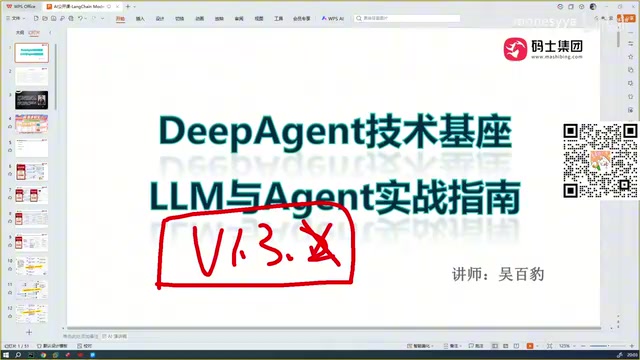
Getting Started with LangChain 1.3: Core Concepts of LLMs and Agents
An in-depth breakdown of LangChain 1.3's core concepts, covering the three major limitations of LLMs, Agent architecture, memory management, and a complete learning path. Master LangChain and LangGraph to quickly build AI development skills.
Read more →

·7 min
The Agent Engineer Transition Roadmap: A Deep Dive into Three Core Skill Systems
Want to become an Agent engineer? This article systematically covers three core skill tracks—LLM fundamentals, LangChain architecture development, and enterprise deployment—to help you avoid detours.
Read more →

·7 min
Dify 1.8.0 in Practice: A Complete Guide to Building Enterprise-Grade AI Workflows with Zero Code
An in-depth walkthrough of deploying Dify 1.8.0 and building applications: three-step Docker deployment, five app types compared, and Workflow vs Chatflow use cases—build enterprise AI apps with zero code.
Read more →

·7 min
Getting Started with Dify: A Complete Guide from Local Deployment to Building Enterprise-Grade AI Applications
A detailed guide to Dify, the open-source LLM app development platform, covering its core features and full local deployment via VMware + Ubuntu + aaPanel + Docker. Supports 100+ models like DeepSeek and ChatGPT to build enterprise AI apps fast.
Read more →

·6 min
From Video to Notes to Knowledge Base: A Practical Guide to AI-Assisted Learning Workflows
A complete AI learning workflow: batch download videos, auto-transcribe, generate structured notes with AI, then build intelligent search and Q&A via Dify. Turn scattered videos into a reusable personal knowledge base.
Read more →
·7 min
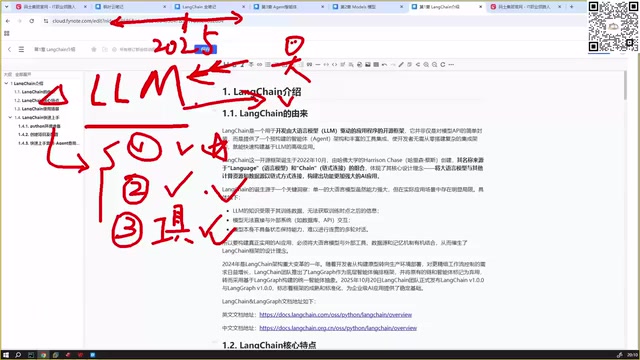
LangChain Hands-On Guide: From LLM Calls to Agent Development
Master LangChain from scratch: the three limitations of LLMs, init_chat_model unified interface config, the Message type system, and the path from LLM calls to Agent development.
Read more →

·7 min
Getting Started with LangChain: The Core Framework Connecting LLMs and AI Applications
A deep dive into LangChain's positioning and value—why do LLMs need a middle layer? How does LangChain serve as the 'glue' unifying multi-model interfaces and supporting Agent development? Learn its core modules and learning path.
Read more →

·7 min
Getting Started with OpenAI LLM Development: A Practical Guide to Model Selection, Token Pricing, and API Usage
A systematic guide to the three cores of OpenAI LLM app development: GPT-4/GPT-3.5 model selection, token billing and cost-saving tips, and practical use of the Models, Completion, and Chat Completion APIs.
Read more →

·7 min
Geosql: A Vertical Skill Pack That Teaches AI Geospatial Data Analysis
Geosql is a geospatial SQL skill pack designed for AI coding assistants like Claude and Codex, enabling LLMs to accurately generate PostGIS queries and handle coordinate transformations and spatial analysis.
Read more →

·7 min
A Java Developer's Guide to AI: Framework Selection and Practical Tutorial for LangChain4J
As LLM costs keep falling, how can Java developers seize the AI opportunity? This article explores LangChain4J's core capabilities, supported models and vector databases, and compares LangChain4J vs. Spring AI to help you build local knowledge bases and intelligent customer service systems.
Read more →

·5 min
Building an AI Second Brain: The Complete NotebookLM + Obsidian Workflow
Use NotebookLM for cross-document AI research and reasoning, Obsidian for long-term knowledge storage and linking. Combine both to build a second brain that gets smarter with use.
Read more →

·6 min
A Beginner's Guide to AI Agents: How Large Models Are Driving a New Computing Revolution
What is an AI Agent? This article systematically explains the core architecture of AI agents (LLM + Planning + Memory + Tools), how they differ from ChatGPT, their combination with robots, and why developers must master Agent development skills.
Read more →

·4 min
Python Learning Path for Absolute Beginners: A Science-Based Guide to Avoid Common Pitfalls
How can beginners learn Python without getting lost? This guide outlines a 3-stage learning path covering basics, advanced topics, and hands-on practice in web scraping, data analysis, and office automation.
Read more →

·7 min
Learning Python from Scratch: A Complete Guide to the Three-Stage Learning Path
Want to learn Python from scratch but don't know where to begin? This article breaks down three stages—basic syntax, advanced mastery, and hands-on practice—with real projects in crawling, automation, and data analysis to help you build programming thinking.
Read more →

·2 min
Unsloth v0.1.45 Released: Gemma 4 MTP Acceleration, Cross-Platform Fixes, and Studio Upgrades
Unsloth v0.1.45-beta adds Gemma 4 MTP support, AMD ROCm & NVIDIA Blackwell fixes, a new Hub download manager, and a compact RAG system for local LLM fine-tuning.
Read more →