#vector semantic routing
203 related articles
AI Costs Out of Control: Real-World St…
·6 min
AI Costs Out of Control: Real-World Strategies for Enterprises to Rein In Soaring Bills
More enterprises are finding AI operational costs spiraling out of control. This article dissects token billing traps and blind flagship-model use, and maps out cost-reduction strategies like model routing, open-source self-hosting, and semantic caching.
Read more →

·3 min
Can MiniMax Serve as a Hermes Agent's Brain? A Complete V0.18 Evaluation
A hands-on test of MiniMax as an AI Agent brain using the Hermes V0.18 framework: fast inference, low cost, stable long tasks—but clear flaws in complex reasoning and tool calling. Learn its three strengths, three weaknesses, and best-fit workflows.
Read more →

·4 min
The Ultimate RAG Interview Guide: 204 Questions, 12 Architectures, and 6 Failure Modes Explained
The open-source project "Interview System" offers 204 RAG interview questions, 12 architecture approaches, and deep analysis of 6 failure modes. Prepare systematically for RAG engineer roles.
Read more →
·5 min
Practical AI Cost Optimization: A Deep Dive into Intelligent Routing and Context Compaction
AI bills keep soaring? This article breaks down two core cost-reduction strategies: intelligent routing via an LLM Gateway, and context compaction to cut Token usage—no major refactoring needed.
Read more →
·6 min
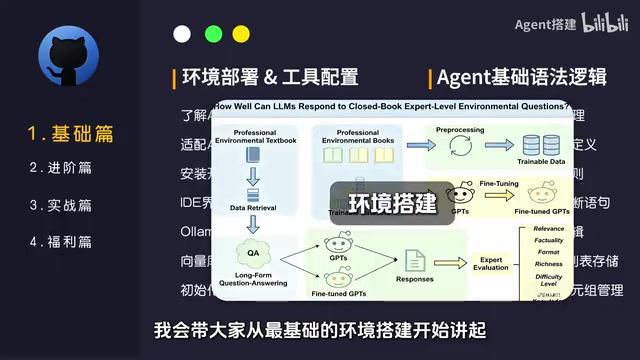
AI Agent Development Learning Path: Four Stages from Zero to Hands-On Projects
A systematic breakdown of the AI agent development learning path, covering four stages: fundamentals, RAG knowledge bases, tool use, multi-agent collaboration, and hands-on projects.
Read more →

·6 min
Airtel Gives Away Free Perplexity Pro: Will You Be Charged Automatically When It Expires?
Airtel partnered with Perplexity to offer users a free one-year Pro subscription, but the renewal charging mechanism worries many. This article breaks down the billing logic of operator-bundled subscriptions and offers practical self-protection tips.
Read more →

·3 min
Getting Started with n8n: A Deep Dive into the Open-Source AI Workflow Automation Platform
A comprehensive look at n8n, the open-source workflow automation platform: core features, 500+ node ecosystem, AI Agent and RAG integration, plus a fast learning path.
Read more →

·4 min
No MLP or Attention Required: How Point-Attractor Dynamics Learn Word Embeddings
A minimalist dynamical system experiment: without MLP, Transformer, or attention layers, point-attractor dynamics driven purely by co-occurrence pressure learns semantic similarity on SimLex-999.
Read more →

·6 min
The Eight-Step Method for Agent Development: A Practical Path from Pitfalls to Production
Many enterprises fail at AI Agents due to choosing the wrong tools and lacking methodology. This article outlines an eight-step Agent development method—from cognitive foundations, scenario selection, hand-writing ReAct, and structured output to Tool Use, RAG, evaluation sets, and production fallback.
Read more →

·1 min
Does Replacing Employees with AI Really Save Money? Executives Are Waking Up to Massive Bills
Companies replacing employees with AI to cut costs get blindsided by massive API bills. This article breaks down AI's hidden costs: Token billing traps, flagship model premiums, and data engineering overhead.
Read more →

·7 min
AI Agent Runs a Fully Automated Chess Channel: A Real-World Practice of Combining LLMs with Engines
A German engineer built a fully automated chess YouTube channel with an AI Agent, combining LLMs and chess engines to auto-generate explainer videos nightly, reaching 500K views. Here's the tech architecture, tool design, and real costs.
Read more →

·2 min
Mastering Cursor in Depth: Multi-File Editing, Rules Configuration, and Efficient Practice Guide
Go beyond basic prompt usage and systematically master Cursor's core features: Composer multi-file editing, Codebase semantic search, and Rules configuration.
Read more →

·5 min
Multi-Model Tiered Deployment: Is an AI Gateway Worth Adopting?
More teams are adopting multi-model tiered scheduling. AI gateways solve cross-vendor API management, automatic fallback, and cost tracking — but add a new abstraction layer. Learn when a gateway is worth it.
Read more →
·7 min
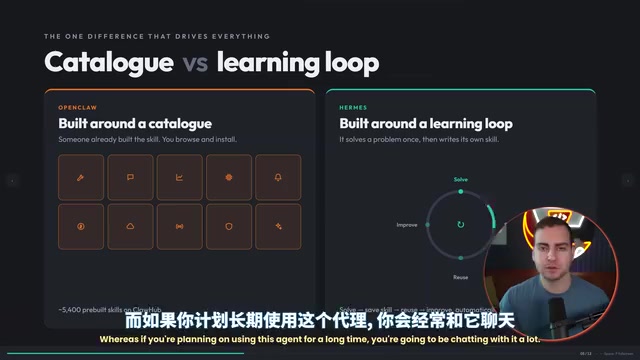
OpenClaw vs Hermes: An In-Depth Comparison and Selection Guide for AI Agent Tools
An in-depth comparison of OpenClaw and Hermes Agent, covering skill management, memory mechanisms, security, and gateway configuration to help you find the right AI agent solution.
Read more →

·2 min
Frugon: Local LLM Call Analysis That Pinpoints Cost-Reduction Opportunities
Frugon is an MIT-licensed, local LLM cost analysis tool that helps developers identify which API calls can be switched to cheaper models for data-driven cost reduction — no log uploads, full privacy.
Read more →

·7 min
Codex Direct Connection Configuration Guide for China: Complete GPT Agent Setup Tutorial
Complete guide for configuring OpenAI Codex Agent in China, covering installation, API key setup, permission modes, reasoning intensity, and security considerations for third-party relay services.
Read more →

·3 min
Intent Recognition Interview Question: Three-Layer Funnel Architecture Breakdown and Answer Template
Asked 'how do you implement intent recognition' in an interview? Dumping everything into an LLM is a red flag. This guide breaks down the 3-layer funnel architecture with a ready-to-use answer template.
Read more →

·5 min
Postgres Is Enough More Often Than You Think: Stop Piling On Your Tech Stack
Many teams add message queues, search engines, and caches before they ever need them. This article maps out what Postgres can cover—task queues, full-text search, JSON storage—and when you actually need Redis, Kafka, or Elasticsearch.
Read more →

·6 min
Cursor Meets Grok 4.5: A Hands-On Test of an AI Coding Assistant That's 5x Faster with Cleaner Output
A developer deeply tests Grok 4.5 High Fast in Cursor, finding it rivals Claude Opus in quality but runs 5x faster with cleaner, filler-free output. Full hands-on review and analysis.
Read more →
·5 min
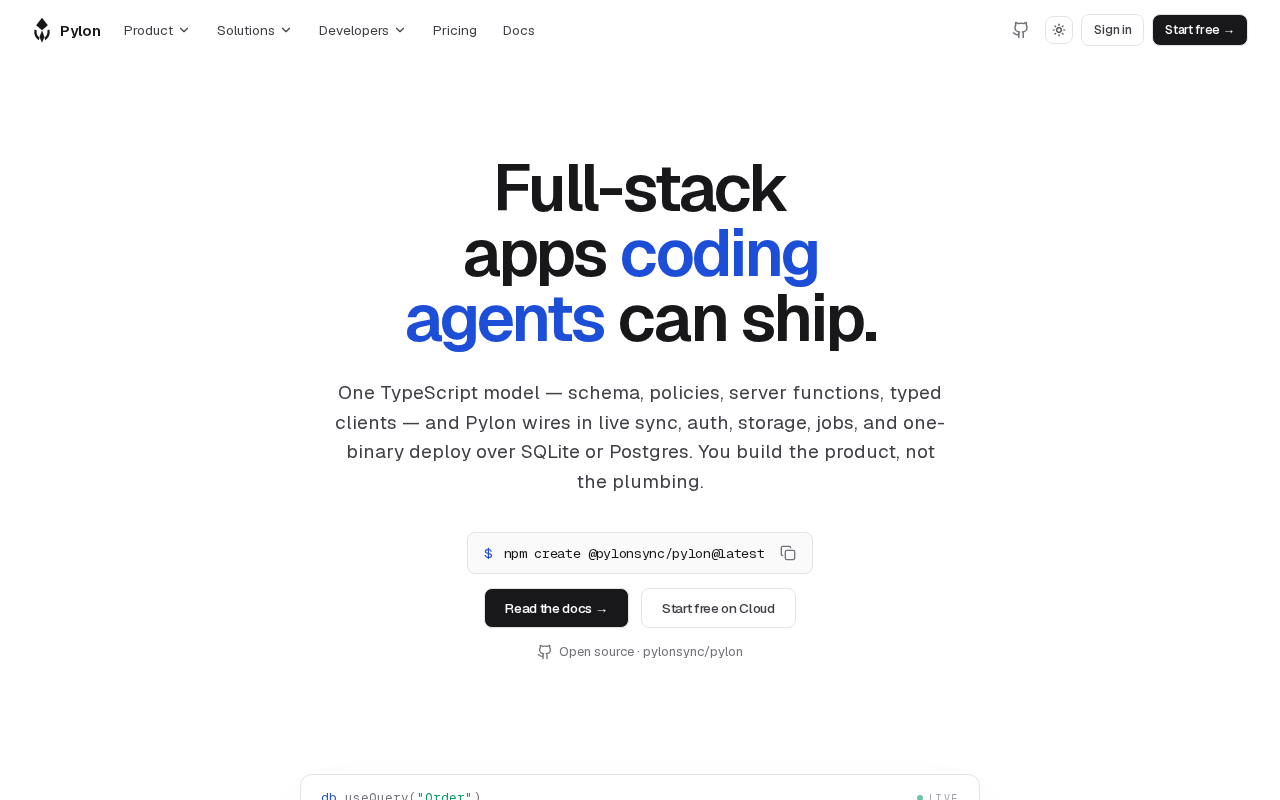
Pylon Sync: An In-Depth Look at the Full-Stack Realtime Framework Built for AI Agents
Pylon Sync is an "Agent-First" full-stack realtime framework that treats AI Agents as first-class design citizens, reducing coding errors via strong conventions.
Read more →