#zero-shot learning
123 related articles

·3 min
A $120 Robot Arm Learns to Actively Search: How Squint Breaks the Field-of-View Barrier
Squint open-source research enables a $120 SO-101 arm to search beyond its camera FOV using 16×16 pixel input, achieving 100% success in 24 min on an RTX 4060.
Read more →
Voice Cloned in Three Seconds: Why AI …
·2 min
Voice Cloned in Three Seconds: Why AI Voice Fraud Is Nearly Impossible to Stop
Just 3 seconds of audio lets AI clone your voice for fraud. Learn the tech behind AI voice scams, why defenses fail, and practical tips like code words to protect yourself.
Read more →

·3 min
Dify + MCP in Practice: Building a Multi-Scene Life Assistant Agent with ModelScope MCP Marketplace
Build a multi-scene life assistant Agent using ModelScope MCP Marketplace and Dify. Integrates Amap, LeetCode, recipe, and news MCP Servers with Qwen3 via Chatflow.
Read more →

·3 min
Meta Muse Spark 1.1 Deep Dive: The Platform Ambitions Behind Meta's First Closed-Source Model
Meta Muse Spark 1.1 deep dive: native multimodal architecture, platform tools, social data retrieval, e-commerce vision — Meta's first closed-source API model benchmarks against Anthropic Sonnet.
Read more →
Apple SpeechAnalyzer vs Whisper: Speed…
·2 min
Apple SpeechAnalyzer vs Whisper: Speed, Accuracy, and Privacy — A Comprehensive Comparison
Apple's WWDC 2025 SpeechAnalyzer API runs fully on-device with zero latency and no cost. We compare it against OpenAI Whisper on accuracy, speed, privacy, and cross-platform support.
Read more →
Latent Reasoning: The Next-Generation …
·3 min
Latent Reasoning: The Next-Generation AI Reasoning Paradigm Beyond Chain of Thought
Is CoT really AI 'thinking'? This deep dive covers latent reasoning's rise — Coconut, HRM, BDH — and the core trade-offs between interpretability, efficiency, and governance in high-stakes AI.
Read more →
AI Agents Playing Games: The Technical…
·2 min
AI Agents Playing Games: The Technical Value and Research Significance Behind the Fun
Why do AI agents play games? Explore how games serve as ideal AI training environments — from DeepMind's AlphaGo to LLM-driven agent experiments — and why game-playing benchmarks matter.
Read more →

·3 min
Zer0Fit: Connecting Google's TabFM and TimesFM to LLM Chat Interfaces via MCP
Zer0Fit wraps Google's TabFM and TimesFM foundation models as MCP servers, letting users run classification, regression, and time series forecasting through a local LLM chat interface — no ML code required.
Read more →

·3 min
AI-Powered OSINT in Practice: A Learning Path and Tool Guide for CS Professionals
How can OSINT practitioners with a CS background automate intelligence with AI? This guide covers computer vision, VLMs, and Agent frameworks including YOLO, SAM, and Grounding DINO.
Read more →

·6 min
GPT-5.6 vs Grok 4.5 on the Same Day: A Packed Week of Flagship AI Model Launches
OpenAI's GPT-5.6 launches with Sawa, Terra, and Luna sub-models the same day as Musk's Grok 4.5, while Anthropic, Meta, and NVIDIA make their moves. A packed week of flagship AI launches.
Read more →

·5 min
How Can Working IT Professionals Learn AI Efficiently? A Practical Learning Path from Zero to Real-World Projects
Limited time but want to learn AI systematically? This guide maps out a practical learning path for working IT pros—from AI application engineering and prompt engineering to RAG and Agents.
Read more →

·4 min
Baidu AI Automation System: Trigger Skill Chains with a Single Sentence, Say Goodbye to Manual Workflows
The Baidu AI Automation System uses departmentalized skill libraries and Agent-style orchestration to let managers trigger multi-skill workflows with one sentence—no tech background needed.
Read more →

·3 min
TabFM: A Zero-Shot Foundation Model for Tabular Data That Disrupts Traditional Modeling
TabFM is a zero-shot foundation model designed for tabular data, enabling direct prediction without retraining on new datasets. This article analyzes TabFM's positioning, its relationship to TabPFN, key strengths, and real-world challenges.
Read more →

·4 min
Testing a Research Automation Agent: Zero-Shot Reproduction of a NeurIPS Paper End-to-End
Testing research automation agent Klaus Goh: full reproduction of IBM's TTM time series paper at NeurIPS—from search to zero-shot inference, 2700+ predictions in 10 seconds, MSE 0.363 beating TimesFM.
Read more →

·4 min
ChatGLM Large Model Development Tutorial: From Zero to Enterprise Deployment
Systematically learn ChatGLM large model development, covering Transformer principles, RAG, private deployment, fine-tuning, and Agent development, with a roadmap and hands-on cases.
Read more →

·5 min
ECC: An Agent Enhancement Framework for AI Coding Assistants — Five Core Capabilities Explained
ECC is an agent optimization framework for AI coding assistants like Claude Code, Cursor, and Codex, enhancing them with skills, memory, security, and research-first development capabilities.
Read more →
·2 min
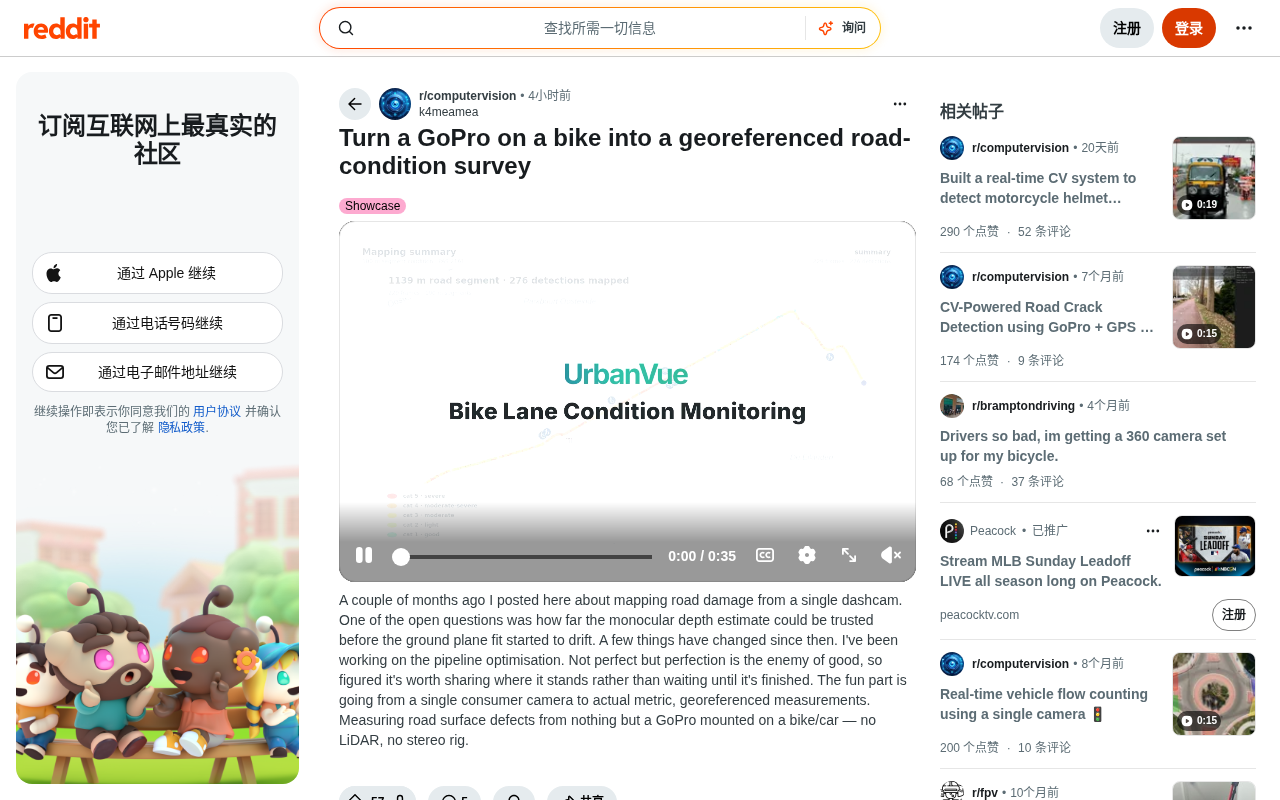
Road Damage Measurement Using Only a GoPro: A Low-Cost Inspection Solution with Monocular Cameras + AI
How can a single GoPro replace expensive LiDAR for road damage detection? This article analyzes core technologies like monocular depth estimation and ground plane fitting, exploring the feasibility and accuracy limits of georeferenced road surveying with consumer cameras.
Read more →

·2 min
Fine-Tuning PaliGemma 2 for Custom Object Detection: A Practical Guide from General to Specialized
Learn how to fine-tune Google's open-source PaliGemma 2 VLM for custom object detection. Covers model architecture, data formatting, fine-tuning strategies, and real-world value.
Read more →

·5 min
Practical Guide to Deploying Invoice Analysis AI: Model Selection and Architecture Pitfalls
How can enterprises process 50+ invoice formats with AI? This article analyzes visual document understanding approaches—multimodal LLMs, OCR+LLM, and hybrid architecture—with key decision advice for non-technical AI leads.
Read more →

·2 min
Toto-2.0: Multivariate Time Series Forecasting Enters the Foundation Model Scaling Era
Toto-2.0 is a major breakthrough in time series forecasting, applying LLM scaling philosophy to achieve zero-shot multivariate prediction across domains via unified representations.
Read more →