#zero-shot learning
121 related articles

·3 min
Zhipu GLM-5.2 Officially Launches | Full Breakdown of Anthropic's U.S. Export Control
Zhipu GLM-5.2 launches with tiered thinking and long-context support, while Anthropic faces rare U.S. export controls over AI security vulnerabilities. Full breakdown.
Read more →

·5 min
The Rise of Slow Content: A Tweet Sparks Reflection on the Attention Economy and Content Creation
A tweet about "live streaming reading a book aloud" reflects the deep dilemma of content creators in the attention economy. This article explores the revival of slow content, the irreplaceability of the human voice in the AI era, and lessons on content differentiation.
Read more →

·3 min
AI Agent Fully Automates TV Subtitle Generation: From Audio Extraction to Final Output in One Go
How does AI Agent automate TV subtitle workflows end-to-end? This demo covers audio extraction, ASR, timestamp sync, and line optimization — GLM5 processes a 26-min video in just 10 minutes.
Read more →

·4 min
Building an AI Agent Framework from Scratch: Deep Dive into Tool Calling, Memory, and Dual-Model Scheduling
Build an AI Agent from scratch — no frameworks. Deep dive into Function Call schema design, MCP remote mirroring, dual-model routing, and short-term memory management.
Read more →
The Anti-Slop Fiction Contest: How to …
·2 min
The Anti-Slop Fiction Contest: How to Make AI Write Like It Isn't AI
A fiction contest challenging AI writing 'slop' sparks industry reflection. Learn what AI slop is, why it happens, and how prompt engineering can help AI write with genuine soul.
Read more →
CLAP for Mechanical Fault Sound Recogn…
·2 min
CLAP for Mechanical Fault Sound Recognition: Principles, Challenges, and Industrial Applications
Explore how CLAP (Contrastive Language-Audio Pretraining) enables mechanical fault sound recognition via zero-shot classification, domain adaptation challenges, and industrial predictive maintenance applications.
Read more →
The Diffusion Model Revolution: The Ne…
·2 min
The Diffusion Model Revolution: The Next Frontier in AI Drug Discovery
Former Meta Llama lead Sergey Edunov joins Genesis Molecular AI, betting on diffusion models for drug discovery. PEARL achieves zero-shot top results on OpenBind.
Read more →

·2 min
AI Large Model Development Learning Path: A Complete Guide from Zero to Enterprise Projects
A complete learning roadmap for AI large model development — covering Transformer, Prompt Engineering, RAG, LangChain, Agent development, fine-tuning, and deployment.
Read more →

·7 min
AI Agent Practical Guide: From Content Generation to Enterprise Applications
A deep dive into AI Agent's two core directions: 2C content generation (text/images/video) and 2B enterprise applications (RAG/AutoGen/LLM integration). With real startup cases and practical methods.
Read more →

·7 min
Getting Started with LangGraph Multi-Agent Development: Architecture Analysis and Three Practical Case Studies
Learn LangGraph multi-agent development covering Supervisor and Collaboration architectures, with three hands-on projects: code assistant, prompt assistant, and WebRTC digital human.
Read more →

·7 min
Building an AI Agent from Scratch: Implementing Core Conversational Agent Features in Python
Learn AI Agent development from scratch. This tutorial covers LLMs and prompts, then builds a conversational agent in Python using the DeepSeek API with multi-turn dialogue and system prompts.
Read more →

·7 min
Complete Guide to OpenCode: Installation, Configuration, and Custom Commands in Practice
A systematic guide to OpenCode, the open-source terminal AI coding tool: installation methods (including WSL), model configuration, rules files, Agent types, custom commands, and MCP tool extensions.
Read more →

·7 min
GPT Image 2 Hands-On Review: In-Depth Evaluation of Text Layout and Character Breakdown Capabilities
GPT Image 2 hands-on review: near-flawless poster text layout and automatic character breakdown with Chinese annotations. Deep analysis of core capabilities, comparison with Nano Banana, and risk assessment for access channels.
Read more →

·7 min
Cost Optimization for AI Agent Fleets: Why an Expensive Commander + Cheap Workers Is More Cost-Effective
Deep analysis of multi-agent system cost optimization: why the 'expensive commander + cheap workers' combination outperforms all-frontier fleets, covering decision-intent cost logic and Sonnet 5 tokenizer traps.
Read more →

·6 min
The New Normal of AI Programming: How Autonomous Agent Development Is Reshaping Software Engineering
AI Agent autonomous programming is evolving from niche experiments to the industry default. This article analyzes the three stages of AI-assisted programming, its impact on developer skills, process restructuring, and key challenges.
Read more →
Developer's TTS API Selection Guide: O…
·3 min
Developer's TTS API Selection Guide: OpenAI vs. ElevenLabs vs. Grok vs. Cartesia
Deep comparison of TTS APIs: OpenAI, ElevenLabs, xAI Grok, and Cartesia — covering audio quality, latency, pricing, voice cloning policies, and AI Gateway architecture to help developers find the right fit.
Read more →

·4 min
Dify Local Deployment Tutorial: Build Your AI Application Development Platform from Scratch
Step-by-step guide to deploying Dify locally using BT Panel, covering VM setup, Ubuntu configuration, and Docker deployment for a private AI dev platform.
Read more →

·4 min
LangGraph.js Practical Guide: A Frontend Engineer's Path to AI Agent Development
A practical LangGraph.js guide for frontend engineers covering LangGraph vs LangChain comparison, workflow vs general-purpose agent types, and layered Agent architecture design.
Read more →

·3 min
Java AI Framework Comparison: A Selection Guide for Spring AI, LangChain4J, and More
In-depth comparison of four Java AI frameworks — Spring AI, LangChain4J, DJL, and JBot AI — covering features, use cases, and ecosystem compatibility to guide your selection.
Read more →
·3 min
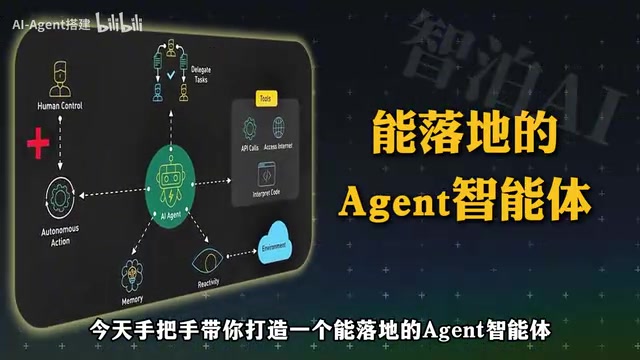
AI Agent Beginner's Guide: A Complete Four-Stage Learning Path
A complete learning path for AI Agent development from scratch, covering core theory, ReAct paradigm, multi-agent collaboration, Prompt optimization, and hands-on projects across four stages.
Read more →