#256K context window
107 related articles

·3 min
Laguna S 2.1: The Open-Source Coding Model That's 14x Smaller Yet Stronger
Poolside releases Laguna S 2.1, an open-source agentic coding model: 118B total params with only 8B active, scoring 40.4% on DeepSWE — ~4.5x DeepSeek V4 Pro Max. Supports 1M-token context, deployable on a single workstation.
Read more →

·3 min
Multi-Agent AI Paper Writing System: A Full-Stack Breakdown of FastAPI + Vue3
A deep dive into an AI paper writing system built with FastAPI + Vue3, covering multi-agent collaboration, RAG, streaming output, and full academic workflow automation.
Read more →
·7 min
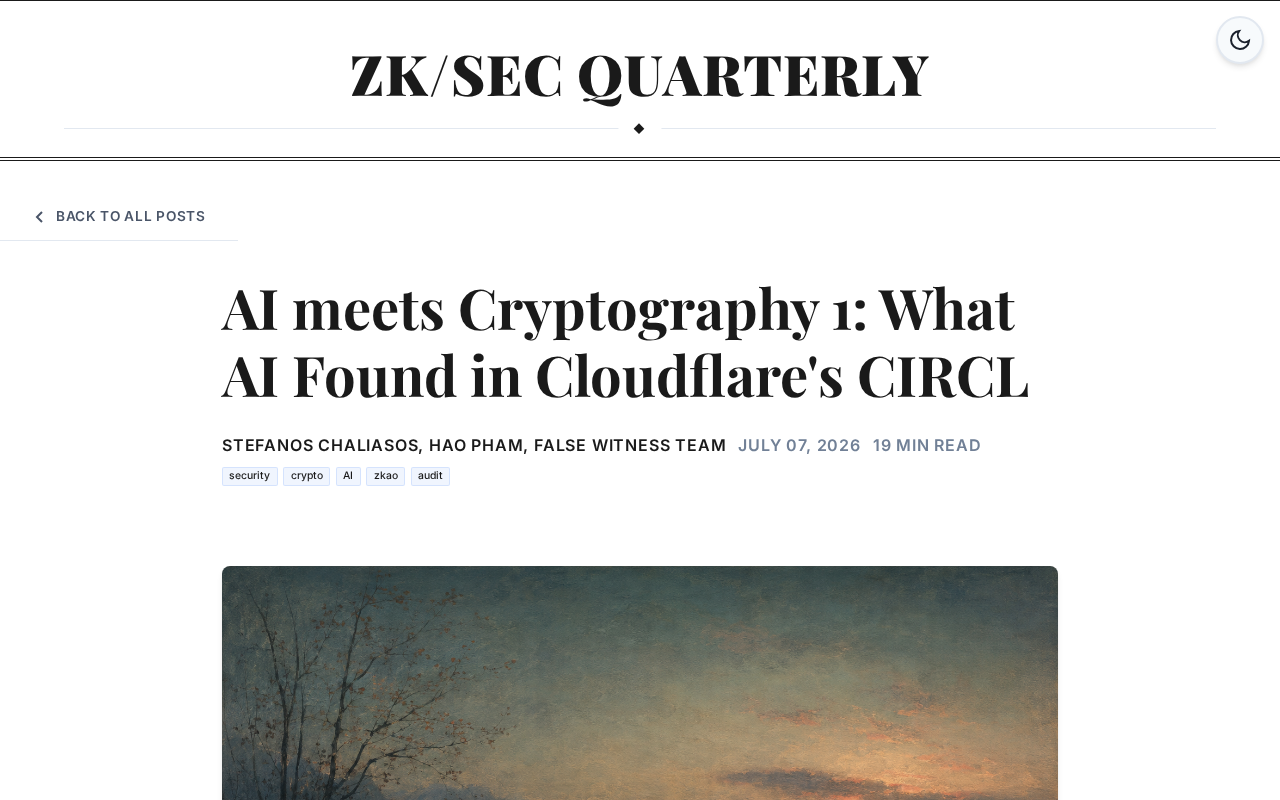
Auditing Cryptographic Libraries with AI: What We Found in Cloudflare's CIRCL
An in-depth look at using AI LLMs to audit Cloudflare's open-source cryptographic library CIRCL, covering constant-time detection, side-channel vulnerabilities, and human-AI collaboration.
Read more →

·2 min
Agent A1 Open Source: 35B MoE Local Inference Speed Test & Deployment Guide
Agent A1 is a 35B MoE open-source model from Shanghai's Intern Science, activating only 3B params. Hits 95 tok/s on M4 Mac Studio. Supports 256K context, tool calling, and free local deployment via Ollama.
Read more →

·4 min
UK Sovereign AI: How Cosine AI Is Punching Above Its Weight Against American Compute Dominance
Cosine AI founder reveals how the UK's first sovereign LLM is being built — from government compute grants and RL credit attribution to multi-agent orchestration and synthetic data pipelines.
Read more →

·3 min
Qwen's Six-Generation Evolution: A Complete Breakdown from Architecture Innovations to the Reasoning Race
From Qwen1 to Qwen3-2507: a complete breakdown of six generations of evolution over two years — GQA, MoE, GRPO, dynamic thinking, and the core shift from architecture to reasoning.
Read more →

·3 min
Enterprise RAG Knowledge Isolation in Practice: Physical Isolation vs. Adaptive Soft Boundaries
A deep dive into two enterprise RAG knowledge isolation strategies: physical isolation vs. adaptive soft boundaries — covering metadata tagging, dynamic user-profile filtering, hybrid retrieval architecture, and data quality best practices.
Read more →

·3 min
Agent Infinite Loop Engineering Guide: Detection, Breaking, and Root Cause Analysis
How to handle Agent infinite loops? This guide covers three-layer loop detection, four strategy-switching techniques, root cause analysis, and multi-layer fallbacks for building stable, production-grade Agent systems.
Read more →

·3 min
Bernini Tile-Based Generation: An Engineered Approach to Video Super-Resolution in ComfyUI
Bernini is a ComfyUI video super-resolution node package using Tile Split/Select/Merge to solve seams, drift, and VRAM overflow. Benchmarked at 325s for 39 frames at 1920×1080.
Read more →
Kimi CLI Open-Sourced: Moonshot AI's C…
·2 min
Kimi CLI Open-Sourced: Moonshot AI's Command-Line AI Coding Agent
Moonshot AI open-sources Kimi CLI, a command-line AI coding agent for code generation, debugging & refactoring. Hits 9K+ GitHub Stars, competing with Claude Code and Gemini CLI.
Read more →

·4 min
AMD Ryzen AI Halo Real-World Test: Can a Non-Programmer Use Local AI to Write Code?
A non-programmer tests AMD Ryzen AI Halo by deploying local AI models to tackle a real dev task. After testing Ollama and Qwen3, the verdict: AI amplifies developers, it doesn't replace them.
Read more →

·2 min
Repaint: Free, Open-Source Offline Painting App with 16-Bit Color and AI Integration
Repaint is a free, open-source, fully offline cross-platform digital painting app built with C/C++, Raylib, and ImGui, featuring 16-bit color, modular brushes, non-destructive layers, and offline Stable Diffusion AI integration.
Read more →

·2 min
Running Qwen 122B on 8GB VRAM: A Complete Guide to Quantized Local Deployment
A Bilibili creator ran Qwen 122B with 256K context on just 8GB VRAM + 64GB RAM using llama.cpp. Full breakdown of quantization, deployment params, performance, and cost-effective alternatives.
Read more →

·3 min
Bonsai-27B Extreme Quantization: Running 1-bit LLMs on Consumer Hardware
Bonsai-27B supports binary/ternary extreme quantization for 27B LLMs running on 8GB VRAM. Covers llama.cpp upstream progress, RTX 4060 benchmarks (30 t/s), and real-world limitations.
Read more →

·2 min
A College Student Built a Cross-Model Persistent Memory System with Ollama: Decoupled Architecture + AES-256 Encryption
A college student built a ~40K-line Mac app around Ollama featuring a decoupled persistent memory system: standalone embeddings, local vector index, self-healing, AES-256 vault, and local voice mode.
Read more →
·3 min
Tencent Hunyuan HY3 In-Depth Review: How a Small Open-Source Model Punches Above Its Weight
In-depth analysis of Tencent's open-source reasoning model Hunyuan HY3: MoE architecture, 295B total params, Apache 2.0 license, coding & front-end rivaling DeepSeek V4 Pro at 1/35 the cost.
Read more →

·4 min
In-Depth Comparison of 4 AI Coding Tools: Cursor, Claude Code, Codex, and Opencode — Which Is Worth Buying?
A real-world review of subscribing to Cursor, Claude Code, Codex, and Opencode simultaneously. Compare quotas, model capability, and value to find your ideal AI coding subscription.
Read more →
·6 min
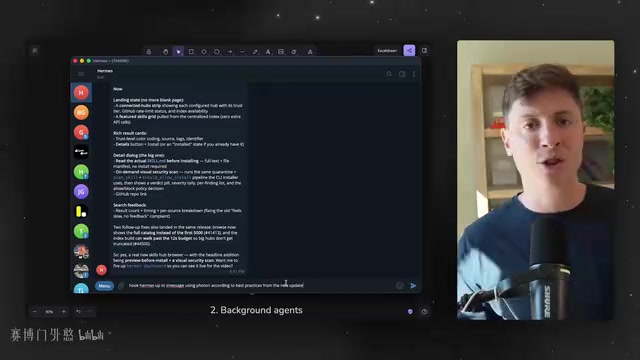
Hands-On With Hermes Agent's Eight Major Updates: A Complete Guide to AI Automation and Self-Evolution
The Hermes Agent gets a major upgrade with eight new features: native iMessage, parallel background sub-agents, Unreal Engine MCP support, a self-evolving Skill Hub, and more. A hands-on breakdown of the core changes and their real impact on personal AI automation workflows.
Read more →

·4 min
No MLP or Attention Required: How Point-Attractor Dynamics Learn Word Embeddings
A minimalist dynamical system experiment: without MLP, Transformer, or attention layers, point-attractor dynamics driven purely by co-occurrence pressure learns semantic similarity on SimLex-999.
Read more →

·4 min
AMD Ryzen AI Halo Hands-On: Can x86 Architecture Challenge NVIDIA's DGX Spark?
In-depth review of the AMD Ryzen AI Halo mini AI box: powered by the Ryzen AI Max Plus 395 (Strix Halo) chip with 128GB unified memory, priced at $4,000. Compared against NVIDIA's DGX Spark across token generation, prefill speed, and x86 advantages.
Read more →