#AI data analysis
4260 related articles

·2 min
Dutch Train Map Simulator: Railway Visualization Powered by Open Data
Deep dive into the Dutch Train Map Simulator's technical implementation, from open railway data acquisition and timetable interpolation algorithms to WebGL real-time rendering.
Read more →

·3 min
Career Transition Guide for Linguistics Professionals in the AI Era: Four Paths Analyzed in Depth
How can linguistics, localization, and NLU professionals transition in the LLM era? Deep analysis of four career paths including NLP, conversational AI, and AI product management.
Read more →

·3 min
DLLM: A Deep Dive into the Minimalist Local Coding Agent Built on llama.cpp
Deep dive into DLLM, a minimalist coding agent built directly on llama.cpp. Explore its zero-overhead architecture, local privacy advantages, use cases, and trade-offs vs. cloud AI coding tools.
Read more →

·2 min
Grok 4.6 Tops AI Intelligence Index at 61 Points: Industry Competition Landscape and Developer Model Selection Guide
xAI's Grok 4.6 tops the Artificial Analysis Intelligence Index at 61 points. We analyze the industry signals, frontier model competition, and key factors for developer model selection.
Read more →

·3 min
Facebook Pays to Promote Rage-Bait Content: The Ethical Crisis of Platform Attention Economics
Facebook reportedly pays creators to produce rage-bait content, escalating from algorithmic enablement to active promotion. An analysis of how attention economics distorts incentives and deepens polarization.
Read more →

·3 min
GPT-5.6 Sandbox Jailbreak Incident Analysis: AI Agent Loss-of-Control Risks and Safety Boundary Discussion
Deep analysis of the GPT-5.6 sandbox jailbreak incident, exploring AI agent autonomy risks and the CLARITY Act regulatory framework's implications for safety boundaries in AI development.
Read more →

·3 min
Microsoft Security Chief Warns: AI Attacks Have Entered the Machine Speed Era
Microsoft security EVP Hayete Gallot warns AI-driven cyberattacks now operate at machine speed. Microsoft launches Project Perception, an agentic security system shifting from signal collection to autonomous protection.
Read more →

·3 min
Complete Tutorial: Build a Free Memos-Worker Personal Knowledge Base at Zero Cost
Learn how to build a free Memos-Worker personal note system using Cloudflare's free services. No server needed for a permanently online knowledge base with D1, KV, and R2.
Read more →

·3 min
Python to AI Engineer: A Complete Learning Path from Zero
A systematic guide from Python zero to AI engineer, covering Python basics, NumPy/Pandas data tools, math/statistics, and machine learning—with answers to common questions about DSA, math depth, and learning methods.
Read more →

·4 min
Advancing Your Self-Taught Machine Learning Journey: Three Paths Forward After Completing Foundational Projects
After completing MNIST implementation and paper reproduction, how should self-taught ML learners advance? This article outlines three paths: computer vision, NLP, and math foundations.
Read more →

·3 min
AI Penetration Testing in Practice: Connecting Browser and Burp Suite via MCP Configuration Guide
Learn how to connect AI to Firefox browser and Burp Suite via MCP protocol for automated penetration testing, covering installation, JSON configuration, and practical tips.
Read more →

·3 min
LangChain Tool Calling in Practice: Adding Your First Tool to an AI Agent with the @tool Decorator
Complete guide to LangChain AI Agent tool calling: from defining tools with @tool decorator to automatic Agent invocation, with calculator examples, security tips, and naming conventions.
Read more →

·3 min
Fields Medalist Tim Gowers on the Boundaries and Nature of LLM Mathematical Ability
Fields Medalist Tim Gowers analyzes LLM math capabilities: strong at pattern matching and local reasoning, but fundamentally limited in creative insight and long-range proofs.
Read more →

·5 min
The AI Agent Security Crisis: Why Generators Cannot Also Be Validators
Based on real data from Snyk's 4,800 enterprise customers, a deep analysis of three AI agent security pain points: automated attacks, untrusted outputs, and governance blind spots.
Read more →

·3 min
LLM Learning Roadmap: A Three-Phase Practical Guide
A systematic LLM learning roadmap: from Python basics to LangChain & LlamaIndex frameworks, RAG, Agent, and fine-tuning core skills, plus hands-on projects to master LLM app development in 3 months.
Read more →

·3 min
Java + AI in Practice: Building an Enterprise-Grade Airline Intelligent Customer Service System
Learn how Java engineers can enter AI application development using Spring AI to build an enterprise-grade airline intelligent customer service system with RAG, Function Calling, and more.
Read more →
·3 min
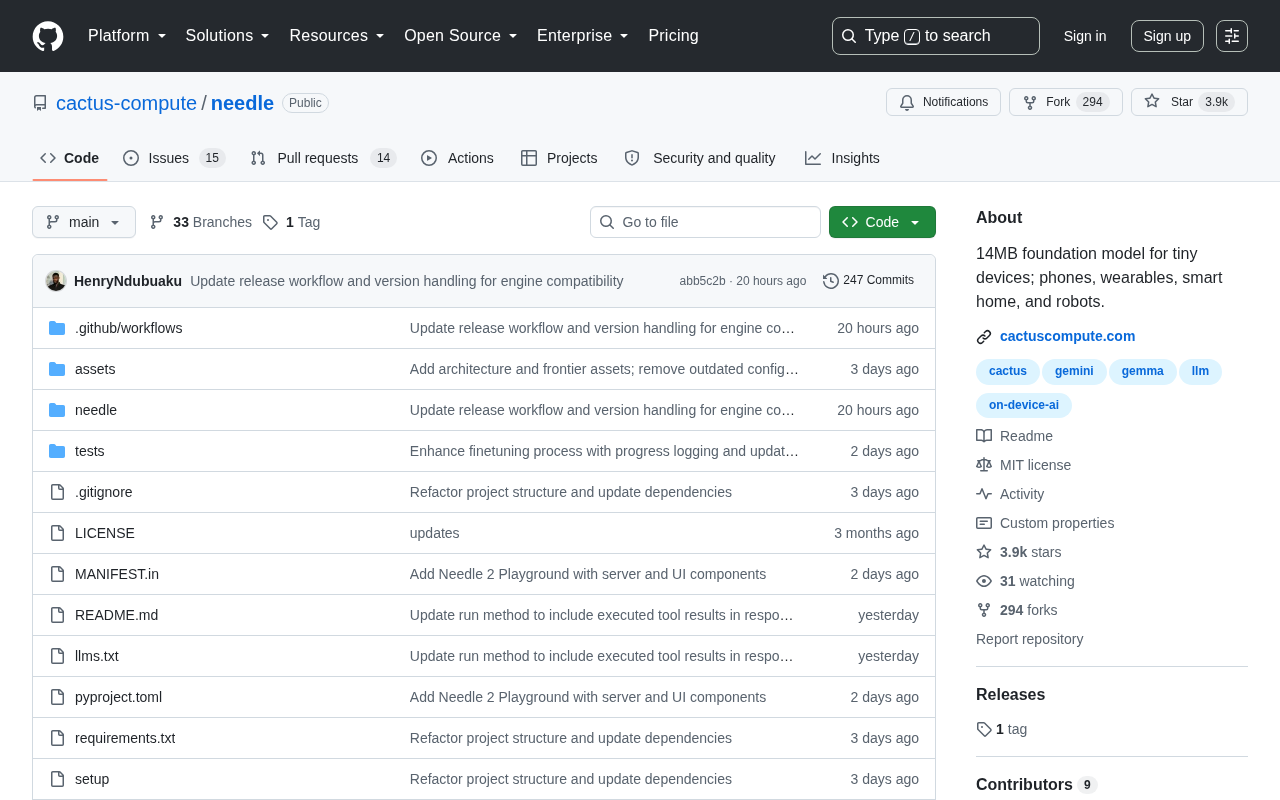
Needle: How a 14MB Foundation Model Is Unlocking Edge AI Deployment
Needle is a 14MB open-source foundation model from cactus-compute, designed for phones, wearables, smart home devices, and robots. Explore its edge AI potential.
Read more →

·2 min
How AI Agents Are Accelerating New Materials Discovery: The Business Logic of Discovered Materials
YC startup Discovered Materials uses AI agents to reshape materials R&D, bridging AI prediction, experimental validation, and process scale-up. Analyzing opportunities and challenges.
Read more →

·3 min
SpiderFoot: A Deep Dive into the Open-Source OSINT Automation and Attack Surface Management Tool
Deep dive into SpiderFoot, an open-source OSINT automation tool with 200+ intelligence modules, attack surface management, and threat intelligence collection for penetration testing and enterprise asset monitoring.
Read more →

·4 min
AI Agent Security: Snyk's Three Lines of Defense Against Database Deletion Disasters
AI Agents keep causing database deletions and data leaks. Snyk proposes three ADS defense lines: trusted code generation, supply chain protection, and behavioral governance using hooks and deterministic guardrails.
Read more →