#AI programming observability
203 related articles
GitHub Daily · July 17: AI Coding Infr…
·3 min
GitHub Daily · July 17: AI Coding Infrastructure Explodes — From Context Graphs to Vector Indexes
AI coding infrastructure explodes on GitHub: context management, code graphs, and vector indexes become the new battleground as the community shifts from apps to underlying capabilities.
Read more →

·3 min
AI Code Getting Worse with Every Fix? A Three-Layer Closed-Loop Engineering Methodology to Break the Cycle
AI code spiraling out of control? This article breaks down a three-layer engineering system — Prompt rules, Skill workflows, and Harness feedback loops — with real-world results showing pass rates rising from 70% to 98%.
Read more →
Smart Proxy: The Key Architecture for …
·3 min
Smart Proxy: The Key Architecture for Running AI Coding Agents Safely and Autonomously
Too much AI permission is risky; too little kills productivity. A smart proxy acts as a controllable middleware layer — intercepting, auditing, and policy-gating AI agent actions in tools like Claude Code and Cursor for safe autonomous operation.
Read more →

·2 min
Spring AI in Action: A Complete Guide to LLM Integration for Java Developers
Spring AI is Java's answer to LangChain — offering unified multi-model APIs, structured output, RAG, Tool Calling, and MCP protocol support for enterprise LLM development.
Read more →
Juggler: An Open-Source GUI Coding Age…
·2 min
Juggler: An Open-Source GUI Coding Agent Built by the Creator of JUCE
Juggler is an open-source GUI coding agent built by the creator of JUCE. It offers a graphical interface for managing AI coding workflows with transparency and full customization.
Read more →
·3 min
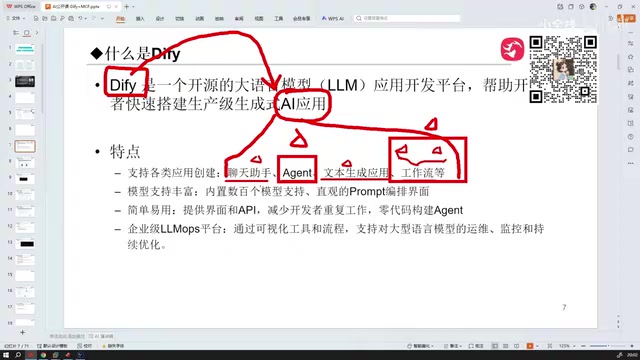
Getting Started with Dify: A Complete Guide to Building Enterprise-Grade AI Apps with Low-Code
A complete guide to Dify, the low-code AI app platform: five app types, multi-model setup, Docker deployment, and enterprise data security. Build LLM-powered workflows and Agents at minimal cost.
Read more →
PlanWright: A Control Plane and Multi-…
·2 min
PlanWright: A Control Plane and Multi-Agent Orchestration Layer for AI Coding Agents
PlanWright is a control plane for AI coding agents, drawing on Kubernetes orchestration principles to tackle multi-agent task assignment, state tracking, and collaboration conflicts.
Read more →

·3 min
Programmer to AI Engineer: You're Already 80% There — Here Are the 6 Skills You're Missing
Programmers transitioning to AI engineering aren't starting from scratch. Learn the 6 core skills — LLM APIs, RAG, prompt engineering, LLMOps — needed to make the leap.
Read more →

·4 min
LangChain V1.3 in Practice: Master AI Engineering Thinking and Break Free from Tool Dependency
LangChain V1.3 course deep-dive: why engineering thinking beats tool-chasing. Covers RAG accuracy myths, Token cost control, and LangChain/LangGraph/Deep Agent breakdowns.
Read more →

·3 min
Spring AI 2.0 Deep Dive: A Java Developer's Guide to LLM Application Development
A deep dive into Spring AI 2.0: provider-agnostic APIs, RAG with vector databases, and how Java developers can build LLM apps using the Spring ecosystem.
Read more →

·3 min
LangChain V1.3 Hands-On Tutorial: A Complete Breakdown of RAG, Multi-Agents, and Engineering Mindset
An in-depth look at LangChain V1.3's core philosophy: from RAG to multi-agent workflows. Master LangGraph, Chain, and DeepAgent, learn token control and Human-in-the-loop, and become a true master of AI app development.
Read more →

·4 min
Codex Plans, DeepSeek Executes: A Practical Guide to Multi-Model Collaboration for Saving Tokens
AI programming burning through Tokens too fast? This guide covers the open-source Hand of Labor project's multi-model approach: Codex plans, DeepSeek executes—cutting AI coding costs while boosting output quality.
Read more →

·4 min
MCP Protocol Deep Dive: Its Relationship with Function Calling and Agents, Plus a Practical Guide
Deep dive into MCP (Model Context Protocol): clarifying the three-layer relationship between MCP, Function Calling, and Agents, covering protocol roles, call flows, transport choices, and production security for AI developers.
Read more →

·3 min
Deep Dive into gRPC: Building High-Performance Microservice Communication with HTTP/2 + Protobuf
An in-depth analysis of gRPC's core architecture: HTTP/2 multiplexing, Protocol Buffers serialization, and unified multi-language implementation, covering microservice communication and cloud-native integration.
Read more →

·4 min
Coze in Practice: A Complete Guide to Building Multi-Agent Collaboration Teams
A systematic guide to Coze's positioning and capabilities, covering Agent-building platform categories, Skill modules, workflow orchestration, and multi-Agent team building.
Read more →

·6 min
A Deep Dive into AI Agent Harnesses: The Core Engineering Behind Agent Frameworks
What is an AI Agent's harness? This article systematically dissects the core components of agent frameworks: context management, tool use, control loops, and caching strategies—revealing why the same model performs so differently across harnesses.
Read more →

·5 min
GPT-5.6 Launches: Comprehensive Upgrades to ChatGPT Work, Sites, and Desktop Client
OpenAI releases the GPT-5.6 model family, launching enterprise-focused ChatGPT Work, one-click ChatGPT Sites, and a major desktop client upgrade, with coding now ahead of rivals. Meta, Google, and Kimi follow intensively.
Read more →

·5 min
Building DeepSeek Agents and Knowledge Bases from Scratch: A Practical Guide to Commercial Deployment
A systematic guide to the full DeepSeek Agent development process: covering prompt engineering, the ReAct framework, workflow orchestration, local deployment, and business requirement breakdown for commercial-ready AI Agents.
Read more →

·2 min
Claude Code Templates: A CLI Guide for One-Click Configuration and Real-Time Monitoring
davila7/claude-code-templates is an open-source CLI tool built for Claude Code, supporting template-based configuration and usage monitoring, with nearly 30K GitHub stars. Learn its core features and how to get started.
Read more →

·5 min
Multi-Model Tiered Deployment: Is an AI Gateway Worth Adopting?
More teams are adopting multi-model tiered scheduling. AI gateways solve cross-vendor API management, automatic fallback, and cost tracking — but add a new abstraction layer. Learn when a gateway is worth it.
Read more →