#APA
9696 related articles

·7 min
Building AI Agents in Rust: The GAIA Benchmark Reveals the Capability Ceiling of Large Models
A Rust-based AI Agent evaluation framework uses the GAIA benchmark to compare GPT, Claude, DeepSeek and other models with no tools. Results show pure LLMs cap at ~25% accuracy, revealing why tool use is decisive for Agents.
Read more →

·6 min
AI Agent Development in Go: A Hands-On Guide to ByteDance's Eino Framework and Its Seven Core Capabilities
Build production-grade AI Agents with a pure Go stack using ByteDance's Eino framework. A deep dive into seven core capabilities: multi-Agent orchestration, long-task execution, command approval, RAG, MCP, Skills, and database reporting.
Read more →
·6 min
GPT-5.6 Sol Limited Preview: The Safety Boundaries Behind AI's Capability Expansion
OpenAI's flagship GPT-5.6 advances on three fronts—Sol, Kara, Luna tiered rollout; ByteDance CGN 5.0 Pro and Meta Muse push image generation toward controllable workflows; AI coding agents expose new supply chain risks.
Read more →

·5 min
ECC: An Agent Enhancement Framework for AI Coding Assistants — Five Core Capabilities Explained
ECC is an agent optimization framework for AI coding assistants like Claude Code, Cursor, and Codex, enhancing them with skills, memory, security, and research-first development capabilities.
Read more →

·4 min
The Three Eras of AI Agents: The Capability Leap from Tool Calling to Autonomous Orchestration
An in-depth look at the three core eras of AI Agent development: reliable tool calling, coherent long-task execution, and autonomous orchestration with metacognition. Helps developers match tasks to model capabilities.
Read more →

·2 min
Agent Skills: Bringing Production-Grade Engineering Capabilities to AI Coding Agents
Google engineer Addy Osmani's open-source project agent-skills (76k+ GitHub stars) injects production-grade engineering skills into AI coding agents, covering performance, security, and code quality.
Read more →

·7 min
GitHub Copilot in Practice: The Capability Boundaries of AI Programming and the Irreplaceable Value of Humans
A developer's real case of building a dental clinic management system with GitHub Copilot and Azure SQL, revealing AI coding limits in cloud security config and how Human-in-the-Loop breaks through.
Read more →

·6 min
Is AI Really Smart? The Future Directions and Capability Boundaries of Next-Generation Artificial Intelligence
Are large language models truly intelligent? This article analyzes core AI limitations — pattern matching, hallucinations, reasoning deficits — and explores next-gen directions like inference-time compute, neuro-symbolic AI, and embodied intelligence.
Read more →

·3 min
Microsoft SQL Major Upgrade: AI Capabilities, Security Enhancements, and Fabric Integration — A Deep Dive
Microsoft SQL team's major updates: Azure SQL adds AI embeddings and dynamic data masking, Fabric SQL gets a Migration Assistant and Fabric Apps, SQL Server CU5 brings memory improvements, SSMS adds a SQL Formatter and Agent mode, and DP-800 certification is now open.
Read more →
·6 min
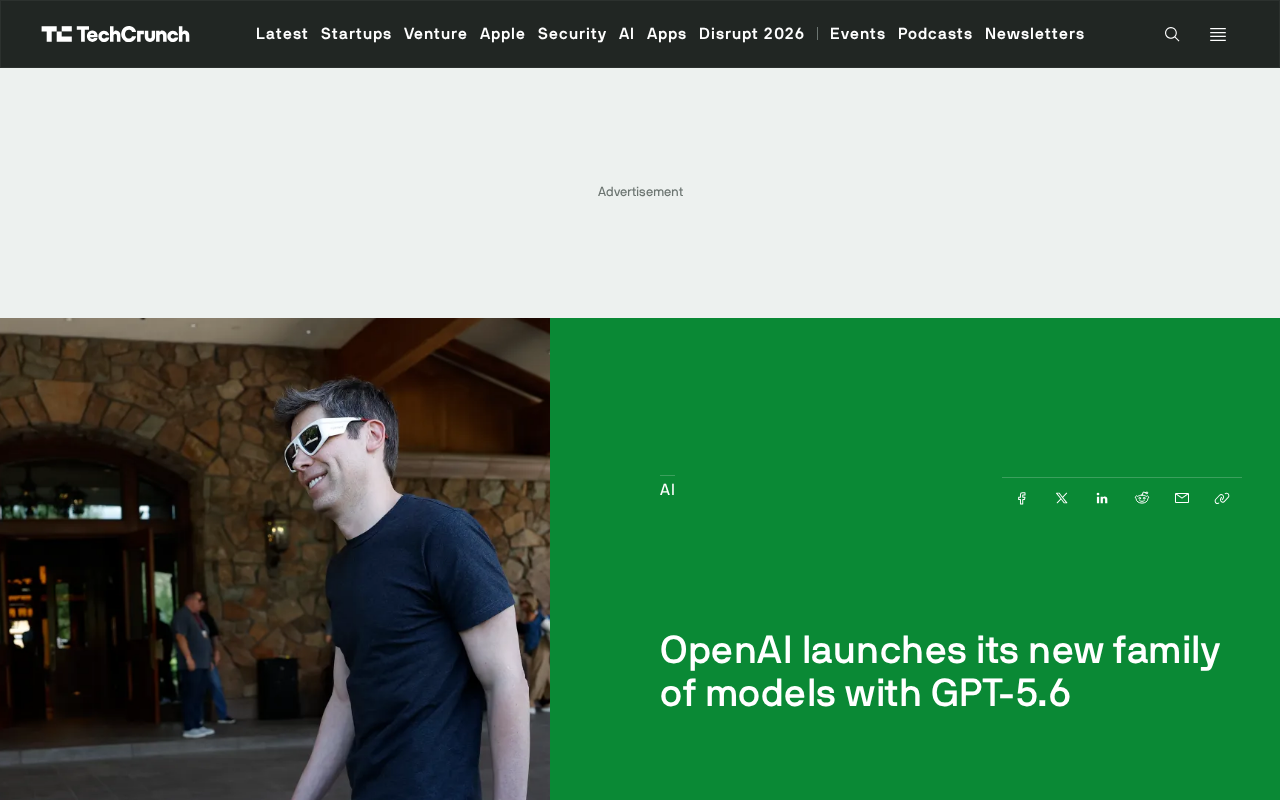
OpenAI Releases GPT-5.6: Cybersecurity Capabilities Take Center Stage
OpenAI launches the GPT-5.6 model family with cybersecurity as its biggest highlight. A deep analysis of GPT-5.6's differentiation, double-edged-sword effect, and enterprise strategy.
Read more →

·3 min
AI-Powered Abaqus Simulation: With vs. Without Skills — The Results Are Worlds Apart
No Skills: AI gets units wrong, assembly fails, zero results. With Skills: AI generates batch stress contour plots end-to-end. A deep dive into the general model + domain skill methodology for AI-driven CAE simulation.
Read more →

·7 min
GLM-5.2 Released: Open-Source Coding Capability Approaches Closed-Source Flagships for the First Time
GLM-5.2 tops open-weight models in coding with a 74.4 Frontiers-WE score, beating GPT-5.5. Its MIT license enables local deployment, and the gap with closed-source flagships is closing fast.
Read more →

·7 min
Tencent DiscoBench: The First Benchmark for Evaluating LLM Search Agents' Ambiguity Clarification Capabilities
Tencent Hunyuan and Tsinghua jointly release DiscoBench, the first benchmark evaluating search agents' dynamic ambiguity clarification. Covering 463 ambiguity instances across 11 domains, it reveals real weaknesses of mainstream LLMs.
Read more →
·6 min
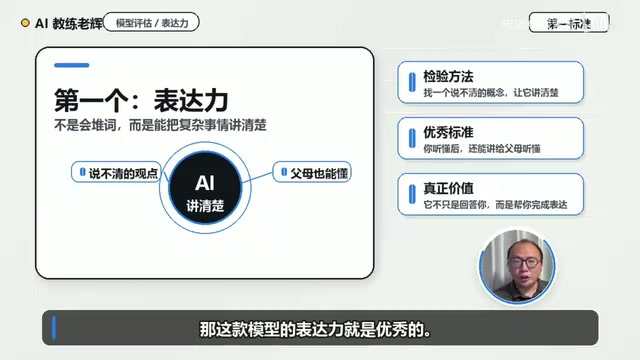
Forget Benchmark Scores! Four Practical Standards to Judge an LLM's Real Capability
High benchmark scores don't mean an LLM is actually useful. This article shares four field-tested standards—expressiveness, insight, cognitive depth, and problem-solving—to help you find the AI that truly fits you.
Read more →

·5 min
GPT-5.6 Explained: Sol, Terra & Luna — Tiered Positioning and Capability Comparison
OpenAI releases the GPT-5.6 series with flagship Sol, balanced Terra, and lightweight Luna. An in-depth look at each model's positioning, use cases, pricing, and the multi-agent Ultra architecture.
Read more →

·6 min
Skill vs MCP: The Essential Difference Between Two Types of AI Agent Capabilities and How They Work Together
Skill and MCP are two core concepts for building AI Agents. Skill encapsulates task execution methodology, while MCP provides a standardized protocol for connecting external tools. This article breaks down their core differences, abstraction levels, and collaboration.
Read more →

·3 min
GPT-5.6 Sol Ultra Rumors Decoded: How Codex's Programming Capabilities Could Evolve
Rumors of GPT-5.6 Sol Ultra integrating into Codex are circulating in tech communities, but OpenAI hasn't confirmed anything. We analyze the real trends: context understanding, reasoning, and agentic workflows.
Read more →

·6 min
Made by Google Event Confirmed: New Pixel Phones with AI Capabilities Coming Soon
Google confirms the Made by Google hardware event in NYC, unveiling next-gen Pixel phones with new Tensor chips and deep Gemini AI integration. On-device AI gets a major upgrade.
Read more →

·4 min
Microsoft Fixes Windows 11 Storage Bloat Bug Caused by Runaway CapabilityAccessManager Database File
Microsoft's optional update KB5095093 fixes a Windows 11 bug where the CapabilityAccessManager.db-wal SQLite WAL file bloats to several GBs due to a failed checkpoint mechanism.
Read more →

·5 min
Agent Skills Specification: Standardization and Reusability Practices for AI Agent Capabilities
The agentskills open-source project aims to solve AI Agent ecosystem fragmentation through standardized skill specifications enabling portable, composable, and reusable agent capabilities.
Read more →