#Alibaba AI ban
223 related articles

·4 min
The Claude Code Covert Tagging Scandal: The AI Trust Crisis Behind Alibaba's Ban
Anthropic's Claude Code is accused of covert tagging via Unicode punctuation encoding, prompting Alibaba to ban its use. A deep dive into the reverse-engineering findings, distillation allegations, and the AI-era battle over compute monopoly and developers' right to know.
Read more →

·3 min
Alibaba Bans Claude Code Company-Wide: Data Security Concerns Around AI Coding Tools
Alibaba has banned employees from using Claude Code company-wide, shifting sharply from encouragement to prohibition. An in-depth look at data security risks, privacy compliance dilemmas, and the domestic AI alternative trend.
Read more →

·6 min
Alibaba Bans Claude Code: The Battle Over AI Coding Tool Security and Data Sovereignty
Alibaba bans Claude Code over security risks, sparking tech community debate. An in-depth analysis of data leakage risks with cloud AI coding tools and the rise of local AI deployment.
Read more →
·5 min
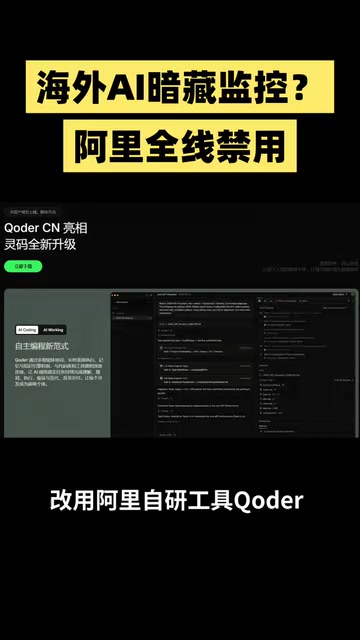
Deep Analysis of the Alibaba-Claude Ban: The Battle for Autonomous Control of AI Coding Tools
Alibaba bans all Anthropic products including Claude Code, while ByteDance and Tencent switch to in-house tools. A deep dive into the security logic and industry trends behind China's push for autonomous AI coding tools.
Read more →

·5 min
Alibaba Bans Claude Code: Invisible Fingerprints and the AI Tool Trust Crisis
Alibaba has banned Claude Code as high-risk software. Reverse engineering revealed a covert environment-identification mechanism hiding user fingerprints in punctuation via prompt steganography. A deep dive into the incident and AI tool trust.
Read more →

·3 min
Alibaba's Claude Ban Explained: The Truth Behind Three Converging Timelines
Alibaba banned Claude company-wide, flagging Claude Code as high-risk. Three converging timelines — Anthropic's distillation attack allegations, the 1260H list, and Claude Code's hidden detection system — reveal the geopolitical logic behind the ban.
Read more →

·3 min
Alibaba's Claude Ban Explained: The Full Story Behind the US-China AI Distillation War
Alibaba banned Claude Code after Anthropic accused it of the largest-ever model distillation attack. We break down what distillation is, Claude's hidden tracking, and how this became a US-China national security dispute.
Read more →

·6 min
Alibaba Bans Claude Code: The Enterprise Security Red Line for AI Coding Tools
In-depth analysis of Alibaba's comprehensive internal ban on Claude Code: from the hidden-marker controversy and Anthropic's regional-restriction stance to five core questions of enterprise AI coding tool security admission.
Read more →

·4 min
Alibaba Plans to Ban Claude Code: The Battle Between Backdoor Risks and Enterprise AI Security
Alibaba reportedly plans to ban Claude Code internally over backdoor and data leakage concerns. A deep dive into enterprise AI security, supply chain trust issues, and what it takes for AI tools to win enterprise adoption.
Read more →

·2 min
Anthropic's Call to Restrict Open-Source Models Sparks Outrage: Safety or Monopoly?
Anthropic CEO's call to restrict "dangerous capabilities" in open-source AI models sparks fierce backlash. Developers question double standards and fear monopoly disguised as safety.
Read more →

·5 min
July 24 AI Daily Brief: Flux 3 Multimodal Release, Kimi K3 Lags in Testing, Qwen Tops TTS Rankings
July 24 AI news: Black Forest Labs launches Flux 3 multimodal model, Kimi K3 lags in US-UK gov tests, Alibaba Qwen tops TTS rankings, Etched raises $300M, AMD unveils MI430X.
Read more →

·3 min
Learning AI Large Language Models: A Complete Roadmap from Beginner to Practitioner
A systematic breakdown of the AI LLM learning roadmap covering prompt engineering, AI Agent development, RAG knowledge bases, model fine-tuning, and hands-on projects for beginners.
Read more →

·3 min
Backend Developer Transition to AI/LLM: 4 Core Skills and a Practical Learning Roadmap
Complete guide for backend developers transitioning to AI/LLM engineering. Covers the 4 core skills—Python, RAG, Fine-tuning, and Agents—with a phased learning roadmap and practical project advice.
Read more →

·3 min
Spring AI Explained: Unified API, RAG, and Enterprise AI Development Guide
Deep dive into Spring AI framework's core features including provider-agnostic unified API abstraction, RAG retrieval-augmented generation, and structured output to help Java developers build enterprise AI apps.
Read more →

·3 min
Spring AI Explained: Unified API, RAG, and Enterprise AI Development Practical Guide
Deep dive into Spring AI framework's core features including provider-agnostic unified API abstraction, RAG retrieval-augmented generation, and structured output to help Java developers build enterprise AI apps.
Read more →

·3 min
Chinese Open-Source AI Conquers Silicon Valley: The Industry Upheaval Behind a 58% Compute Share
Chinese open-source AI models surged from under 10% to 58% of U.S. AI consumption. Kimi K3, DeepSeek, and Qwen are reshaping AI cost structures as DoorDash, Airbnb, and other Silicon Valley giants adopt them at scale.
Read more →

·3 min
Kimi K3 Launch: Performance Rivaling Claude at One-Third the Price, US-China AI Gap Narrows to 3 Months
Moonshot AI launches Kimi K3 reasoning model with performance rivaling Claude and OpenAI's top models at one-third the price. The US-China AI gap narrows from 6-12 months to just 3 months.
Read more →

·3 min
Open Source vs. Closed Source: Who Will Win the US-China AI Battle?
Chinese open-source models DeepSeek and Kimi K3 are challenging OpenAI's closed-source dominance. Analyzing the business logic, chip ecosystems, and US-China strategic dynamics behind the open vs. closed AI debate.
Read more →

·4 min
Jensen Huang Joins 50 Silicon Valley Giants to Champion Open-Source Models: How Capital Logic Overrides Political Correctness
Jensen Huang's first-ever tweet backs open-weight AI. 50 Silicon Valley giants oppose banning Chinese open-source models. Deep analysis of the interests behind closed vs. open AI ecosystems.
Read more →

·3 min
Kimi K3 Launches on Ollama Cloud: Free Tier, User Experience, and Developer Guide
Kimi K3 officially launches on Ollama Cloud as an "extra high usage" model. This guide covers free tier quotas, cloud inference experience, technical advantages, and how developers can seamlessly call this high-performance LLM.
Read more →