#Anthropic
340 related articles

Anthropic Accused of Training Claude on Stanford Professor's Books: Copyright Controversy Reignites
Anthropic is accused of training Claude on Stanford professors' books without authorization, reigniting AI training data copyright disputes. This article analyzes the background, academic content copyright dilemmas, and implications for the AI industry.

Giving Chat Feedback Sends Your Data to Anthropic?
A Hacker News discussion suggests that submitting feedback on Anthropic's chat products may send conversation data to the company. This article analyzes the data flow of the feedback mechanism, community disagreements, and practical usage advice to help you make informed decisions before sharing.

Anthropic Files IPO Prospectus: The Risks and Ambitions Behind an AI Giant's Public Listing
Anthropic files its IPO prospectus, with about 100 of 335 pages focused on risk disclosure. We unpack the structural signals, what it means for the foundation model industry, and the parallel topics of smarter power grids and exercise pills.

Anthropic Files S-1 for IPO: What Developers Need to Know
Anthropic files S-1 to list on Nasdaq as ANT, disclosing revenue, losses, and API-user risk factors. Here's what the filing means for developers and the tech stack changes to make Monday.

Anthropic IPO Filing Revealed: Five Surprising Details
Anthropic files a 300+ page S-1 with the SEC. This article highlights five notable details: executive pay structure, how IPO proceeds split between compute and safety research, risk factor disclosure, and governance and voting arrangements under its public benefit corporation structure—analyzing the trade-offs between mission and capital as the AI lab goes public.

Anthropic's IPO Prospectus Revealed: Who Is This Company Really?
Anthropic files a 335-page IPO prospectus, with about 100 pages focused on risk. This article analyzes how the document reveals the identity tension of this AI company: the narrative contest between safety lab and commercial giant, and its signal significance for the AI industry's IPO wave.

Anthropic IPO Filing Reveals Enterprise Customer Retention Strategy
Anthropic's S-1 filing reveals that over half of enterprise customers paying $100K+ use both the Claude platform and first-party apps—Amazon-style cross-selling to boost retention.

Anthropic Officially Files S-1, Initiating IPO Process
Anthropic has filed an S-1 registration statement with the SEC to list on Nasdaq under ticker ANT. This article explains the S-1 filing's key details, the PBC structure, and its potential impact on the AI competitive landscape.

Anthropic Reportedly Launches Largest IPO in History, Retail Investors Can Buy Shares but Get No Voting Rights
Reddit leak claims Anthropic has launched the largest IPO in history, where retail investors can buy shares but have no voting rights. This article analyzes the AI capital frenzy behind the news, the pros and cons of non-voting equity structures, and the potential impact on the AI investment landscape, while noting the leak has not been officially confirmed.

Anthropic Formally Files for IPO: High Growth, High Losses, and a Distinctive Governance Structure
Anthropic files for IPO, disclosing soaring revenue, widening losses, rising enterprise adoption, and a special governance structure preserving founder control and its AI safety mission.

Anthropic Confidentially Files for IPO, Plans to List on Nasdaq Under Ticker ANT
Anthropic has confidentially filed an S-1 with the SEC to list on Nasdaq under ticker ANT, potentially beating OpenAI to become the first publicly listed frontier AI lab.

Anthropic S-1 Filing Surfaces, Signaling IPO Moves by AI Giants
Anthropic files its S-1 registration statement with the SEC, sparking Hacker News discussion. This article explains what the filing means for AI company IPOs, key community concerns, and implications for industry capitalization.
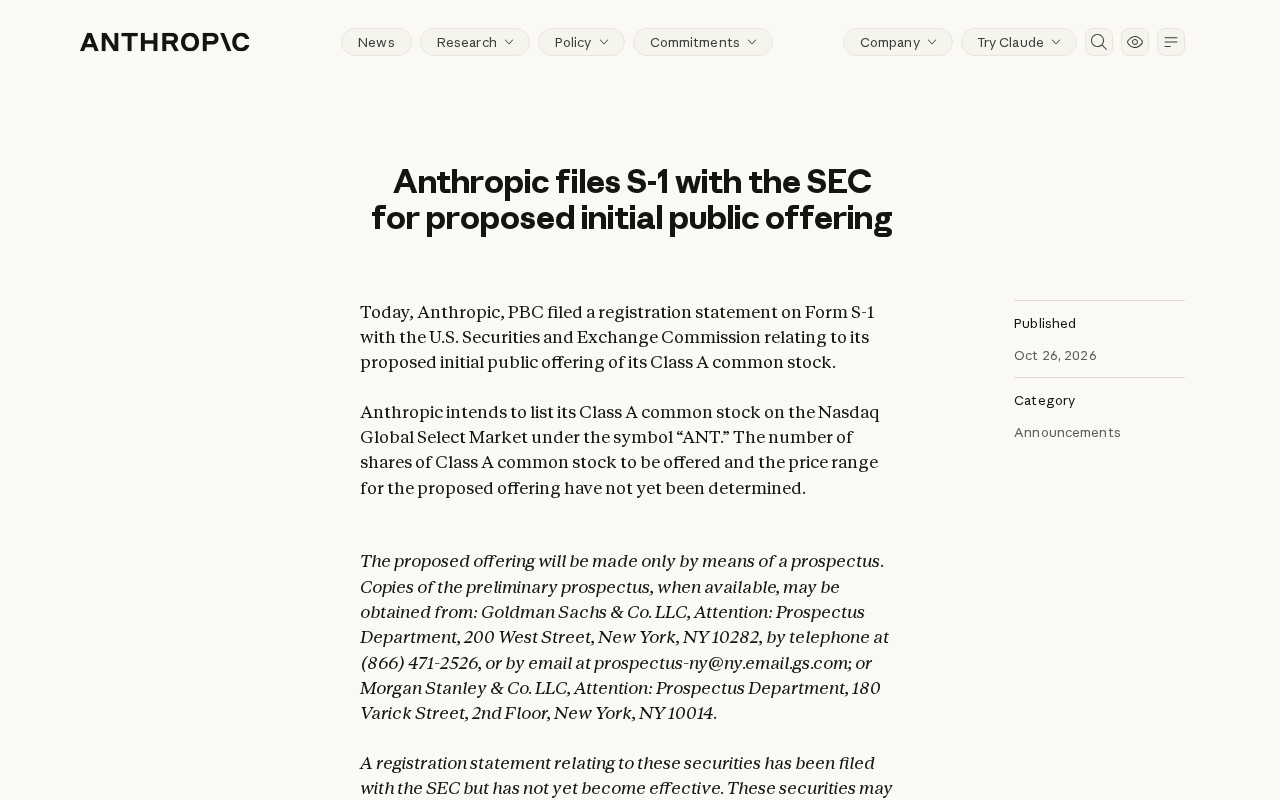
Anthropic Confidentially Files S-1, Formally Kicks Off IPO Process
Anthropic has filed an S-1 with the SEC to start its IPO. We examine what this means for AI competition, public-market valuation signals, and transparency among large-model companies.
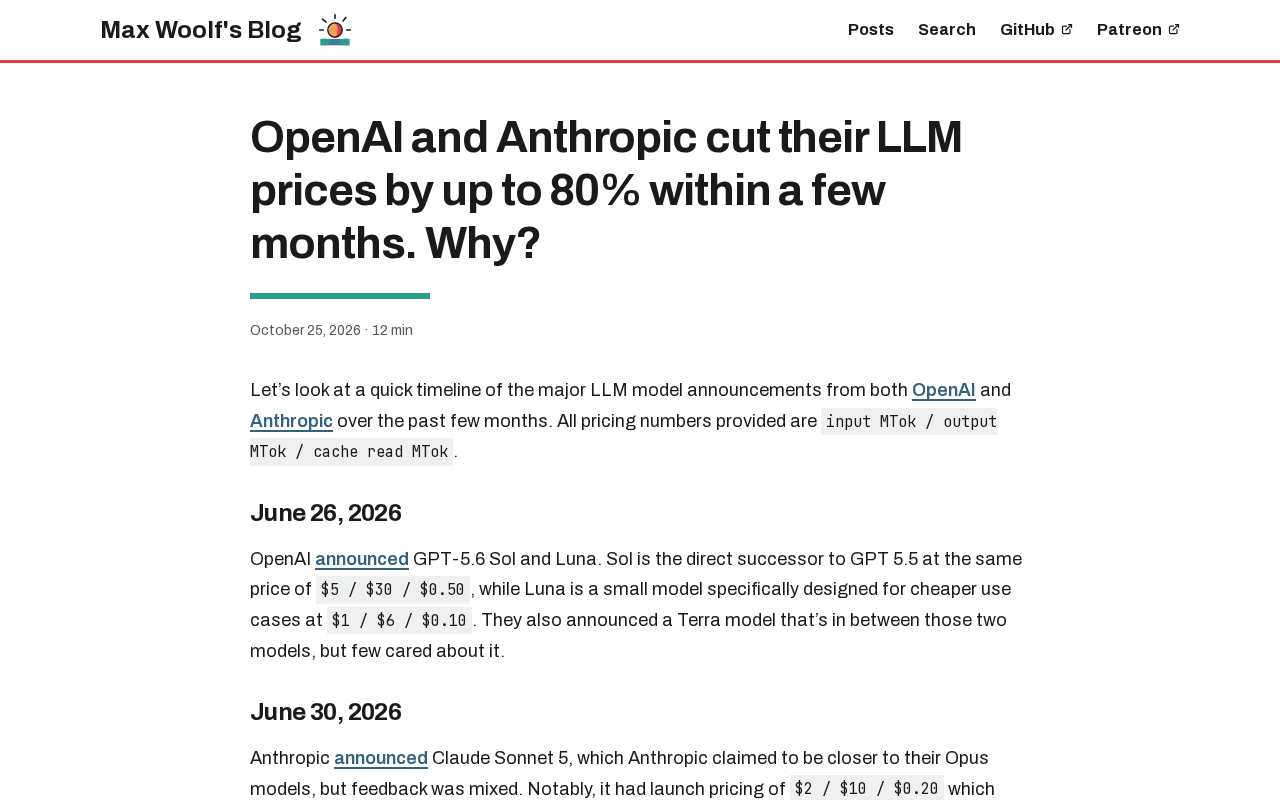
The LLM Price War: Why Did OpenAI and Anthropic Cut Prices by 80%?
OpenAI and Anthropic cut LLM prices by up to 80% in months. This article analyzes the competition, technology costs, business model shifts, and industry impact behind the price war.

Anthropic Launches Claude Duet: An In-Depth Look at the Personal AI Agent
Anthropic launches Claude Duet, a personal AI agent. We break down its proactive briefings, cloud computer, 6,000+ connectors, security, and shared quota limits.

Anthropic SDK v2.3.0 Released: Claude Tag Endpoints and Multiple Internal Refactors
Anthropic SDK v2.3.0 released: new Claude Tag endpoints for Claude Enterprise organizations, fixed Google Cloud user profiles request endpoint, refactored client query parameter handling, and improved documentation for code execution tool, usage reports, and more.

How High Are Anthropic's Early Investor Paper Returns Ahead of IPO?
Anthropic's early investor paper returns draw attention ahead of IPO. This article analyzes sources of book gains, capital structure, pre-IPO games and risks, and implications for the AI startup ecosystem.
Claude Pro Doesn't Include API Access? Max and Team Plans Now Add API Credits Explained
Claude Pro has no API access; API is billed separately. But Max and Team plans now include monthly API credits: Max 5x $100, Max 20x $200, Team up to $500 per seat. This article details each tier's credits, how to claim them, and the impact on developers.

Anthropic Builds Its Own Source Control System Scion: The Performance Dilemma Behind 30,000 PRs a Day
Anthropic built its own source control system Scion after Git hit performance issues at 30,000 PRs/day, and it won't be open-sourced. Here's the performance dilemma, the motivation, and what it means for AI engineering infrastructure.
Anthropic Launches Claude Duet: The Era of Proactive AI Agents Arrives
Anthropic releases proactive AI agent Claude Duet, powered by Claude Opus 5.5 and running on a separate cloud computer. It sends daily briefings and requires user approval before emails or payments. This article analyzes how it works, its competition with Meta Muse and OpenAI Dots, and the cost constraints of shared usage limits.