#ChatGPT Plus Codex
145 related articles
·3 min
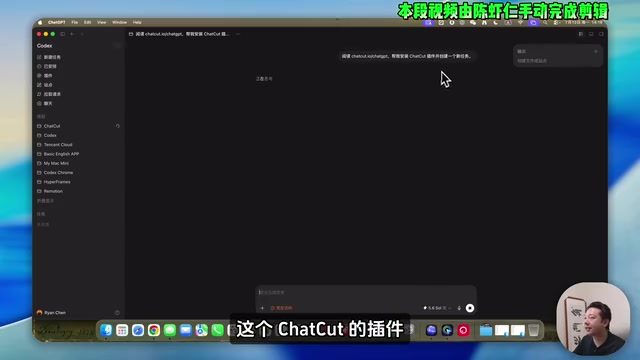
ChatCut × Codex Hands-On: Can AI Agent Edit Your Video With a Single Prompt?
Hands-on test of ChatCut AI video editor: Codex plugin support, auto filler removal, MG animation & subtitle generation. Full workflow test on a 3min 20sec video.
Read more →

·3 min
Tencent Hunyuan Hy3 Free Access Guide: 5 Channels to Try It at No Cost
Tencent Hunyuan Hy3 is live — here are 5 free access channels including WorkBuddy, Hermes Agent, OpenRouter, SiliconFlow, and WeChat Mini Program (up to 100M tokens).
Read more →

·3 min
The ChatGPT Redesign Backlash: How AI Companies Treat Their Loyal Users
A Reddit debate reveals the core tension in AI markets: emotional loyalty vs. rational choice. Examining OpenAI vs. Anthropic strategies and the ChatGPT redesign backlash.
Read more →
·3 min
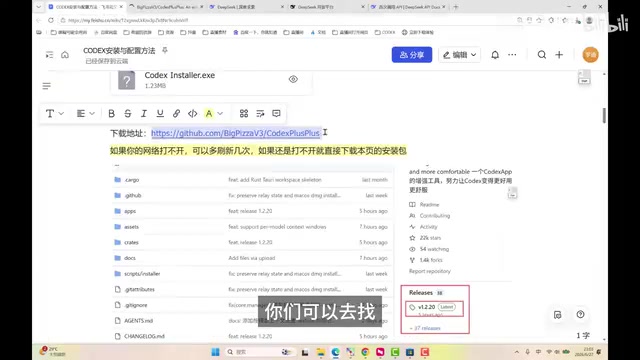
Connect Codex to DeepSeek: A Complete Setup Guide for Beginners
No ChatGPT Plus? No problem. Learn how to connect DeepSeek and other domestic LLMs to Codex using Codex++, with full setup steps from install to launch.
Read more →

·3 min
Codex Merges into ChatGPT: GPT-5.6's Three Tiers Explained — Sol, Terra, and Luna
Codex merges into ChatGPT with a new Work Mode. GPT-5.6 splits into Sol (flagship), Terra (balanced), and Luna (lightweight). Full breakdown of capabilities, costs, and how to choose.
Read more →
OpenAI May Roll Out Universal Usage Li…
·2 min
OpenAI May Roll Out Universal Usage Limits — How Should ChatGPT Users Prepare?
OpenAI's Codex hits rate limits fast — is this a preview of broader ChatGPT usage caps? We analyze compute costs, tiered subscriptions, and how users can prepare.
Read more →

·3 min
GPT-5.6 and ChatGPT Work Launch: AI Evolves from Conversational Assistant to Task Executor
OpenAI launches the GPT-5.6 family (Sol/Terra/Luna), ChatGPT Work, a new desktop app, and Hosted Sites — marking AI's evolution from Q&A assistant to autonomous task executor.
Read more →

·2 min
Is Cursor's $20 Pro Plan Enough? A Deep Dive Into AI Coding Subscriptions
Is Cursor's $20 Pro plan enough? This deep dive breaks down fast vs. slow requests, compares ChatGPT and Claude quotas, and helps developers decide whether to subscribe.
Read more →

·4 min
Hands-On with GPT-5.6: A Single Prompt Builds a Real-Time Voice Anime App
Hands-on with GPT-5.6 Sol: auto-generate real-time voice anime characters from one prompt, write physics engines from scratch, and build unfamiliar toolchains autonomously. In-depth review of coding, agentic tasks, benchmarks, and its hallucination weakness.
Read more →

·3 min
ChatGPT Plus/Pro Plans: A Complete Comparison of Features and Payment Methods
A detailed breakdown of ChatGPT Plus ($20) vs Pro ($100/$200) plan features, comparing credit card, gift card, and Google Play top-up methods, plus an honest look at third-party top-up risks.
Read more →

·5 min
GPT-5.6 In-Depth Field Test: A Real-World Log After Burning Through $200K
A developer stress-tested GPT-5.6 for six weeks across 67 projects, burning $180K-$240K in inference. Real cases of task persistence, Rust rewrites, autonomous browser control — plus honest frontend and 3D shortfalls.
Read more →

·5 min
GPT-5.6 Launches: Comprehensive Upgrades to ChatGPT Work, Sites, and Desktop Client
OpenAI releases the GPT-5.6 model family, launching enterprise-focused ChatGPT Work, one-click ChatGPT Sites, and a major desktop client upgrade, with coding now ahead of rivals. Meta, Google, and Kimi follow intensively.
Read more →

·5 min
ChatGPT Work Officially Launches: How GPT-5.6 Is Reshaping the Way You Work
OpenAI launches the GPT-5.6 model family (Sol/Terra/Luna) and ChatGPT Work, enabling automated financial analysis, local file operations, Codex coding, and cross-app workflows—AI officially becomes a real work partner.
Read more →

·3 min
GPT-5.6 Released: Codex Takes Over ChatGPT, Ushering in the Era of AI Agents
OpenAI releases the GPT-5.6 series, deeply merging ChatGPT with Codex as the Agent engine takes over the underlying architecture. A deep dive into its impact on AI coding toolchains and Agent applications.
Read more →

·2 min
GPT-5.6 Opens to All: Three-Tier Model Lineup + ChatGPT Work Agent Reimagines the Workflow
OpenAI launches GPT-5.6 with three tiers — Sol, Terra, Luna. Terra cuts price in half; Luna inputs at $1/M tokens. ChatGPT Work agent automates tasks end-to-end; Codex merges into a unified platform.
Read more →

·6 min
GPT-5.6 Fully Available: A Deep Dive into the Sol/Terra/Luna Three-Tier Models and Four-Agent Parallelism
GPT-5.6 is now officially available to all users, launching the three-tier Sol, Terra, and Luna models with four-agent parallelism. An in-depth look at the official benchmarks, API pricing, safety, and Ultra mode.
Read more →

·8 min
GPT-5.6 Hands-On: Farm Automation, Mathematical Breakthroughs, and End-to-End AI Execution
GPT-5.6 (Sol, Terra, Luna) hands-on testing: a Hokkaido farmer controls a greenhouse with AI, a NYC small business builds custom software, and a Polish mathematician breaks a 3-year problem. A deep dive into end-to-end autonomous execution.
Read more →

·4 min
Why General-Purpose Agents Don't Work: How a Job Interview Reshaped One Developer's Thinking
An Agent developer's three-round interview reveals why general-purpose Agents are a dead end for startups. The path forward: vertical Agents, domain context, and iteration speed as a moat.
Read more →

·5 min
The Complete Guide to Claude Skills: Configure Once, Reuse Your Workflow Forever
An in-depth guide to Claude Skills: from built-in skills and plugins to building your own custom skills and continuous refinement. Learn to end repetitive instructions and build an automated, consistent AI workflow.
Read more →

·6 min
GPT-5.6 Hits 91.9% on Coding Benchmark: A Guide to Choosing Among Three Tiers and Avoiding Ultra Mode Pitfalls
GPT-5.6 launches Soul/Terra/Luna, with flagship Soul scoring 91.9% on Terminal Bench 2.1. This article breaks down the Ultra vs Max reasoning modes, three-tier pricing, and four hidden pitfalls to guide your technical selection.
Read more →