#Claude vs Codex
585 related articles

·4 min
AI Testing in Practice: A Complete Guide to Three Types of AI Tools and the New Paradigm of Test Development
A complete guide to the three core categories of AI tools in the testing era (personal assistants, CLI geek tools, AI IDEs), revealing the real challenges of AI test case generation and the new AI test development paradigm.
Read more →

·2 min
OpenCode: The Complete Guide to the Open-Source Coding Agent Chosen by 8 Million Developers
OpenCode has become the world's most popular open-source coding agent—8M monthly active developers, 75+ model providers, and custom sub-agent routing. This deep dive covers its core features, config tips, and business model.
Read more →

·2 min
A Stable AI Coding Workflow: A Practical Guide That Works Across 4 Major Editors
For VS Code, Cursor, Windsurf, and JetBrains users! An editor-agnostic AI coding workflow: clean workspace, understand before acting, make small changes, review diffs—bring order to AI coding.
Read more →

·2 min
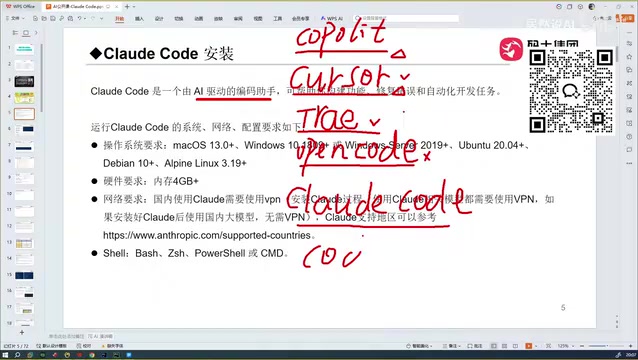
Getting Started with Claude Code: A Beginner's Guide to Installation, Configuration, and Model Selection
A detailed walkthrough of the full Claude Code setup process, comparing AI coding tools like Cursor and Trae, and analyzing the cost and performance of models like Sonnet and DeepSeek V4 Pro.
Read more →
·2 min
Getting Started with Claude Code: A Beginner's Guide to Installation, Configuration, and Model Selection
A complete guide to installing and configuring Claude Code, comparing tools like Cursor and Trae, and analyzing the cost and performance of models like Sonnet and DeepSeek V4 Pro.
Read more →

·2 min
Getting Started with Claude Code: Why Terminal Agents Are the Top Choice for Enterprise AI Testing
What is the fundamental difference between terminal agents and device agents? This article breaks down Claude Code's core positioning, the key logic for enterprise AI testing selection, and the advantages of the Claude Code + DeepSeek combination.
Read more →

·3 min
Stop Flying Blind: A Complete Practical Guide to Writing Evals for AI Agent Skills
A Google DeepMind engineer reveals that over 50,000 AI agent skills come with almost no evals. Learn how to write skill evaluations, from description tuning to test design.
Read more →

·3 min
Stop Flying Blind: A Complete Practical Guide to Writing Evals for AI Agent Skills
A Google DeepMind engineer reveals that over 50,000 AI agent skills come with almost no evals. This guide covers skill descriptions, test design, eval harnesses, and retirement strategies.
Read more →

·3 min
The AI Coding Landscape: Model Tiers, Tool Camps, and a Deep Dive into MCP/Skills/CLI
A systematic map of today's AI coding landscape: the evolution from ChatGPT to Claude Code, LLM capability tiers, tool camps like Cursor/Copilot, and the three key weapons of the Agent era — MCP, Skills, and CLI.
Read more →
·3 min
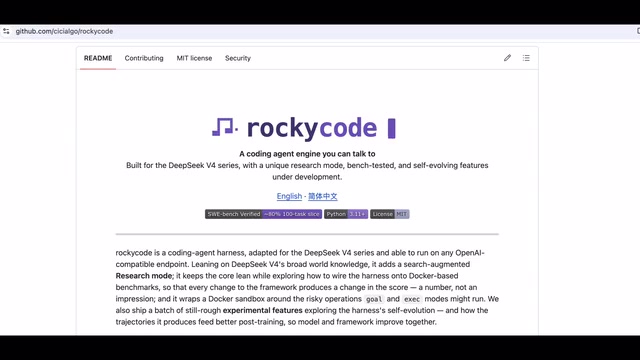
Rocky: An Open-Source Coding Agent with Minimal Architecture and Native DeepSeek Integration
Rocky is a minimal, transparent open-source coding agent with a core loop under a few hundred lines of Python, native DeepSeek search, Research mode, and built-in SWE benchmarking for reproducible agent experiments.
Read more →

·7 min
Getting Started with Codex: Installation and Usage Guide for OpenAI's AI Coding Agent
A comprehensive guide to OpenAI's new AI coding agent Codex: from concept and comparison of its four forms, to installing Git/Node.js/VS Code, configuring the API Key, and creating a workspace.
Read more →

·6 min
Making Money with AI Coding Gigs: A Sober Breakdown and Honest Assessment of the Four-Week Learning Path
Can beginners really earn over 10,000 yuan in their first month with AI coding gigs? This article breaks down the four-week AI coding learning path week by week and objectively assesses the real monetization barriers.
Read more →

·3 min
The Complete Beginner's Guide to Vibe Coding: Core Logic and Practical Learning Path
Vibe Coding is the new AI-era programming paradigm. Describe what you want in plain language; let AI generate the code. Learn the 3-stage path: mindset, quality, and real projects.
Read more →

·5 min
From Vibe Coding to AI Engineering: A Complete Guide to Enterprise-Grade Development
In the AI programming era, Vibe Coding alone can only build toys. This article deeply analyzes the complete engineering path from Vibe Coding to SDD spec-driven development, covering Claude Code and Codex tool selection, the SuperPower plugin, and domestic LLM comparisons.
Read more →

·3 min
Vibe Coding vs. AI Engineering: A Practical Guide to Enterprise-Level AI Programming
From Vibe Coding to AI Engineering, explore Claude Code vs Codex tool selection, real enterprise boundaries of AI programming, and how to build maintainable AI-assisted development workflows.
Read more →

·4 min
Java Developer to AI Architect: A Three-Layer Capability Upgrade Roadmap
How can Java engineers transition to AI Architect? This article breaks down three core capability layers — AI app development, production RAG, and AI Agent orchestration — using Spring AI Alibaba and LangChain4j to turn your Java foundation into a competitive edge.
Read more →

·4 min
Beyond Vibe Coding: A Complete Guide to Enterprise-Grade AI Engineering
Hit the Vibe Coding ceiling? This guide covers the three-stage AI coding progression path, Claude Code vs. Codex, SuperPower SDD, and how to go from vibe coding to enterprise-grade AI engineering.
Read more →

·3 min
Vibe Coding for Beginners: Build Your First Project with AI from Scratch
What is Vibe Coding? Learn this new AI programming paradigm from scratch — no CS degree needed. Use Claude Code, Cursor, and more to build real projects by describing your ideas.
Read more →

·7 min
Alibaba Open-Sources 2.4T Qwen Model as Chinese AI Sweeps the Global Competitive Landscape
Alibaba open-sources a 2.4 trillion parameter Qwen model and launches the Qwen Token Plan. Chinese models surge, Kimi K3 tops global rankings, and China's AI is reshaping the global competitive landscape.
Read more →

·4 min
Vibe Coding vs. AI-Assisted Engineering: An In-Depth Look at Enterprise-Level Development
Can AI coding tools let non-developers replace programmers? This deep dive examines Vibe Coding's real limits, compares Claude Code vs. Codex, and reveals the methodology behind enterprise-grade AI-assisted software engineering.
Read more →