#Few-shot Prompting
257 related articles
Third Mind Notes: A Note-Taking App Bu…
·2 min
Third Mind Notes: A Note-Taking App Built for AI Prompt Management
Third Mind Notes is an AI-era note-taking app combining Apple Notes simplicity, Cursor AI interaction, and Obsidian knowledge graphs — built for prompt management and LLM wiki construction. Now on TestFlight.
Read more →

·3 min
Skill Pack-Driven AI Agents: An Efficient Alternative to Complex Workflows
Ditch complex workflow nodes. Use Agent Skill packs to dynamically load AI capabilities, build stable intelligent automation, and understand RAG, LLM limits, and Scale Agent plugin setup.
Read more →

·4 min
A Deep Dive into Claude Cookbooks: A Guide to the Official 47K-Star Hands-On Code Repository
Anthropic's open-source Claude Cookbooks project offers runnable Jupyter Notebook examples covering RAG, Tool Use, multimodal processing, and more—helping developers master Claude API best practices.
Read more →
The Theory of Deep Learning: Why Do Ne…
·4 min
The Theory of Deep Learning: Why Do Neural Networks Work? A Complete Overview of Theoretical Research
Deep learning shines in practice, but why does theory always lag behind? This article surveys the over-parameterization paradox, implicit regularization, NTK, the information bottleneck, and more.
Read more →

·2 min
4-Step Roadmap to Becoming an AI Agent Engineer: From Zero to a $50K LLM Role
A proven 4-step roadmap to becoming an AI Agent engineer: stable LLM calls, tool use (RAG + Function Calling), production engineering, and resume optimization.
Read more →

·4 min
Baidu AI Automation System: Trigger Skill Chains with a Single Sentence, Say Goodbye to Manual Workflows
The Baidu AI Automation System uses departmentalized skill libraries and Agent-style orchestration to let managers trigger multi-skill workflows with one sentence—no tech background needed.
Read more →
·6 min
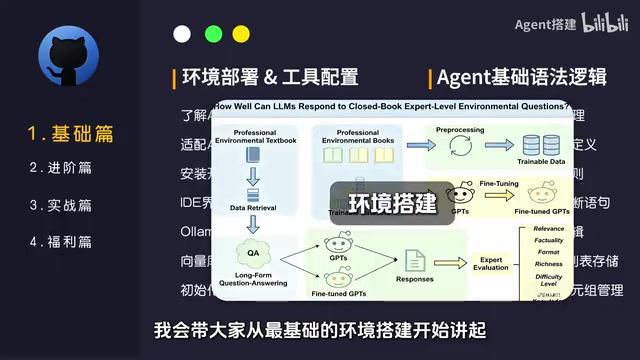
AI Agent Development Learning Path: Four Stages from Zero to Hands-On Projects
A systematic breakdown of the AI agent development learning path, covering four stages: fundamentals, RAG knowledge bases, tool use, multi-agent collaboration, and hands-on projects.
Read more →

·4 min
The Complete AI Agent Development Learning Path: From Zero to Enterprise-Grade Practice
A systematic AI Agent development learning path covering fundamentals, prompt engineering, tool calling, multi-agent collaboration, and hands-on practice with LangChain, CrewAI, and Dify.
Read more →
·6 min
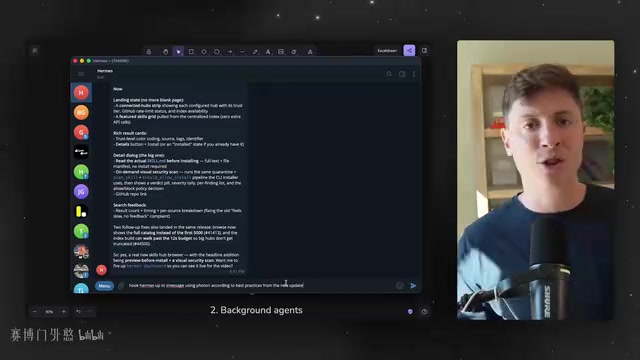
Hands-On With Hermes Agent's Eight Major Updates: A Complete Guide to AI Automation and Self-Evolution
The Hermes Agent gets a major upgrade with eight new features: native iMessage, parallel background sub-agents, Unreal Engine MCP support, a self-evolving Skill Hub, and more. A hands-on breakdown of the core changes and their real impact on personal AI automation workflows.
Read more →

·5 min
Building DeepSeek Agents and Knowledge Bases from Scratch: A Practical Guide to Commercial Deployment
A systematic guide to the full DeepSeek Agent development process: covering prompt engineering, the ReAct framework, workflow orchestration, local deployment, and business requirement breakdown for commercial-ready AI Agents.
Read more →

·4 min
ChatGLM Large Model Development Tutorial: From Zero to Enterprise Deployment
Systematically learn ChatGLM large model development, covering Transformer principles, RAG, private deployment, fine-tuning, and Agent development, with a roadmap and hands-on cases.
Read more →

·3 min
The Complete AI Agent Development Workflow: A Seven-Step Guide from Requirements Analysis to Deployment
Want to build an AI Agent but don't know where to start? This guide covers the complete seven-step workflow—from requirements analysis, platform selection, prompt engineering, data storage, and UI building to testing and deployment.
Read more →
·5 min
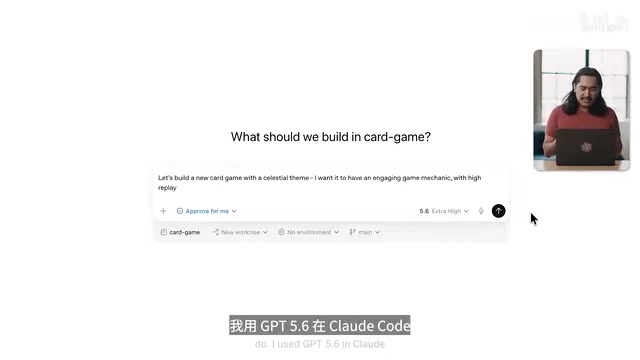
GPT-5.6 Released: Hands-On Analysis of Programmatic Tool Calling and Autonomous Agents
GPT-5.6 is officially released with core upgrades including programmatic tool calling, autonomous subagent delegation, and higher token information density. A hands-on card game build reveals its Agentic power.
Read more →

·7 min
Building AI Agents in Rust: The GAIA Benchmark Reveals the Capability Ceiling of Large Models
A Rust-based AI Agent evaluation framework uses the GAIA benchmark to compare GPT, Claude, DeepSeek and other models with no tools. Results show pure LLMs cap at ~25% accuracy, revealing why tool use is decisive for Agents.
Read more →

·2 min
Does Yelling at AI Make It Smarter? Breaking Down LLM Behavior and Prompting Techniques
Why does yelling at AI sometimes seem to work? This article breaks down LLM behavior using technical principles and offers actionable prompt engineering tips.
Read more →

·5 min
ECC: An Agent Enhancement Framework for AI Coding Assistants — Five Core Capabilities Explained
ECC is an agent optimization framework for AI coding assistants like Claude Code, Cursor, and Codex, enhancing them with skills, memory, security, and research-first development capabilities.
Read more →

·3 min
Visualize and Edit AI Reasoning Chains: Making LLM Thinking Transparent and Controllable
A new web tool visualizes and lets users edit AI chain-of-thought reasoning. Explore how it works, its use cases, and the limits of LLM interpretability.
Read more →

·4 min
AI Agent Learning Roadmap: From Zero to Real-World Projects
A complete AI Agent learning roadmap covering agent principles, prompt engineering, RAG, multi-agent systems, and hands-on projects — from zero to real-world deployment.
Read more →

·3 min
From Raw LLMs to Agents: A Complete Guide to Enterprise-Grade AI Development
Prompt engineering and RAG are just the basics. Real enterprise AI runs on Agents. Explore the 4 stages of LLM deployment, Agent core capabilities, and industry trends.
Read more →

·3 min
AI Application Development Learning Roadmap: From Agents and RAG to Real-World Career Success
Want to break into AI application development? This guide covers the full learning path — from Agents and RAG to Prompt Engineering — helping you master LLM engineering skills and land the job.
Read more →