#IDE plugin specification
541 related articles

·4 min
Claude Code vs. Codex vs. Cursor: A Deep Comparison of Three AI Coding Tools
Claude Code, Codex, or Cursor? This in-depth comparison covers each tool's positioning, ideal users, and how to combine them for maximum productivity in your AI coding workflow.
Read more →

·3 min
Gemini's Code Highlighting Theme Update Sparks Developer Discussion
Gemini quietly swapped its code syntax highlighting theme, sparking developer discussion. We break down One Dark, Dracula, and how Google's Material Design shapes its coding UI.
Read more →

·3 min
Generate a Mini-Game from a Single Prompt? Testing the Cocos AI Agent Plugin
Deep dive into the Cocos Creator AI Agent Plugin: three-level context compression, tool approval, multi-agent parallelism, and DeepSeek-powered Mario scene building — all in one test.
Read more →
·4 min
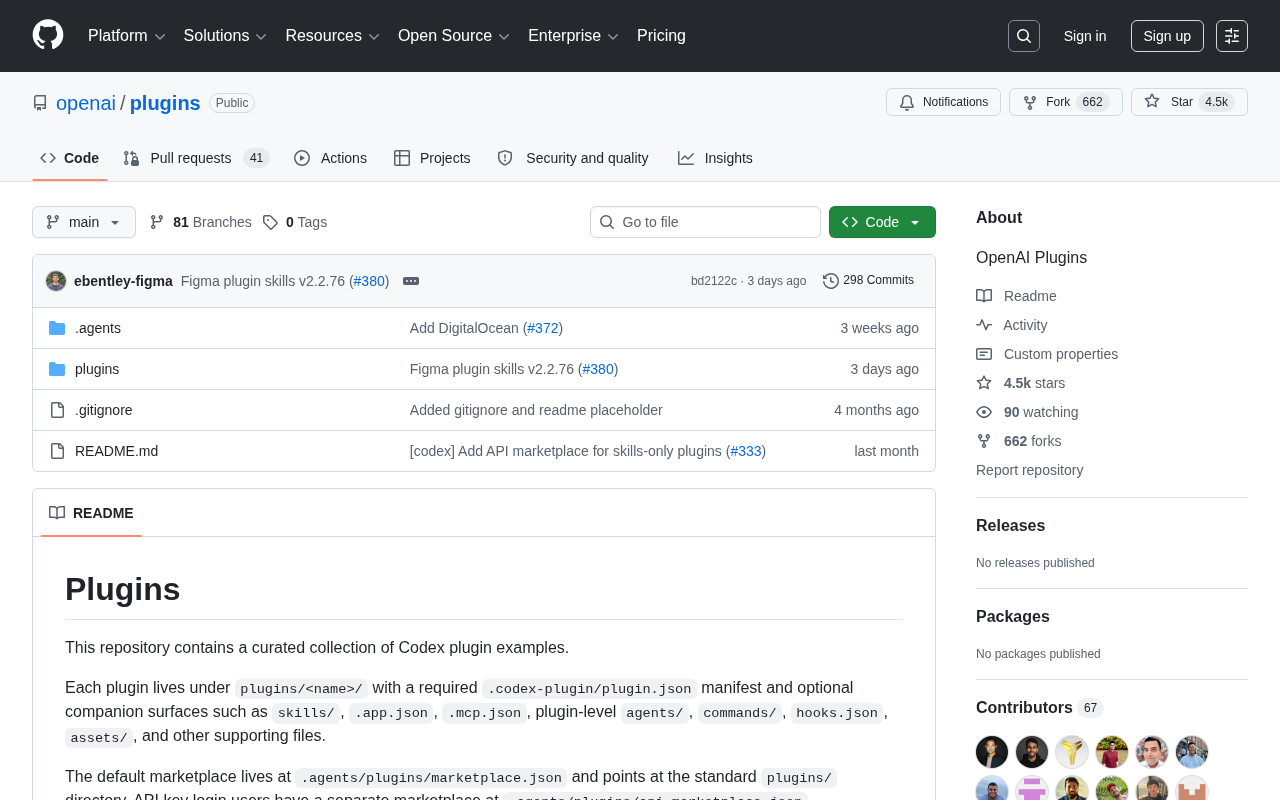
OpenAI Plugins Deep Dive: The Plugin System That Connects ChatGPT to the Real World
A deep dive into OpenAI Plugins: how the system works, its technical architecture, and why it matters. Learn how ChatGPT uses plugins to access real-time data, take real-world actions, and lay the groundwork for AI Agents and Tool Use.
Read more →

·3 min
Empowering AI Agents with Skills to Automate WeChat Official Account Analytics
Learn how Skill-powered AI Agents can automatically log in to WeChat Official Account backends, scrape data, sort it, and generate Excel reports — eliminating manual analytics work.
Read more →

·3 min
Skill Pack-Driven AI Agents: An Efficient Alternative to Complex Workflows
Ditch complex workflow nodes. Use Agent Skill packs to dynamically load AI capabilities, build stable intelligent automation, and understand RAG, LLM limits, and Scale Agent plugin setup.
Read more →

·4 min
RoughCut: A Fully Automated AI Video Editing Tool Built with Codex
RoughCut is a fully automated AI editing tool generated by Codex, supporting talking-head, unboxing, and commentary modes with a semi-automated publishing system.
Read more →

·3 min
The Cypress End-to-End Testing Framework: Core Advantages and Usage Guide
An in-depth look at the core advantages of the Cypress front-end automated testing framework: fast execution, a simple easy-to-use API, and stable reliable results. Covers architecture, Selenium comparison, and component testing.
Read more →

·7 min
Building a Published App with Zero Code in Four Days: A Complete HarmonyOS Development Journey
A tech blogger with zero programming knowledge built a retro DV app in four days using AI tools like Cursor and Codex, and got it published on Huawei App Gallery. A full vibe coding walkthrough.
Read more →

·5 min
How Can Working IT Professionals Learn AI Efficiently? A Practical Learning Path from Zero to Real-World Projects
Limited time but want to learn AI systematically? This guide maps out a practical learning path for working IT pros—from AI application engineering and prompt engineering to RAG and Agents.
Read more →
The Nopia Synthesizer Nears Launch: AI…
·2 min
The Nopia Synthesizer Nears Launch: AI Music Hardware That Redefines Harmony Creation
The viral synthesizer Nopia is finally nearing mass production. Creators Martin Grieco and Rocío Gal spent years refining an AI-driven harmony interaction design that breaks traditional music-theory barriers—worth watching for pros and enthusiasts alike.
Read more →

·4 min
9 AI Voice Recorders Compared: How to Choose Across the ¥198–¥899 Price Range
From ¥198 entry-level to ¥899 flagship, a full comparison of 9 mainstream AI voice recorders. Covering noise reduction, transcription accuracy, battery life, and discreetness to help you choose by scenario.
Read more →

·4 min
Zhipu GLM-5.2 Released: China's First Open-Source Model to Cross the 'Primary Model' Threshold
Zhipu releases GLM-5.2 with 1M token context, matching GPT-5.x and Claude. Zcode 3.0 offers 3M free daily calls with one-click migration from Claude Code and Codex.
Read more →

·7 min
Unity Custom MCP Tool Development Guide: Enabling AI Agents to Precisely Control the Editor
Learn how to develop custom tools based on the Unity MCP Relay Server, enabling AI agents like Cursor to directly control the Unity editor. Covers setup, tool building, parameter validation, and MCP Pro comparison.
Read more →

·5 min
Hands-On with PageAgent: Add AI Agent Capabilities to Web Pages with a Single Line of Code
In-depth hands-on review of Alibaba's open-source web automation tool PageAgent: three integration methods, script execution analysis, and a full breakdown of current limitations. Add AI Agent capabilities to web pages with one line of JS.
Read more →
·6 min
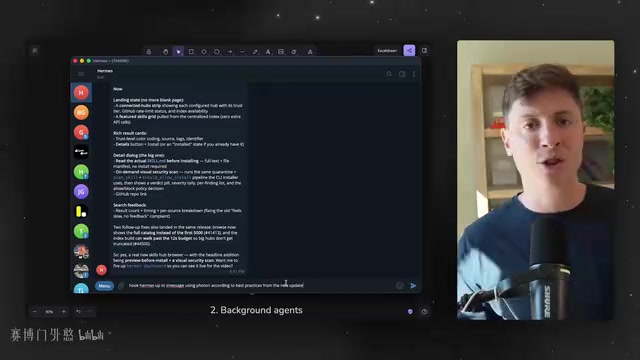
Hands-On With Hermes Agent's Eight Major Updates: A Complete Guide to AI Automation and Self-Evolution
The Hermes Agent gets a major upgrade with eight new features: native iMessage, parallel background sub-agents, Unreal Engine MCP support, a self-evolving Skill Hub, and more. A hands-on breakdown of the core changes and their real impact on personal AI automation workflows.
Read more →

·5 min
Getting Started with LangGraph: Building AI Agent Workflows with Graph Structures
Master LangGraph core concepts: nodes, edges, and routing functions. Learn StateGraph, MemorySaver, and ToolNode through a weather-query Hello World example, and understand how LangGraph relates to LangChain and powers Agent workflows.
Read more →

·3 min
Google Open-Sources Stitch Skills: A New Practice in AI Agent Skill Standardization
Google Labs open-sourced stitch-skills, a standardized skill encapsulation solution for AI Agents, compatible with Gemini CLI, Claude Code, Cursor and more.
Read more →

·4 min
Building Container Networking From Scratch: A Deep Dive Into Linux Bridge and veth
A deep dive into the fundamentals of container networking. By manually building a Linux bridge, veth pair, and iptables NAT, fully reproduce Docker's default bridge mode to understand container connectivity, port mapping, and Kubernetes networking.
Read more →

·4 min
AI Agents Powering the Full Research Pipeline: A Practical Guide to Automation from Topic Selection to Publication
Learn how to use AI Agents to link the entire research pipeline—from literature management, data analysis, and paper writing to scientific illustration and dissemination—building a reusable research automation workflow with NotebookLM, N8N, and Ollama.
Read more →