#IVF
93 related articles

·3 min
ARYA: Building a Voice AI Assistant That Controls Real Applications from Scratch
Developer builds ARYA, a voice AI assistant that controls real apps like WhatsApp and Spotify with vector memory. Deep dive into its technical implementation, AI Agent trends, and opportunities for builders.
Read more →

·3 min
You Don't Always Need a Vector Database for Vector Search — Brute Force Might Be All You Need
In-depth analysis of when brute force vector search beats vector databases. For RAG apps with under a few hundred thousand vectors, brute force offers exact recall, simpler architecture, and easier debugging.
Read more →

·5 min
pgvector 0.8 Iterative Index Scans in Practice: Best Practices for Vector Search with Scalar Filtering
Deep dive into pgvector 0.8 iterative index scans that solve the over-filtering problem in hybrid vector search with WHERE conditions. Includes SQL examples, strict_order vs relaxed_order comparison, and max_scan_tuples tuning tips.
Read more →

·4 min
AI Agent Memory Systems: Genuine Technical Progress or RAG in Disguise?
In-depth analysis of AI agent memory systems: examining whether current improvements represent real progress or just RAG repackaged, and what architectural changes are truly needed.
Read more →

·3 min
DeepSeek-OCR Deployment and Fine-Tuning: A Complete Hands-On Guide
Master the full DeepSeek-OCR deployment and fine-tuning workflow: vLLM inference deployment, efficient Unsloth fine-tuning, dataset preprocessing, LoRA training, validation, and RAG vector database integration.
Read more →

·8 min
LangChain Crash Course: A Complete Roadmap from Zero to Agent Development
A systematic roadmap from LangChain and LangGraph to multi-agent development, covering RAG, Tool Calling, MCP, and more, helping developers break into AI app development.
Read more →

·3 min
AI Agent Development Landscape: From Architecture Design to Production Deployment
A systematic overview of the AI Agent tech stack: RAG retrieval, Agent planning, MCP protocol, AI Gateway, and observability — helping developers build production-grade AI systems.
Read more →

·3 min
AI Development for Java Engineers: A Complete Guide to LangChain4j Agents
Java developers can build AI apps too! Learn LangChain4j fundamentals including RAG, Agents, Function Calling, and hands-on projects — no Python required.
Read more →

·3 min
Enterprise RAG Knowledge Isolation in Practice: Physical Isolation vs. Adaptive Soft Boundaries
A deep dive into two enterprise RAG knowledge isolation strategies: physical isolation vs. adaptive soft boundaries — covering metadata tagging, dynamic user-profile filtering, hybrid retrieval architecture, and data quality best practices.
Read more →

·2 min
Which Coursera Advanced AI Courses Are Worth as Much as an Internship? Top Picks
Can online courses replace internships? We break down the real value of MLOps, Generative AI, and Deep Learning courses on Coursera, plus 3 strategies to get internship-level results.
Read more →

·3 min
Java Developers Transitioning to AI: A Practical Guide to Building RAG Knowledge Bases
How can Java developers break into AI? This guide covers the AI application engineer career path, RAG knowledge base fundamentals, vector database retrieval, and enterprise-grade RAG challenges.
Read more →
TurboVec: A Deep Dive into the Rust-Po…
·3 min
TurboVec: A Deep Dive into the Rust-Powered High-Performance Vector Index Library
TurboVec is a Rust-based vector index library powered by TurboQuant, with Python bindings for RAG, semantic search, and AI applications. A deep-dive into its architecture.
Read more →
·5 min
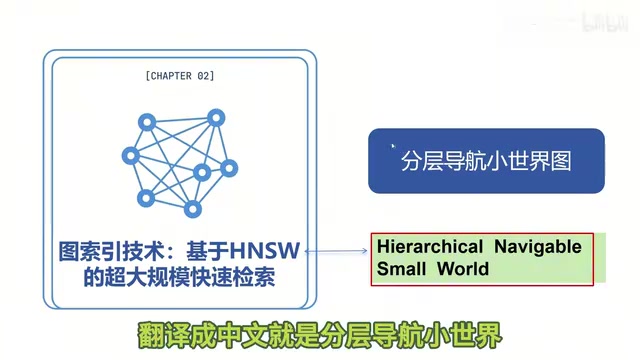
A Deep Dive into Vector Search for AI Agents: The Technical Foundations of RAG and Long-Term Memory
An in-depth look at the core tech behind AI Agents: how the HNSW, IVF, and PQ vector search algorithms power RAG and long-term memory. Understand where a model's "memory" and "knowledge" come from.
Read more →

·3 min
Semantic Caching: The Core Technology and Practical Guide to Cutting AI Costs by 50%
Semantic caching uses vector embeddings to match similar queries and avoid redundant LLM calls, cutting AI app costs by up to 50%. Learn how it works, how to set thresholds, and when to use it.
Read more →
Does Cosine Similarity of -1 Mean Sema…
·2 min
Does Cosine Similarity of -1 Mean Semantic Opposites? A Deep Dive Into a Classic ML Interview Trap
Does cosine similarity of -1 really mean 'semantic opposites'? We unpack this classic ML interview trap across math, embedding training, and engineering practice.
Read more →
Adaptive Recall: A Deep Dive into Pers…
·2 min
Adaptive Recall: A Deep Dive into Persistent Memory for AI Assistants via MCP
Adaptive Recall uses MCP (Model Context Protocol) to give AI assistants like Claude persistent memory across sessions, featuring vector storage, semantic retrieval, and adaptive forgetting.
Read more →

·3 min
The Deterministic Factual Substrate for Multi-Agent AI: A Deep Dive into Knowledge Kernel's Reproducible Grounding Design
A deep dive into how Knowledge Kernel builds a deterministic factual substrate for multi-agent AI through layered decoupling of reality, evidence, facts, and reasoning — with dataset_hash fingerprinting, atomic reloads, and observable telemetry.
Read more →
AI Costs Out of Control: Real-World St…
·6 min
AI Costs Out of Control: Real-World Strategies for Enterprises to Rein In Soaring Bills
More enterprises are finding AI operational costs spiraling out of control. This article dissects token billing traps and blind flagship-model use, and maps out cost-reduction strategies like model routing, open-source self-hosting, and semantic caching.
Read more →

·4 min
The Ultimate RAG Interview Guide: 204 Questions, 12 Architectures, and 6 Failure Modes Explained
The open-source project "Interview System" offers 204 RAG interview questions, 12 architecture approaches, and deep analysis of 6 failure modes. Prepare systematically for RAG engineer roles.
Read more →
·6 min
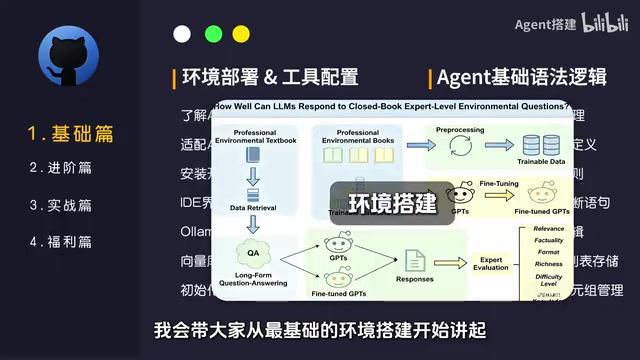
AI Agent Development Learning Path: Four Stages from Zero to Hands-On Projects
A systematic breakdown of the AI agent development learning path, covering four stages: fundamentals, RAG knowledge bases, tool use, multi-agent collaboration, and hands-on projects.
Read more →