#KV cache optimization
429 related articles

·7 min
OpenAI Codex Shortcuts Getting an Upgrade — How Will the AI Programming Experience Evolve?
OpenAI announces Codex shortcut upgrades focused on developer workflow optimization. Analysis of upgrade directions, industry competition, and expected improvements to code completion and natural language triggers.
Read more →

·6 min
14x Speedup: How Manticore Rebuilt the ONNX Embedding Inference Path
Manticore Search restructured its ONNX inference path to achieve 14x faster text embeddings. Deep dive into batching, session reuse, zero-copy memory, and thread tuning for vector search systems.
Read more →

·3 min
CodeBurn: The 8.4K-Star Open-Source Tool That Tracks Every Cent of Your AI Coding Spend
CodeBurn is a privacy-first local tool for analyzing AI coding costs. It supports 31 tools including Claude Code, Cursor, and Codex, breaking down spending by model, project, and task to eliminate hidden waste.
Read more →

·6 min
A 284B Model Running on a MacBook: The Real Breakthrough and Barriers of Local DeepSeek Inference
Redis creator runs 284B-parameter DeepSeek model on a MacBook Pro at 26 tokens/sec using a pure C engine, asymmetric quantization, and MoE architecture.
Read more →

·3 min
Vibe Coding Guide: Building Web Apps with AI from Zero Experience
Vibe Coding lets non-programmers build web apps using natural language and AI agents. Learn Claude Code, model selection, cost control via cache optimization, and agentic engineering.
Read more →

·3 min
Running Local LLMs on AMD GPUs: Ditching Ollama for LM Studio Delivers 7x Speed Boost
AMD GPU black screens running local LLMs? This post-mortem covers Ollama's 3 fatal flaws and how switching to LM Studio boosted token speed from 5 to 36, with ROCm setup, Speculative Decoding, and GFX version tips.
Read more →

·2 min
AI Large Model Development Learning Path: A Complete Guide from Zero to Enterprise Projects
A complete learning roadmap for AI large model development — covering Transformer, Prompt Engineering, RAG, LangChain, Agent development, fine-tuning, and deployment.
Read more →
OpenAI and Broadcom Unveil Jalapeño Ch…
·2 min
OpenAI and Broadcom Unveil Jalapeño Chip: Built Exclusively for LLM Inference
OpenAI and Broadcom unveil Jalapeño, a custom ASIC designed for LLM inference. A deep dive into its technical logic, strategic intent, and impact on NVIDIA and the AI compute landscape.
Read more →

·7 min
AI Agent Development: A Four-Stage Competency Model from 15K to 40K RMB Salary Growth Path
A detailed four-stage competency model for AI Agent development: from Python/RAG basics (15K) to workflow orchestration (20K), inference optimization (30K), and Agent cluster governance (40K RMB).
Read more →

·7 min
AI Agent Code Execution Sandbox Selection Guide: In-Depth Comparison of E2B and Four Other Solutions
In-depth comparison of five AI Agent code execution sandbox solutions—E2B, Daytona, Modal, Cloudflare Sandbox, and Vercel Sandbox—across isolation, cold start latency, state management, and pricing.
Read more →
·8 min
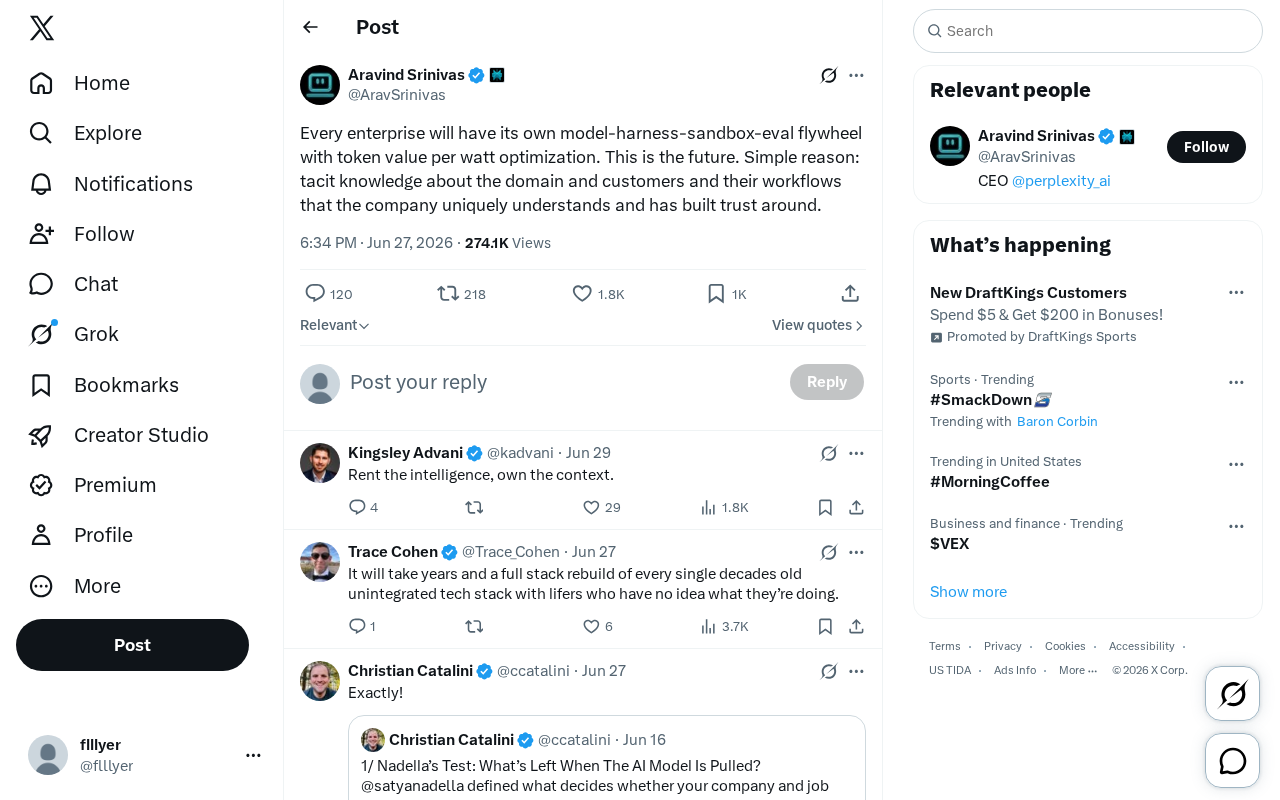
The Enterprise AI Flywheel: Building a Model-Eval Loop as a Competitive Moat
The core of enterprise AI isn't calling general models—it's building a self-reinforcing "model-harness-sandbox-eval" flywheel. This article analyzes the four components, tacit knowledge moats, and the "token value per watt" efficiency metric.
Read more →

·3 min
Behind SpaceX's Acquisition of Cursor: The Systemic Oxygen Deprivation of China's Deep Tech
SpaceX acquires Cursor for $60B in all-stock deal, buying the AI-era developer gateway. A deep analysis of the U.S.-China deep tech ecosystem gap and China's path to building its own flywheel.
Read more →

·4 min
LLM Job Interviews: Multi-Agent and Harness Engineering Are Now Must-Know Topics
Deep analysis of LLM job interview essentials: Multi-Agent architecture, Harness engineering, Agent Loop, sandbox isolation, and memory management with career transition tips.
Read more →

·2 min
GLM5.2 Frontend Development Capabilities Tested: Better Aesthetics Than GPT5.5?
Hands-on comparison of GLM5.2 vs GPT5.5 frontend development: GLM5.2 edges ahead in page aesthetics but slow inference and limited API access remain major drawbacks.
Read more →

·2 min
AI LLM Development Career Path: Four Stages from Zero to $60K+/Year
A four-stage learning path for AI LLM application development: from Python basics and RAG architecture to Agent cluster orchestration, helping developers transition into AI roles.
Read more →
OpenAI's First Custom AI Chip Jalapeño…
·2 min
OpenAI's First Custom AI Chip Jalapeño: A Deep Dive into Its Full-Stack AI Platform Strategy
OpenAI unveils Jalapeño, its first custom AI chip built with Broadcom, optimized for LLM inference. A deep dive into its architecture, strategy, and impact on NVIDIA and the AI chip landscape.
Read more →
From a Single Prompt to an AI Product:…
·3 min
From a Single Prompt to an AI Product: Starting Is Easy, Shipping Is Hard
AI startups begin with a prompt, but going from idea to product means overcoming major technical, product, and business challenges. A low barrier to entry doesn't mean a low barrier to success.
Read more →

·4 min
Cursor's Three Major Announcements: Mobile App, Git Platform, and In-House Frontier Model
Cursor unveils three major updates: Cursor Mobile, Origin platform challenging GitHub, and a frontier in-house LLM trained from scratch. A deep dive into Cursor's strategy.
Read more →

·2 min
MiniMax Model Real-World Test: The Ultimate Cost-Effective Choice for Ultra-Long Research Tasks
Developer tests MiniMax model running 16 hours on research tasks at a fraction of GPT-4o and Claude costs. Analysis of cost advantages, use cases, and multi-model strategies.
Read more →

·2 min
Minimax at $40/Month for 35 Billion Tokens: A Deep Dive into This Fable Alternative
Minimax offers 35 billion tokens for just $40/month (~$1.14 per million tokens), far below mainstream AI pricing. Compare Minimax vs Fable for the best value AI inference solution.
Read more →