#LLM stateless
255 related articles
·6 min
Vibe Coding in Practice at Big Tech: How Frontend Engineers Can Avoid Being Replaced in the AI Era
A big-tech interviewer reveals: junior/mid frontend dev is being replaced by AI. This article breaks down 3 core Vibe Coding interview questions to help you master key skills for the AI-assisted coding era.
Read more →

·4 min
Proactive AI Agent Monitoring: Stop Fighting Fires, Catch Bugs Before Your Customers Do
A real case study: team builds AI Agent "Oogway" to auto-patrol after every job, investigate anomalies, create tickets, and update a knowledge Wiki — catching bugs before customers do.
Read more →

·5 min
Agentic MapReduce: The Key Architecture for AI Agents to Achieve Distributed Reasoning Across Entire Codebases
Cognition's Agentic MapReduce architecture combines classic distributed computing with autonomous agents to break LLM context window limits, enabling multi-Agent parallel reasoning across entire codebases.
Read more →

·4 min
OpenWiki: A CLI Tool That Automatically Generates AI Agent Documentation for Codebases
OpenWiki is an open-source CLI tool that automatically generates and maintains structured documentation for AI agents. It addresses the context gap in AI coding assistants like Claude Code and Cursor, helping teams build effective context engineering workflows.
Read more →

·6 min
Databricks Agent Framework in Practice: A Guide to ChatAgent Wrapping and Production Deployment
A deep dive into Databricks Agent Framework (Mosaic AI): unify LangGraph/OpenAI agents via ChatAgent, log & evaluate with MLflow, version with Unity Catalog, and deploy Model Serving Endpoints for production AI agents.
Read more →

·7 min
ManagedAgents.sh: A Deep Dive into the Model-Agnostic Open-Source Managed Agent Platform
ManagedAgents.sh is a model-agnostic managed agent platform from OpenComputer, supporting Claude, Pi, and Codex runtimes with Slack and GitHub integration.
Read more →

·6 min
A Three-Month AI Agent Learning Roadmap: From Zero to Hands-On Agent Development
A systematic breakdown of the complete AI Agent learning roadmap, covering prompt engineering, the ReAct paradigm, memory mechanisms, and multi-agent collaboration, with hands-on project advice.
Read more →

·7 min
21-Day Python Automation Testing Crash Course: A Complete Breakdown of the Three-Stage Learning Path
Learn automation testing from scratch! This article breaks down a three-stage path: Selenium/Appium tools, Requests+PyTest API testing, performance testing and CI/CD, with real projects—build a complete skill set in 21 days.
Read more →
·7 min
Getting Started with LangChain 1.3: Core Concepts of LLMs and Agents
An in-depth breakdown of LangChain 1.3's core concepts, covering the three major limitations of LLMs, Agent architecture, memory management, and a complete learning path. Master LangChain and LangGraph to quickly build AI development skills.
Read more →

·4 min
AI Weekly: GPT-5.6 Launches in Three Tiers, Open-Source Inference Frameworks and Robot Safety Break Through Across the Board
This week in AI: OpenAI launches GPT-5.6 in three tiers (Sol/Terra/Luna) hitting 91.9% on coding benchmarks; DeepSeek and PKU open-source DSpark for 85% faster inference; Prime Intellect trains trillion-param models on just 28 H200s; Anthropic Claude enters Slack.
Read more →
·7 min
Dify Enterprise System Integration in Practice: Building a Project Management AI Copilot with Workflows
Using a project management system as an example, this article details how to use the Dify low-code platform to achieve AI-powered integration of enterprise internal systems through interface capture and workflow orchestration.
Read more →

·7 min
Dify 1.8.0 in Practice: A Complete Guide to Building Enterprise-Grade AI Workflows with Zero Code
An in-depth walkthrough of deploying Dify 1.8.0 and building applications: three-step Docker deployment, five app types compared, and Workflow vs Chatflow use cases—build enterprise AI apps with zero code.
Read more →
·7 min
LangChain Hands-On Guide: From LLM Calls to Agent Development
Master LangChain from scratch: the three limitations of LLMs, init_chat_model unified interface config, the Message type system, and the path from LLM calls to Agent development.
Read more →

·7 min
Getting Started with OpenAI LLM Development: A Practical Guide to Model Selection, Token Pricing, and API Usage
A systematic guide to the three cores of OpenAI LLM app development: GPT-4/GPT-3.5 model selection, token billing and cost-saving tips, and practical use of the Models, Completion, and Chat Completion APIs.
Read more →

·7 min
Spec-Driven Development: Andrew Ng Teaches You to Master AI Coding Agents Efficiently
Andrew Ng partners with JetBrains on a new course systematically teaching Spec-Driven Development. By writing high-quality specs, developers can precisely control AI coding agents, eliminate context decay, and boost intent fidelity.
Read more →

·4 min
6-Week Agent Engineering Roadmap: From Beginner to Enterprise Deployment
A structured 6-week roadmap for enterprise Agent deployment covering LangChain, LangGraph, MCP, and RAG — from planning and memory to multi-agent collaboration and production deployment.
Read more →
·5 min
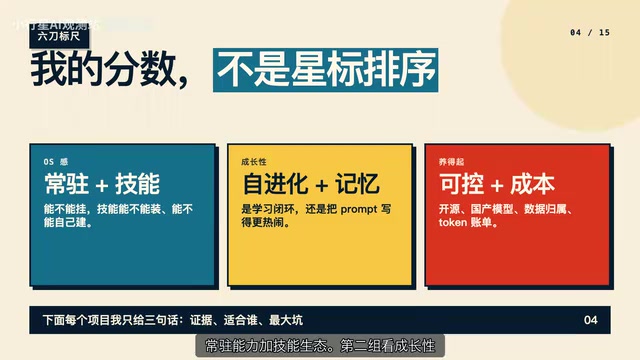
6 Self-Hosted AI Agents Compared: Which One Is a Truly Self-Evolving Digital Employee?
An open-source AI Agent with 380K stars ranks only third? This comparison of 6 self-hosted AI Agents scores them on persistence, self-evolution, and data control—revealing why Generic Agent won with just 3,000 lines of code.
Read more →

·7 min
Fable AI Coding in Practice: Optimizing Reasoning Levels and Multi-Model Collaboration to Cut Costs
How developer Theo used Anthropic's Fable model to rebuild his AI coding workflow — controlling reasoning levels, multi-model routing with Codex, and sub-agent orchestration to cut costs from thousands to $150.
Read more →

·7 min
Fable AI Coding in Practice: Optimizing Reasoning Levels and Multi-Model Collaboration to Save Money
Hands-on guide: Use Anthropic's Fable model to optimize AI coding workflows — control reasoning levels, leverage Claude-Codex multi-model collaboration, and cut costs from thousands to $150.
Read more →

·6 min
LangChain 1.3 in Practice: A Complete Guide to DeepAgent Architecture and the Harness Philosophy
An in-depth look at LangChain 1.3's core modules and DeepAgent architecture—covering the Harness philosophy, LangGraph internals, HITL, memory management, and guardrails to master production-grade AI Agent development.
Read more →