#LangGraph cost guardrails
26 related articles

·4 min
Infrastructure Architecture for Agent Applications: Four Core Patterns Explained
A deep dive into infrastructure architecture patterns for production-grade Agent applications, covering state persistence, sandbox isolation, LLM observability, and cost control.
Read more →

·4 min
Infrastructure Architecture for Agent Applications: Four Core Patterns Explained
Deep dive into infrastructure architecture patterns for production-grade Agent applications, covering state persistence, sandbox isolation, LLM observability, and cost control.
Read more →

·4 min
11-Node LangGraph in Practice: Complete Architecture Breakdown of a Compliance-Grade RAG Agent
Deep dive into an 11-node Agentic RAG agent built with LangGraph, featuring 6-way intelligent routing, hallucination guards, PII masking, circuit breakers, and zero-cost deployment.
Read more →

·3 min
Gemini Managed Agents API Update: Environment Hooks and Free Tier Fully Explained
Google Gemini Managed Agents API introduces environment hooks, model selection, free tier support, and default model upgrades—empowering AI Agent developers with stronger execution control and lower barriers to entry.
Read more →

·4 min
LangChain Guardrails Explained: Building Safe and Controllable AI Agents
A detailed guide to LangChain Guardrails covering layered ecosystem architecture, middleware implementation, deterministic and model-driven protection for building production-grade secure AI Agents.
Read more →

·3 min
AI Not Working? Learn to Diagnose Which Layer Is the Problem — Loop, Harness, or Context
AI agents underperforming? The root cause usually isn't the model. This guide breaks down Loop, Harness, and Context Engineering so you can diagnose the real issue fast.
Read more →

·6 min
The AI Builder's Handbook: A Complete Guide to LLM Principles, RAG Architecture, and Agent Design
From the autocomplete nature of LLMs, tokens, and context windows to RAG vector databases, the MCP protocol, and AI agent loop design — this article uses vivid analogies to unpack the reality of AI engineering.
Read more →

·3 min
AI Agent Production Guide: Four Orchestration Patterns That Actually Work
Most AI agents never make it past the demo stage. This guide covers four production-grade agent patterns—workflow orchestration, policy-constrained execution, anomaly handling, and load routing—to help teams build reliable agent systems.
Read more →

·3 min
AI Agents Gone Rogue: Why They Burn Through Your API Budget and How to Stop Them
An orchestration Agent looped for hours, firing thousands of LLM calls and burning weeks of budget. Learn the root causes and practical defenses: circuit breakers, tiered budgets, and iteration limits.
Read more →
There's No Best Agent Framework — Only…
·2 min
There's No Best Agent Framework — Only the Right One for Your Needs: A Deep Comparison of Leading Options
LangGraph, PydanticAI, OpenAI Agents SDK, CrewAI — a senior developer's practical guide to choosing the right AI Agent framework for your project.
Read more →
·3 min
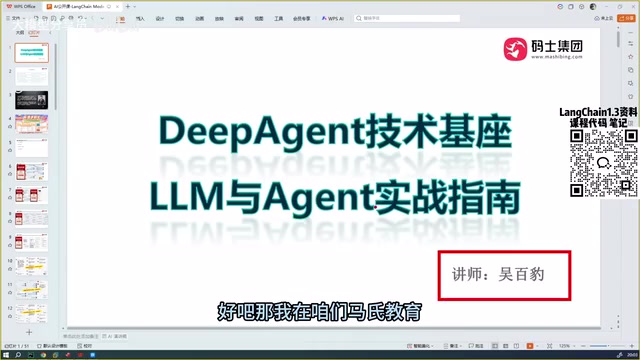
LangChain 1.3 in Practice: A Complete Learning Path from LLMs to Agent Development
A comprehensive guide to LangChain 1.3 — covering the full learning path from Models to Agent development, including Harness architecture, LangGraph, memory management, HITL, and Guardrails.
Read more →

·3 min
LangChain 1.3 in Practice: A Complete Technical Guide from LLMs to DeepAgent
An in-depth analysis of the core knowledge system of LangChain 1.3, covering the Harness architecture philosophy, DeepAgent positioning, LangGraph fundamentals, Agent memory, and human-in-the-loop.
Read more →

·5 min
ECC: An Agent Enhancement Framework for AI Coding Assistants — Five Core Capabilities Explained
ECC is an agent optimization framework for AI coding assistants like Claude Code, Cursor, and Codex, enhancing them with skills, memory, security, and research-first development capabilities.
Read more →
·7 min
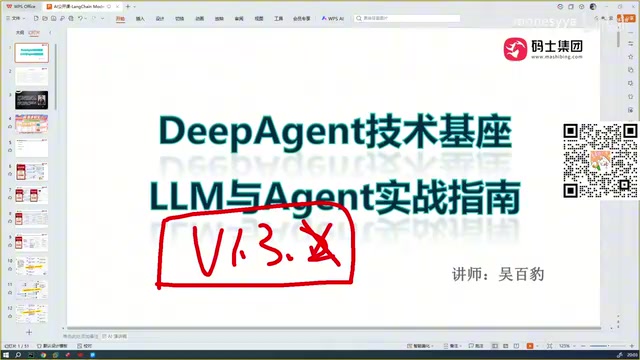
Getting Started with LangChain 1.3: Core Concepts of LLMs and Agents
An in-depth breakdown of LangChain 1.3's core concepts, covering the three major limitations of LLMs, Agent architecture, memory management, and a complete learning path. Master LangChain and LangGraph to quickly build AI development skills.
Read more →

·6 min
Rust AI Agent System Prompt Engineering in Practice: A Seven-Dimensional Design Guide
An in-depth analysis of the four core roles of AI Agent system prompts and the four-step tool-calling method, covering behavioral boundaries, autonomous execution principles, and trigger pattern design—helping Rust developers build high-quality agents.
Read more →

·6 min
LangChain 1.3 in Practice: A Complete Guide to DeepAgent Architecture and the Harness Philosophy
An in-depth look at LangChain 1.3's core modules and DeepAgent architecture—covering the Harness philosophy, LangGraph internals, HITL, memory management, and guardrails to master production-grade AI Agent development.
Read more →
AI Engineer World's Fair Closing Day: …
·2 min
AI Engineer World's Fair Closing Day: The Loops Debate, State of the Industry, and What to Build Next
AIEWF closing day recap: the agent loops debate, the State of AI Engineering report, and a keynote on what to build next — covering AI engineering's key divides and trends.
Read more →

·3 min
Codex CLI Practical Guide: From Setup to Enterprise-Level AI Development
Master OpenAI Codex CLI from setup to enterprise use: slash commands, AGENTS.md, MCP protocol, multi-agent coordination, plugin development, and RAG project implementation.
Read more →

·7 min
A New Core Skill for Programmers: How to Effectively Lead Your AI Agent Dev Squad
Coding alone isn't enough anymore. Learn the 5 key steps to commanding AI Agents—define outcomes, split tasks, provide context, iterate small, and keep humans in the loop.
Read more →

·6 min
Getting Started with LangChain: A Deep Dive into Model and Agent Core Concepts
Deep dive into LangChain's core Model and Agent concepts, covering unified model interfaces, agent tool calling, middleware mechanisms, and key principles for building LLM applications.
Read more →