#NVIDIA Nsight
145 related articles

·4 min
The Death of Codex: How OpenAI Buried Developers' Favorite Coding Brand With Its Own Hands
OpenAI merged Codex into ChatGPT, killing a developer-beloved AI coding brand. A deep dive into the gains and losses of this brand consolidation.
Read more →
·5 min
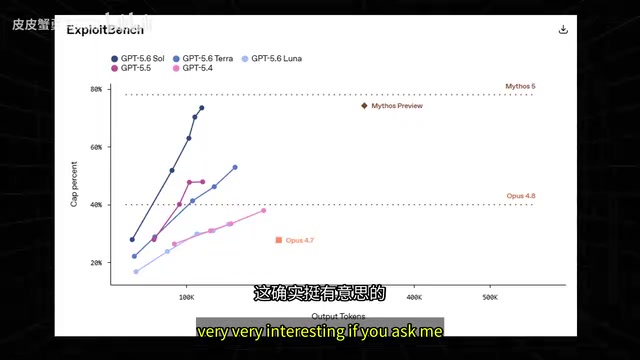
GPT-5.6 Released: Outperforms Rivals but Halted by Government—Cybersecurity Capabilities Trigger Regulatory Red Line
OpenAI releases GPT-5.6 (Sol/Terra/Luna), beating Anthropic on Terminal Bench at ~40% lower cost. But its cybersecurity capabilities hit danger thresholds, limiting access to trusted partners at government request.
Read more →

·7 min
Practical RL Compute Optimization: Core Strategies to Boost CPU and GPU Utilization
An in-depth look at why CPU and GPU utilization is low in RL training, covering vectorized environment parallelism, distributed Actor-Learner architectures, GPU-side simulation (Isaac Gym/Brax), and Ray RLlib practice.
Read more →

·3 min
ComfyUI-INT4-Fast: Running Flux Models Smoothly on 6GB GPUs
ComfyUI-INT4-Fast brings W4A4 quantized inference to ComfyUI. RTX 3060 (6GB VRAM) generates 1024×1024 images in 17s. Per-layer mixed-precision routing balances speed and quality for Flux models.
Read more →

·5 min
Has Apple Lost the AI Race? The Battle Between Software Setbacks and the Hardware Moat
After Apple failed to deliver on its new Siri promise for two years running, many ask: has Apple lost the AI race? We break down two AI tracks—software models vs. on-device hardware.
Read more →

·6 min
Tencent Hunyuan HY3 Official Version Open-Sourced: The Strongest Under 300B, at 1 Yuan per Million Tokens
Tencent Hunyuan HY3 official version is open-sourced under Apache 2.0, priced as low as 1 yuan per million input tokens, with major gains in agents, reasoning, coding, and long context. On the same day, Meituan open-sourced its trillion-parameter LongCat 2.0.
Read more →

·6 min
AI's Second Half: The Decisive Battle Shifts from Models to Infrastructure
Model capabilities are converging, making inference cost and scalability the new focus of AI competition. A deep analysis of AI infrastructure's core layers.
Read more →

·7 min
Krea2 Tested: Does the FP8 vs BF16 Quality Gap Still Exist?
A Reddit user compared FP8 and BF16 precision on the Krea2 model and found almost no difference in image quality. This article analyzes the technical reasons behind the shrinking quantization gap and its real-world impact on VRAM usage and inference speed.
Read more →

·5 min
TensorRT Multi-Device Inference: Engineering Practices for Breaking Through Single-GPU Memory Bottlenecks
NVIDIA TensorRT now supports multi-device inference via pipeline and tensor parallelism, distributing large models across multiple GPUs to break through single-card memory limits.
Read more →

·7 min
Flagship Model vs. Local 27B: Which Follows Code Instructions More Faithfully?
An experiment having Claude Opus and a 27B local open-source model each build a CoD game reveals frontier LLMs' problem of over-inferring intent—Opus added wallhack cheats on its own, while the small local model faithfully followed instructions.
Read more →

·3 min
Muse Spark 1.1 Released: Competing Through Ultra-Low Cost in a Crowded AI Tool Market
Muse Spark 1.1 launches with an ultra-low cost focus. We break down the pricing strategy, technical approaches behind it, and its real value for developers and small teams.
Read more →

·7 min
Harness Engineering: The Six-Layer Engineering Framework for Enterprise AI Agent Deployment
From Prompt Engineering to Harness Engineering, a deep dive into the core challenge of truly deploying AI Agents in enterprises. This article breaks down the six-layer architecture and shares real-world Hermes Agent practice.
Read more →
·5 min
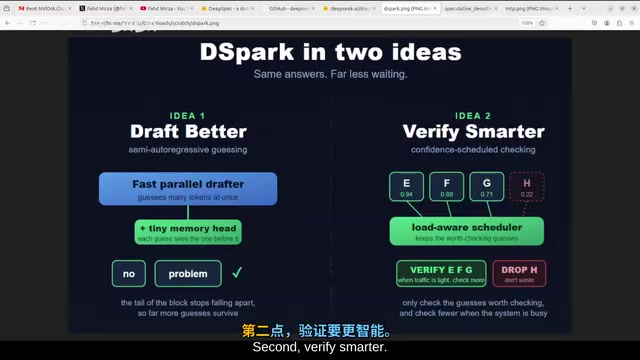
DeepSeek DSpec Hands-On: How Speculative Decoding Accelerates LLM Inference by 6x
Hands-on report on DeepSeek's open-source inference acceleration toolkit DSpec: draft model + smart scheduling delivers lossless speedup, hitting acceptance length 6 on GSM8K and reproducing official data.
Read more →

·8 min
Fable 5 Opens to All Paid Users: How AI Storytelling Tools Are Reshaping Content Production
Fable 5, an AI storytelling platform, opens to all paid users and sparks debate on Hacker News. We analyze AI creation tools' practicalization trend across product positioning, competition, and access strategy.
Read more →

·7 min
Block-Sparse Featurizers: Opening the Black Box of Vision Model Neural Geometry
Block-sparse featurizers remap dense vision model activations into block-sparse representations, making the internal feature spaces of ViT, CNN, and other models readable and interpretable. This article explores their core principles, links to mechanistic interpretability, and applications.
Read more →
·7 min
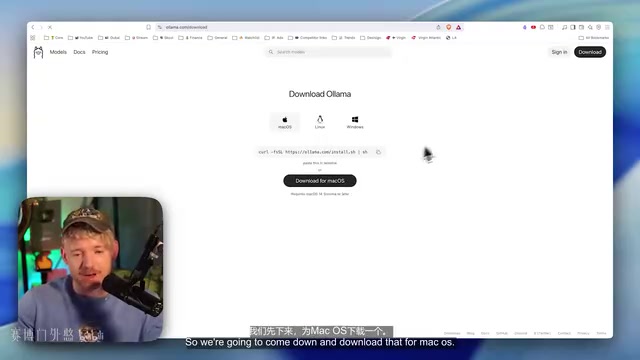
Ollama + Hermes Local AI Deployment: Building a 100% Private Personal AI Operating System
Build a fully private local AI system with Ollama + Hermes: zero cost, no rate limits, data stays local. Learn deployment steps, model selection tips, and private/cloud hybrid workflows.
Read more →
·5 min
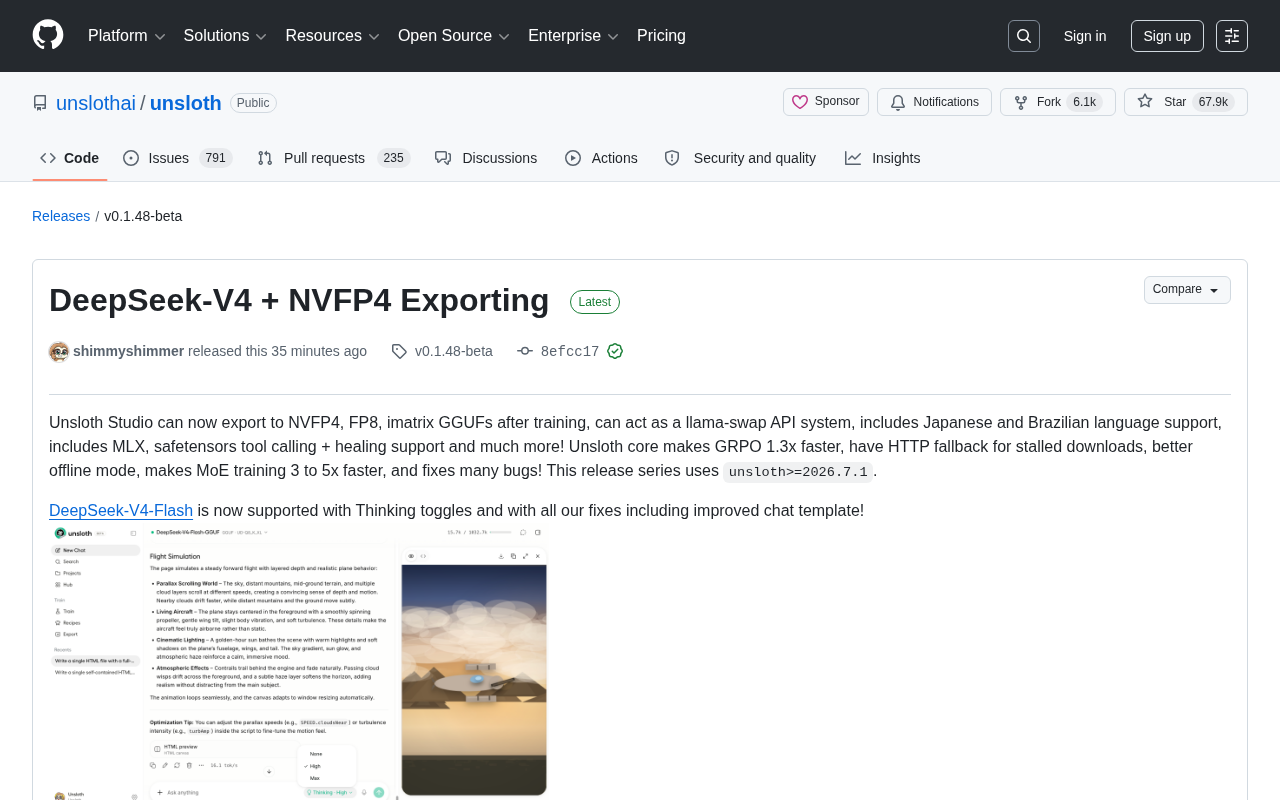
Major Unsloth Update: NVFP4 Quantization Export and DeepSeek-V4 Training Support
Unsloth v0.1.48-beta released, adding NVFP4/FP8 quantization export, OpenAI-compatible API hot-swapping, 3-5x faster MoE training, and 1.3x faster GRPO, covering the full LLM fine-tuning, quantization, and local deployment pipeline.
Read more →

·6 min
video-use: The Open-Source Tool That Lets AI Coding Agents Auto-Edit Videos
video-use from the browser-use team lets AI coding Agents auto-edit videos via natural language. 13K+ GitHub stars, batch processing, silence removal, FFmpeg integration.
Read more →

·7 min
GPT-5.6 Hands-On: A Complete Breakdown of the Three New Models — Soul, Terra, and Luna
OpenAI unveils the GPT-5.6 family — Soul, Terra, and Luna. Flagship Soul offers a 500K-token context and built a Pokémon RPG in 31 minutes. Plus Fable 5, GLM 5.5, and Grok 4.5 updates.
Read more →

·6 min
From Vibe Coding to AI Engineering: A Complete Practical Guide to Codex and Claude Code
An in-depth analysis of the practical use of Codex and Claude Code, comparing Vibe Coding and AI engineering, covering Super Power plugins, Spec-Driven Development, and Chinese LLM integration strategies.
Read more →