#PyTorch image classification
26 related articles

·3 min
PyTorch Image Classification in Practice: Complete Pipeline from Data Preprocessing to Model Training
A PyTorch flower classification project covering the full image classification pipeline: data preprocessing, transforms augmentation, ResNet pretrained models, and Resize strategies with reusable template code.
Read more →

·3 min
Mathematical Foundations for Machine Learning: A Complete Learning Path from Linear Algebra to Probability Theory
A systematic guide to the three core math areas for ML—linear algebra, calculus, and probability—with verified free resources like Mathematics for Machine Learning, 3Blue1Brown, and practical learning strategies.
Read more →

·6 min
Hands-On with Panel AI On-Premises Deployment: One-Click Enterprise Adoption and Unified Compute Cluster Scheduling
In-depth review of Panel AI v1.1.1: second-level installation, no-public-IP networking, batch compute cluster management. Learn how enterprise AI on-premises deployment barriers are dramatically lowered.
Read more →

·5 min
China Weighs Restricting Top AI Model Exports as DeepSeek Develops Its Own Inference Chip
China's Commerce Ministry weighs restricting overseas access to top open-weight AI models from Alibaba, ByteDance, and DeepSeek, while DeepSeek develops its own inference chip amid a US-China AI export standoff.
Read more →

·5 min
China Weighs Restricting Top AI Model Exports, While DeepSeek Quietly Builds Its Own Inference Chip
China's Ministry of Commerce is weighing restrictions on overseas access to top open-weight AI models from Alibaba, ByteDance, and DeepSeek. Meanwhile, DeepSeek is quietly building its own inference chip and raising ~$7B in first external funding.
Read more →

·2 min
Variable-Length Matrix Classification: Choosing the Right Neural Network Architecture for Unordered Set Data
Why do CNNs and RNNs fail on unordered matrix data? Learn about permutation invariance, Deep Sets, and Set Transformer to pick the right architecture for set-based classification.
Read more →

·3 min
How to Systematically Learn Machine Learning After Mastering Math and Python
Already know math and Python? Learn the complete machine learning roadmap: from data science tools and classical algorithms to deep learning frameworks and specialization.
Read more →

·3 min
Math Foundations for Machine Learning: A Roadmap Covering Four Core Areas with Recommended Resources
Struggling with math for ML? This guide covers linear algebra, calculus, probability, and optimization with top resources like 3Blue1Brown and Mathematics for Machine Learning.
Read more →

·2 min
A Beginner's Guide to Grokking Machine Learning: Self-Study Paths and Resource Recommendations
Why Grokking Machine Learning is a top pick for ML beginners — covering the author, content, legal access options, and an effective self-study roadmap.
Read more →

·5 min
Advanced Machine Learning Reading List: How to Choose the Right Book Among These 4 Classics?
Torn between Géron, Chollet, and Raschka? This article breaks down 4 classic ML books for self-learners aiming at finetuning and small language models (SLM), helping you find the best advanced path.
Read more →
·4 min
No Competitive Programming Required: How CS Students Can Pivot to AI/ML and Land Internships
How can CS students who dislike competitive programming systematically pivot to AI/ML? This guide covers skill priorities (Python/SQL/ML/deployment), portfolio strategy, Kaggle tips, and real paths to landing AI/ML internships.
Read more →

·7 min
Training Machine Learning Models from Scratch: A Complete Beginner's Guide
A complete walkthrough of training machine learning models from scratch—covering problem definition, data preprocessing, algorithm selection, hyperparameter tuning, and evaluation, with tool recommendations for beginners.
Read more →

·3 min
Should Developers Learn Machine Learning? A Rational ROI Analysis and Learning Path Guide
Should full-stack developers learn machine learning? This article analyzes the difference between applied ML and research ML, breaks down the ROI at each stage, and offers a concrete action path.
Read more →

·4 min
How to Choose a Machine Learning Course for Beginners: A Complete Roadmap
Not sure where to start with machine learning? This guide covers the community-approved ML roadmap: from math and Python basics to Andrew Ng, fast.ai, Kaggle, and CS229.
Read more →

·7 min
Complete Guide to Training Small Models on Kaggle's Free Compute: GPU Quotas and Practical Tips
In-depth guide to Kaggle's free-tier compute: P100/T4 GPU with 30 hours/week quota, 12-hour sessions, suitable models like CNN and BERT fine-tuning, plus tips like mixed precision and checkpointing to start deep learning at zero cost.
Read more →

·7 min
Open Source Community Collaboration Culture: How a Single Tweet Amplifies Technical Impact
Starting from a brief thank-you tweet, this article explores content co-creation in AI and open source communities—how video demos become a new dissemination medium and how creators and developers build trust networks together.
Read more →
·6 min
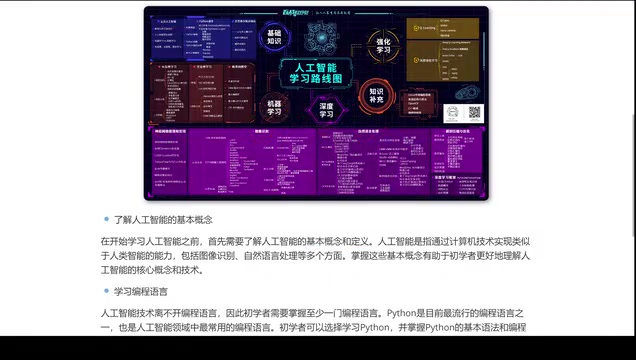
AI for Beginners: A Five-Step Practical Path That Skips the Math and Python Syntax Traps
Struggling with math and Python when learning AI from scratch? This article lays out a five-step entry path: grasp the concepts, learn Python lightly, master ML and deep learning principles, get hands-on with PyTorch, then deepen understanding through real projects.
Read more →

·6 min
A 284B Model Running on a MacBook: The Real Breakthrough and Barriers of Local DeepSeek Inference
Redis creator runs 284B-parameter DeepSeek model on a MacBook Pro at 26 tokens/sec using a pure C engine, asymmetric quantization, and MoE architecture.
Read more →
·3 min
A Complete Guide to Learning Python from Scratch: From Basics to Web Scraping Projects
A systematic Python learning path for beginners covering syntax, OOP, web scraping, office automation, and data analysis, with methodology tips and resources.
Read more →
·4 min
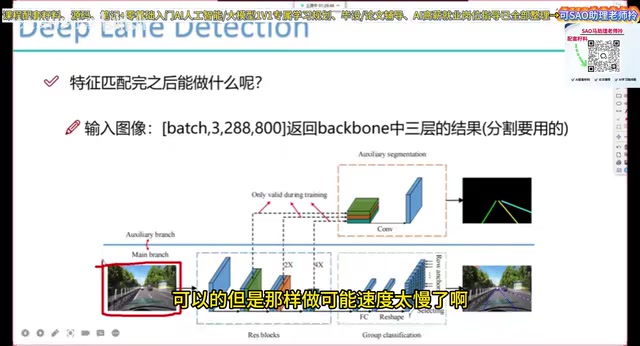
Deep Learning Lane Detection: From Segmentation to Classification for 300+ FPS Real-Time Inference
Deep learning lane detection algorithm that simplifies dense segmentation into efficient grid classification, achieving 300+ FPS real-time inference with row selection, Focal Loss, and expectation-based localization.
Read more →