#React Native Expo tutorial
60 related articles

·2 min
Stop Blindly Using Adam: The Hidden Pitfalls and Practical Boundaries of Optimizers
Deep analysis of Adam optimizer failure mechanisms in RL and deep Transformer training, revealing the mathematical roots of loss burstiness from second moment estimation, with practical solutions.
Read more →

·5 min
Getting Started with Codex: Four Product Forms Explained & How to Choose Between Cursor, Claude Code, and Codex
In-depth analysis of OpenAI Codex's four forms (CLI, web, plugin, app), comparing Codex, Claude Code, and Cursor on price, stability, and use cases to help developers choose the right tool.
Read more →

·3 min
Six-Week AI Persona Account Experiment: The Truth Behind "Passive Income" at $0.32/Hour
A creator built a faceless AI persona account from scratch. After 6 weeks: 34 hours invested, $11 earned, $0.32/hour. The real economics behind AI passive income revealed.
Read more →

·4 min
Gemini 3.5 Pro Hands-On: No More Lazy Code Generation, Complete Projects in a Single Output
A Reddit user tested Gemini 3.5 Pro in Arena and found it generates 20+ files with hundreds of lines of code per file in a single pass, with no lazy shortcuts or placeholders.
Read more →

·3 min
Getting Started with AI Agent Development: A Learning Path from Zero to Deployment
A systematic guide to the complete learning path for AI Agent development—covering prompt engineering, RAG knowledge bases, LangChain & LangGraph, fine-tuning, and multi-agent collaboration.
Read more →

·7 min
Claude Code in Action: Building an Embedded Tetris Game with AI in 3 Hours
A hands-on case study: using Claude Code and the LVGL graphics library to build a Tetris game running on an embedded dev board from scratch in under 3 hours.
Read more →

·6 min
Vue3 from Scratch: A Hands-On Journey to Building an AI Health Monitoring System
A Vue3 beginner tutorial centered on "learn just enough, apply immediately." A three-stage path covers reactivity, Composition API, Element Plus, and data visualization, culminating in an enterprise-grade AI health monitoring system with blood sugar management, RAG consultation, and doctor-patient collaboration.
Read more →

·2 min
FastAPI Fundamentals: Frontend-Backend Separation and RESTful Design Explained
Learn the core concepts behind FastAPI: frontend-backend separation, API interface design, and RESTful specification. Master resource-oriented design before writing your first line of code.
Read more →

·2 min
AI Skills in Practice: How Test Engineers Can Automate API Testing and Generate Test Cases at Scale
Learn how AI Skills are transforming software testing. This guide covers Skill architecture, learning paths, and real-world applications in API automation and WebApp testing.
Read more →

·3 min
Modern Web Guidance: Helping AI Stop Writing Outdated Frontend Code
Chrome's Modern Web Guidance offers 100+ expert-reviewed guides to help AI Agents adopt modern web practices, fixing training data lag and legacy pattern recommendations with semantic search and Baseline compatibility checks.
Read more →

·3 min
Programmer to AI Engineer: You're Already 80% There — Here Are the 6 Skills You're Missing
Programmers transitioning to AI engineering aren't starting from scratch. Learn the 6 core skills — LLM APIs, RAG, prompt engineering, LLMOps — needed to make the leap.
Read more →
·6 min
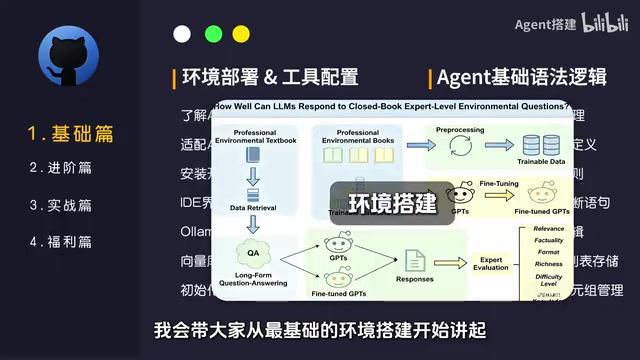
AI Agent Development Learning Path: Four Stages from Zero to Hands-On Projects
A systematic breakdown of the AI agent development learning path, covering four stages: fundamentals, RAG knowledge bases, tool use, multi-agent collaboration, and hands-on projects.
Read more →

·4 min
Coze in Practice: A Complete Guide to Building Multi-Agent Collaboration Teams
A systematic guide to Coze's positioning and capabilities, covering Agent-building platform categories, Skill modules, workflow orchestration, and multi-Agent team building.
Read more →

·5 min
Getting Started with LangGraph: Building AI Agent Workflows with Graph Structures
Master LangGraph core concepts: nodes, edges, and routing functions. Learn StateGraph, MemorySaver, and ToolNode through a weather-query Hello World example, and understand how LangGraph relates to LangChain and powers Agent workflows.
Read more →

·6 min
The Eight-Step Method for Agent Development: A Practical Path from Pitfalls to Production
Many enterprises fail at AI Agents due to choosing the wrong tools and lacking methodology. This article outlines an eight-step Agent development method—from cognitive foundations, scenario selection, hand-writing ReAct, and structured output to Tool Use, RAG, evaluation sets, and production fallback.
Read more →

·7 min
Codex Direct Connection Configuration Guide for China: Complete GPT Agent Setup Tutorial
Complete guide for configuring OpenAI Codex Agent in China, covering installation, API key setup, permission modes, reasoning intensity, and security considerations for third-party relay services.
Read more →

·5 min
Connecting DeepSeek V4 in VSCode: Complete Claude Code Plugin Setup Tutorial
Shrinking GitHub Copilot student benefits? Learn to install the Claude Code plugin in VSCode and connect the DeepSeek V4 API via CCSwitch—powerful Agent capabilities at 25% price, no IDE switch needed.
Read more →

·7 min
Getting Started with Dify: A Complete Guide from Local Deployment to Building Enterprise-Grade AI Applications
A detailed guide to Dify, the open-source LLM app development platform, covering its core features and full local deployment via VMware + Ubuntu + aaPanel + Docker. Supports 100+ models like DeepSeek and ChatGPT to build enterprise AI apps fast.
Read more →
·7 min
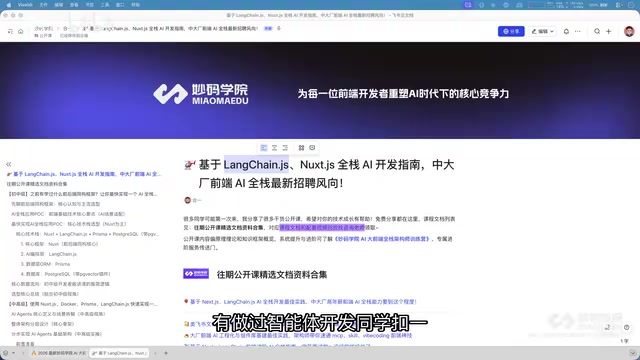
LangChain.js + Nuxt.js: An AI Full-Stack Advancement Path for Frontend Engineers
Frontend hiring now treats AI capabilities as a core assessment, covering RAG knowledge bases, AI Agent development, and LangChain.js engineering. Learn how LangChain.js + Nuxt.js helps frontend developers build memory- and retrieval-capable AI full-stack apps.
Read more →

·7 min
Electron + LangGraph in Practice: Building an AI Agent Visual Orchestration App from Scratch
A hands-on guide to building an enterprise-grade AI Agent workflow orchestration app with Electron Forge and LangGraph, covering local LLM deployment (Qwen3-0.6B), node-based visual canvas design, and full Function Calling integration.
Read more →