#Rust CUDA
64 related articles

·3 min
Cherry Studio + MCP: A Practical Guide to Building AI Agents with Local Deployment
Learn how to build an automated AI agent using Cherry Studio, MCP protocol, and locally deployed models — covering DeepSeek integration, web scraping, and private knowledge base setup.
Read more →
CUDA 13.3 Adds Carryless Multiplicatio…
·2 min
CUDA 13.3 Adds Carryless Multiplication: A Key Step Forward for GPU Cryptography Acceleration
CUDA 13.3 introduces native carryless multiplication support, closing a 15-year GPU gap in AES-GCM, CRC, and cryptographic acceleration. Here's what it means.
Read more →

·2 min
GPU Sharing in Kubernetes Production: A Deep Dive into MIG, MPS, and Time-Slicing
A deep dive into MIG, MPS, and Time-Slicing GPU sharing solutions for Kubernetes production. Compare isolation, performance, and use cases to make the right choice.
Read more →

·2 min
Ollama Complete Guide: Running Open-Source LLMs Locally
Want to run open-source LLMs like DeepSeek locally for free? Ollama is the easiest solution. This guide covers what Ollama is, its core advantages, and key use cases.
Read more →

·4 min
Running Qwen3.6 27B Locally on a Single RTX 3090: A Complete Guide to Cloud-Rivaling Performance
One used RTX 3090, one 16.8GB GGUF file, and Qwen3.6 27B runs locally offline. SWE-bench score of 77 rivals Claude Sonnet. MTP boosts speed to 59 tok/s. Full local AI coding assistant deployment guide.
Read more →
The Complete AI Researcher Learning Ro…
·3 min
The Complete AI Researcher Learning Roadmap: A Beginner's Guide to Deep Learning
A structured AI/ML learning roadmap covering Python, math, machine learning, deep learning, and MLOps — with timelines, milestones, and free resource recommendations.
Read more →

·3 min
Zer0Fit: Connecting Google's TabFM and TimesFM to LLM Chat Interfaces via MCP
Zer0Fit wraps Google's TabFM and TimesFM foundation models as MCP servers, letting users run classification, regression, and time series forecasting through a local LLM chat interface — no ML code required.
Read more →

·2 min
Getting Started with Ollama: A Powerful Tool for Deploying Open-Source LLMs Locally
Ollama is a free, open-source LLM management platform that lets you deploy open-source models like DeepSeek locally with one click. It supports macOS, Windows, Linux, and Docker, with both API and CLI modes to build private AI apps at zero cost.
Read more →
The Circular Financing Trap in Nvidia'…
·4 min
The Circular Financing Trap in Nvidia's Ecosystem: The Capital Undercurrents Behind the GPU Boom
An in-depth look at the circular financing model among Nvidia, CoreWeave, and Nebius—where suppliers double as investors, capital self-reinforces, and valuation bubbles and systemic risk lurk behind the AI infrastructure boom.
Read more →

·2 min
SGLang Integrates DSpark: How Confidence-Driven Speculative Decoding Cracks the High-Concurrency Failure Problem
SGLang officially integrates DSpark, solving the core pain point of speculative decoding failure under high-concurrency batches via confidence-driven variable-length verification. Supports Qwen3 and DeepSeek-V4, hitting 383.7 tok/s on B300.
Read more →

·7 min
GPT-5.6 and Grok 4.5 Launch Simultaneously, Meta Unveils Agent-Based Image Model
OpenAI GPT-5.6 expands its preview, xAI Grok 4.5 opens access at the same time, Meta releases the Agent-based Muse Image model and Muse Video model, while Apple and DeepSeek launch in-house AI inference chip programs. A quick look at the week's five biggest AI stories.
Read more →

·3 min
The Software Compounding Effect: The Real Deciding Factor in AI Infrastructure Competition
Beyond the GPU arms race, software is becoming AI infrastructure's true compounding engine. A deep dive into optimization stacking, the CUDA ecosystem moat, and how open source scales individual breakthroughs into community wealth.
Read more →

·2 min
AI Agents for SGLang Kernel Optimization: Real-World Performance Gains and Engineering Methodology
SGLang's team converted expert knowledge into agent skills, achieving 71.4% throughput gains, TTFT reduced from 456ms to 168ms. A deep dive into agent-assisted kernel optimization methodology.
Read more →

·3 min
Krea 2 Real-World Test: RTX 3060 Generates 1080P Images in Under 2 Minutes
Can an RTX 3060 12GB run Krea 2? Real-world tests show 1080P images in 1–2 minutes. Explore how Krea2 Turbo FP8 quantization enables efficient AI art on consumer GPUs.
Read more →

·3 min
GLM-5.2 Coming Soon? Domestic GPU Code LLM MUSA Coder Goes Open Source
GLM-5.2 enters internal testing; Moore Threads open-sources MUSA Coder, China's first code LLM trained on domestic GPUs; Google backs Anthropic with $35B in guarantees.
Read more →

·6 min
Tencent Hunyuan HY3 Official Version Open-Sourced: The Strongest Under 300B, at 1 Yuan per Million Tokens
Tencent Hunyuan HY3 official version is open-sourced under Apache 2.0, priced as low as 1 yuan per million input tokens, with major gains in agents, reasoning, coding, and long context. On the same day, Meituan open-sourced its trillion-parameter LongCat 2.0.
Read more →

·2 min
Unsloth v0.1.462-beta: Keyboard Navigation and Accessibility Improvements for Model Picker
Unsloth v0.1.462-beta adds full keyboard navigation to the Studio Model Picker, fixes Tab focus order, and improves accessibility for LLM fine-tuning workflows.
Read more →

·4 min
Claude Science Launch: Anthropic's AI Assistant Built for End-to-End Scientific Research
Anthropic launches Claude Science (beta), a research-focused AI app with artifact traceability, on-demand environments, and 60+ scientific database integrations.
Read more →
·6 min
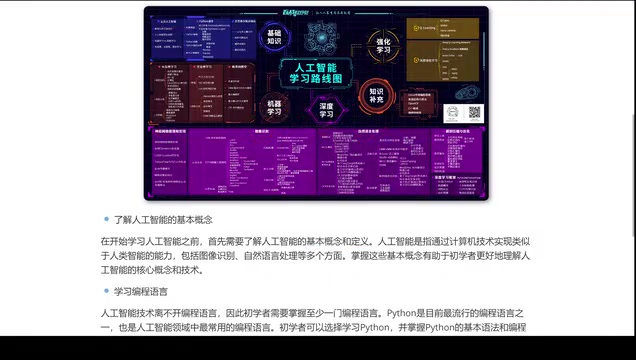
AI for Beginners: A Five-Step Practical Path That Skips the Math and Python Syntax Traps
Struggling with math and Python when learning AI from scratch? This article lays out a five-step entry path: grasp the concepts, learn Python lightly, master ML and deep learning principles, get hands-on with PyTorch, then deepen understanding through real projects.
Read more →

·5 min
Python Learning Roadmap for Beginners: A Three-Stage System to Avoid 90% of Detours
Learning Python from scratch? This article breaks down the three learning stages—Fundamentals, Intermediate, and Practice—covering variables, OOP, scraping, and data analysis to help you plan a systematic Python path.
Read more →