#SWE-Bench Verified
93 related articles
·3 min
SlopCodeBench: Why AI Code Benchmarks Are Failing
SlopCodeBench sparks deep reflection on AI code evaluation. From benchmark contamination to pass-rate pitfalls, exploring why current benchmarks fail to measure real code quality.
Read more →

·3 min
Opus vs Gemini vs GPT: Top AI Model Comparison & Evaluation Methodology
In-depth analysis of Claude Opus, Gemini Pro, and ChatGPT: the real competitive landscape among top AI models, limitations of community benchmarks, and scientific methods for model selection.
Read more →

·4 min
Burning Through 80 Billion Tokens: Why Vibe Coding Is Doomed to Fail
A creator spent 40 days and 80 billion tokens testing the real limits of Vibe Coding. This article dissects why AI programming crashes in production: complexity, context limits, and compression loss.
Read more →

·3 min
Anthropic's Hands-On Guide: How to Scientifically Choose and Evaluate AI Models
Anthropic's Applied AI team breaks down a methodology for choosing AI models: building custom evals, avoiding three common pitfalls, measuring value by cost per success, and cutting costs with prompt caching and context engineering.
Read more →

·3 min
Laguna S 2.1: The Open-Source Coding Model That's 14x Smaller Yet Stronger
Poolside releases Laguna S 2.1, an open-source agentic coding model: 118B total params with only 8B active, scoring 40.4% on DeepSWE — ~4.5x DeepSeek V4 Pro Max. Supports 1M-token context, deployable on a single workstation.
Read more →

·5 min
From Vibe Coding to AI Engineering: A Complete Guide to Enterprise-Grade Development
In the AI programming era, Vibe Coding alone can only build toys. This article deeply analyzes the complete engineering path from Vibe Coding to SDD spec-driven development, covering Claude Code and Codex tool selection, the SuperPower plugin, and domestic LLM comparisons.
Read more →

·3 min
Vibe Coding for Beginners: Build Your First Project with AI from Scratch
What is Vibe Coding? Learn this new AI programming paradigm from scratch — no CS degree needed. Use Claude Code, Cursor, and more to build real projects by describing your ideas.
Read more →

·3 min
Grok 4.5 Review: A Full Breakdown of Elon Musk's Most Powerful AI Coding Model
xAI releases Grok 4.5, ranking #1 on SWE Marathon and outperforming Claude Opus. Explore benchmark scores, Agent capabilities, free access, and CLI installation.
Read more →
·3 min
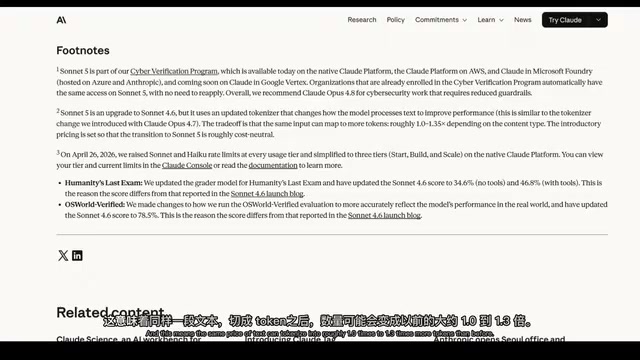
Claude Sonnet 5 Deep Dive: Impressive Benchmarks, Questionable Value — Just Use Opus 4.8?
Claude Sonnet 5 review: 63.2% SWE-bench, near Opus 4.8 performance, but new tokenizer hides real costs. Ranks 13th on CursorBench. Most tasks: stick with Opus 4.8.
Read more →
·3 min
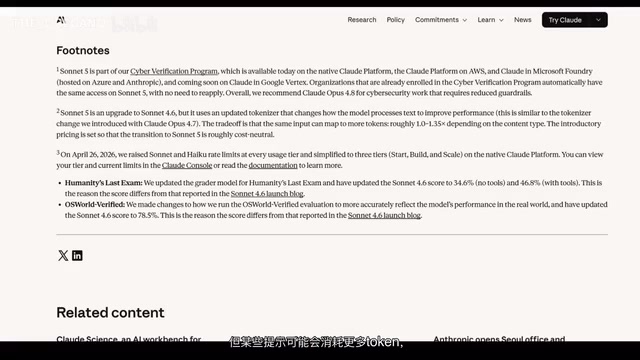
Claude Sonnet 5 Deep Dive: Impressive Benchmarks, Disappointing Reality — Stick with OPUS 4.8
Anthropic's Claude Sonnet 5 claims near-OPUS 4.8 performance at lower cost. Real-world tests reveal hidden tokenizer costs, weak creative output, and only 13th place on Cursor rankings.
Read more →
Can Vorflux Disrupt the AI Coding Agen…
·2 min
Can Vorflux Disrupt the AI Coding Agent Landscape? A Rational Take on Investor Endorsements
An investor's tweet benchmarked AI coding assistant Vorflux against Devin, claiming it "wins hands down" and predicting a $100B valuation. Here's a rational breakdown.
Read more →

·2 min
GLM Open-Source Model: Can a Million-Token Context Window Challenge Claude Code?
GLM open-source LLM claims 1M-token context, local deployment, and coding ability rivaling Claude Code. We break down the three key selling points and evaluate the hype vs. reality.
Read more →

·2 min
Grok 4.5 vs Composer 2.5: Real-World Code Benchmark — Who Wins?
A developer benchmarked Grok 4.5 High vs Composer 2.5 on real Terraform/AWS bug fixes. Composer 2.5 won decisively — even beating the pricier GPT-5.6 Sol.
Read more →

·2 min
GPT-5.6 Truth Check: Celestial Model Names and the Risks of Third-Party 'Direct Access' Services
A viral video claims GPT-5.6 uses Sol/Terra/Luna celestial model names. We break down the suspicious benchmarks, fake model names, and serious risks of third-party 'direct access' services.
Read more →

·2 min
Selling Reinforcement Learning Environments: Real Business Opportunity or Phantom Demand?
Can selling RL environments be a viable startup? We break down TAM, technical barriers, Scale AI competition, and real niche opportunities in this emerging space.
Read more →

·4 min
Running Qwen3.6 27B Locally on a Single RTX 3090: A Complete Guide to Cloud-Rivaling Performance
One used RTX 3090, one 16.8GB GGUF file, and Qwen3.6 27B runs locally offline. SWE-bench score of 77 rivals Claude Sonnet. MTP boosts speed to 59 tok/s. Full local AI coding assistant deployment guide.
Read more →

·4 min
GPT-5.6 Deep Dive: AI Training AI Opens a New Paradigm in the Model Race
OpenAI's GPT-5.6 launches as three models: SO, TERA, and LUNA. The flagship SO autonomously completed LUNA's post-training, marking a new era of AI-trained AI. Deep dive into pricing, Programmatic Tool Calling, METR safety findings, and government oversight.
Read more →

·3 min
Ornith 1.0 9B Model Local Test: Tower Defense Game Exposes Small Model Coding Limitations
Hands-on test of Ornith 1.0 9B open model on a 16GB M4 Mac mini. A tower defense game task reveals the precision limits of small-parameter models vs 35B.
Read more →

·2 min
Getting Started with Claude Code: A Complete AI Coding Tool Comparison & Practical Guide
A deep dive into Claude Code's core strengths: full project context reading, auto error fixing, and agentic coding. Compare Copilot, Cursor, Trae, and Codex to find the right AI coding tool for you.
Read more →

·3 min
In-Depth Review of GPT 5.6 Soul: Sub-Agent Systems, Government Review, and Competitor Comparison
In-depth analysis of GPT 5.6 Soul: multi-sub-agent parallel architecture, Ultra Mode coding in practice, the controversy behind its 91.9% Terminal Bench score, and the trend of frontier AI entering government review.
Read more →