#Selenium vs Playwright
32 related articles
·3 min
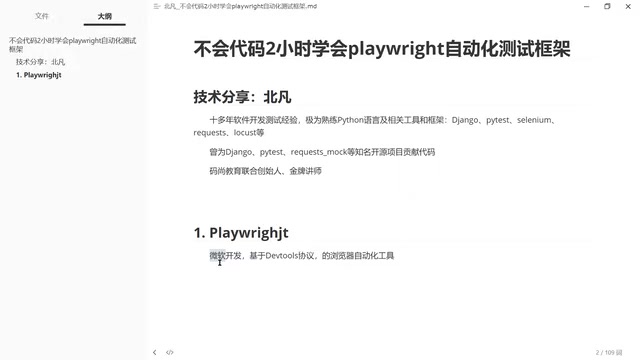
Playwright vs Selenium: Why More People Are Switching to Playwright
In-depth comparison of Playwright vs Selenium: DevTools protocol speed advantages, async support, smart locators, and AI/MCP integration to help you choose the right Web automation tool.
Read more →

·3 min
Playwright vs Selenium In-Depth Comparison: A Test Automation Tool Selection Guide for the AI Era
In-depth comparison of Playwright vs Selenium covering DevTools Protocol, async performance, smart locators, and AI MCP integration to help you choose the best automation testing tool.
Read more →

·4 min
WebMCP in Practice: How MakeMyTrip Is Reshaping the Travel Booking Experience
India's largest OTA platform MakeMyTrip uses WebMCP to standardize AI Agent interactions with web apps, replacing fragile DOM scraping with natural language-driven test automation and simplified complex booking scenarios.
Read more →

·4 min
WebMCP in Practice: How MakeMyTrip Is Reshaping the Travel Booking Experience
India's largest OTA platform MakeMyTrip uses WebMCP to standardize AI Agent interaction with web apps, solving DOM scraping fragility, enabling natural language test automation, and simplifying complex international flight bookings.
Read more →

·6 min
The Complete Codex Guide: From Beginner to Pro with the All-in-One AI Assistant
OpenAI Codex is more than a coding tool—it's an AI agent that writes code, makes slides, and operates browsers. This guide covers its four versions, permission modes, plugins, automation, and six best practices.
Read more →

·2 min
Python Learning Path for Beginners: A Complete Breakdown of Three Core Modules
A complete Python learning path for beginners covering three modules: Fundamentals, Intermediate, and Hands-On Practice — including web scraping, office automation, and data analysis.
Read more →

·2 min
AI Skills in Practice: How Test Engineers Can Automate API Testing and Generate Test Cases at Scale
Learn how AI Skills are transforming software testing. This guide covers Skill architecture, learning paths, and real-world applications in API automation and WebApp testing.
Read more →

·4 min
AI-Powered Automated Testing: Using Pytest + MCP to Tackle Non-Determinism
Deep dive into AI-era automated testing: using Pytest + Playwright + MCP for stable automation, constraining code conventions with Skills, avoiding non-determinism and high token costs. Includes real debugging war stories.
Read more →

·5 min
Browser Use: A Deep Dive into the Event-Driven Browser AI Agent Framework
Browser Use is an open-source AI Agent framework that lets LLMs autonomously drive browser operations via natural language. This article breaks down its four-layer architecture, core Agent loop, CDP perception layer, dynamic Tools dispatch, and its Skills, Sandbox, and MCP extension capabilities.
Read more →

·6 min
Playwright E2E Builder: Engineering AI-Driven Web Automation Testing
Playwright E2E Builder is an AI Skill installed in Cursor that transforms UI automation from throwaway scripts into sustainable engineering assets through a four-step workflow, with built-in locator health checks.
Read more →

·3 min
Python for Absolute Beginners: A Complete Breakdown of a 10-Hour Systematic Course
Breaking down a 10-hour Python course for absolute beginners — covering syntax, OOP, functional programming, web scraping, and automation, with mind maps and exercises.
Read more →

·7 min
Learning Python from Scratch: A Complete Guide to the Three-Stage Learning Path
Want to learn Python from scratch but don't know where to begin? This article breaks down three stages—basic syntax, advanced mastery, and hands-on practice—with real projects in crawling, automation, and data analysis to help you build programming thinking.
Read more →
·7 min
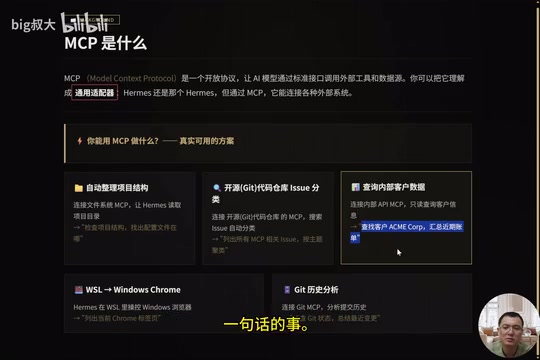
Connecting Hermes Agent to MCP: One Protocol to Unify All External Systems
Learn how to extend Hermes Agent's external system capabilities via MCP (Model Context Protocol): setup, whitelist permissions, WSL-to-Chrome bridging, and multi-server orchestration for AI Agent developers.
Read more →

·6 min
10 Billion Tokens in Practice: An In-Depth Review of Codex's Long-Horizon Engineering Capabilities
Creator Ajiang burned 10B Tokens on Codex to migrate cc-haha from Tauri 2 to Electron. A deep dive into Codex's long-horizon engineering, Computer Use, costs, and practical advice for developers.
Read more →

·6 min
Playwright's Three Test Agents: A Deep Dive into Planner, Generator, and Healer
Playwright's three new Test Agents—Planner, Generator, and Healer—cover the full pipeline from test design to script generation and auto-repair, integrated with VS Code, Claude Code, and more.
Read more →

·3 min
GitHub Daily · July 5: The Dual Narrative of Skill Ecosystem Explosion and Local-First AI
GitHub Trending July 5: Claude Code Skill ecosystem explodes, AI pen-testing tool Strix gains +2137 Stars, and local-first privacy apps surge.
Read more →

·3 min
Python Self-Study Roadmap: A Three-Phase Learning Method from Zero to Hands-On Projects
A detailed Python self-study roadmap in three phases: fundamentals, OOP & intermediate skills, and hands-on projects including web scraping and office automation.
Read more →

·2 min
AI-Powered Playwright: A Beginner's Guide to Zero-Code Web Automation Testing
Compare Playwright vs Selenium, explore Playwright's DevTools Protocol speed advantages, smart locators, and AI integration via MCP for zero-code web automation testing.
Read more →

·3 min
MCP vs Skills: Understanding the Key to AI Testing Efficiency
Understand the key differences between MCP (Model Context Protocol) and Skills through practical analogies and real testing scenarios to boost AI-driven test automation efficiency.
Read more →

·3 min
Codex Capabilities Explained: From Code Writing and Browser Automation to Controlling Your Computer and Phone
Deep dive into OpenAI Codex desktop's three core capabilities: AI coding & debugging, browser automation, and computer/iPhone control. Includes ChatGPT comparison and membership tips.
Read more →