#Skill synchronization
136 related articles
Sx 2.0: Sharing AI Skills via Dropbox …
·3 min
Sx 2.0: Sharing AI Skills via Dropbox to Bridge Team Collaboration Gaps
Sx 2.0 distributes team AI skills via shared Dropbox folders — no servers, zero deployment cost. A deep dive into its design philosophy, technical trade-offs, and the future of AI skill asset management.
Read more →

·2 min
Carmack × Sutton: Teaching AI Robots to Play Atari in the Real World
John Carmack and Turing Award winner Richard Sutton co-founded Keen Technologies. Their debut paper Physical Atari has robots playing real Atari games via cameras and mechanical controllers in real time.
Read more →

·3 min
ChatGPT Integrates Codex: A Full Hands-On Breakdown of Work and Codex on Desktop
ChatGPT desktop gets a major upgrade, integrating Codex into new Work and Codex modules. Hands-on tests cover auto PPT generation and full AI video production pipelines.
Read more →

·2 min
Unlocking Claude Code Cloud VMs: Context Engineering and Parallel Agent Orchestration
Deep dive into Claude Code cloud sessions (Claude Cowork): build context repositories, assign minimum-privilege credentials, and orchestrate parallel AI agents as an engineering team.
Read more →

·3 min
GPUStack in Action: Complete Guide to Day 0 Deployment of DeepSeek-V4-Flash
Deploy DeepSeek-V4-Flash DSpark on 8× H20-141G using GPUStack's SGLang backend on Day 0. Full walkthrough of Web UI config, parameter tuning, and 200 tokens/sec benchmark results.
Read more →
MailFlow Open Source Email Client: A D…
·2 min
MailFlow Open Source Email Client: A Developer's Guide to Contribution and Value
MailFlow is an open source email client project built for developers, prioritizing privacy, self-hosting, and extensibility. Here's why it matters and how to evaluate whether to contribute.
Read more →

·2 min
Distributed AI Systems: A Practical Engineering Guide to Training, Inference, and Production Deployment
A deep dive into distributed AI systems engineering: data/model/tensor parallelism for training, KV cache, quantization, elastic scaling for inference, and cloud deployment with Kubernetes, Ray, and DeepSpeed.
Read more →

·3 min
Can MiniMax Serve as a Hermes Agent's Brain? A Complete V0.18 Evaluation
A hands-on test of MiniMax as an AI Agent brain using the Hermes V0.18 framework: fast inference, low cost, stable long tasks—but clear flaws in complex reasoning and tool calling. Learn its three strengths, three weaknesses, and best-fit workflows.
Read more →
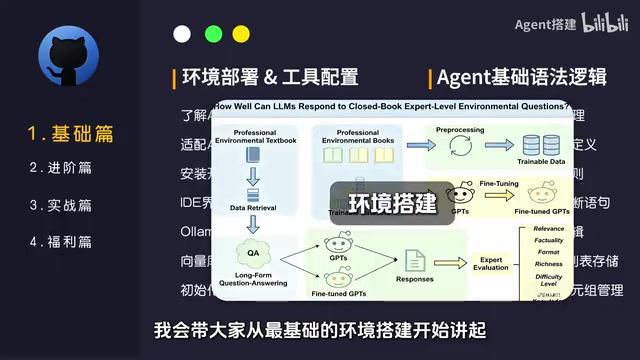
·6 min
AI Agent Development Learning Path: Four Stages from Zero to Hands-On Projects
A systematic breakdown of the AI agent development learning path, covering four stages: fundamentals, RAG knowledge bases, tool use, multi-agent collaboration, and hands-on projects.
Read more →

·3 min
AI Agent Builder: A Complete Hands-On Guide from Zero to Enterprise-Grade Delivery
AI Agents are becoming the core form for deploying large models. This article explores the AI Agent Builder profession, revealing the SME deployment gap and a complete path from fundamentals to delivery.
Read more →

·5 min
The Complete Guide to Building an AI-Powered Second Brain with Obsidian + Hermes Agent
An in-depth guide to building an AI-driven second brain with Obsidian + Hermes Agent. Covers living files, VPS deployment, core memory mechanisms, and skill visualization.
Read more →

·4 min
Coze in Practice: A Complete Guide to Building Multi-Agent Collaboration Teams
A systematic guide to Coze's positioning and capabilities, covering Agent-building platform categories, Skill modules, workflow orchestration, and multi-Agent team building.
Read more →

·5 min
Java Backend Interview Sprint: A Systematic Methodology From Rote Q&A to Scenario Questions
How can you prepare efficiently for a Java backend interview? This article breaks down the core methodology of "process-driven interview engineering," covering resume optimization, understanding principles, scenario analysis frameworks, and production troubleshooting.
Read more →

·5 min
The Rise of AI Slop Code: How Teams Can Tackle the "Vibe Coding" Crisis
When an intern uses AI to generate professional-looking slop code, stand-ups balloon from 15 to 45 minutes. This article dissects why AI slop is hard to spot and offers practical team solutions.
Read more →
OpenAI Targets the Home Market: How Ch…
·5 min
OpenAI Targets the Home Market: How ChatGPT Aims to Become the Whole Family's AI Assistant
OpenAI is recruiting a family product manager, targeting older adults and caregiver scenarios. An in-depth analysis of ChatGPT's shift from productivity tool to home digital assistant.
Read more →

·5 min
ECC: An Agent Enhancement Framework for AI Coding Assistants — Five Core Capabilities Explained
ECC is an agent optimization framework for AI coding assistants like Claude Code, Cursor, and Codex, enhancing them with skills, memory, security, and research-first development capabilities.
Read more →

·6 min
GPT-5.6 Now Widely Available: The Era of Three-Tier Models and Multi-Agent Orchestration Arrives
OpenAI releases GPT-5.6 (SOUL/TERRA/LUNA), with Ultra mode running four agents in parallel; Meta launches Muse Spark 1.1 with million-token context; ChatGPT desktop unifies Chat, Work, and Codex.
Read more →

·6 min
GPT-5.6 Hands-On Deep Dive: ChatGPT and Codex Merge, Full Analysis of the Sol Model
GPT-5.6 is officially released, merging ChatGPT and Codex into one app and launching the three-tier Sol, Terra, and Luna models. A detailed breakdown of 16 hands-on tests plus Worker mode and Codex dev upgrades.
Read more →

·5 min
Postgres Is Enough More Often Than You Think: Stop Piling On Your Tech Stack
Many teams add message queues, search engines, and caches before they ever need them. This article maps out what Postgres can cover—task queues, full-text search, JSON storage—and when you actually need Redis, Kafka, or Elasticsearch.
Read more →

·4 min
AI Agent Learning Roadmap: From Zero to Real-World Projects
A complete AI Agent learning roadmap covering agent principles, prompt engineering, RAG, multi-agent systems, and hands-on projects — from zero to real-world deployment.
Read more →