#TDD
99 related articles
·4 min
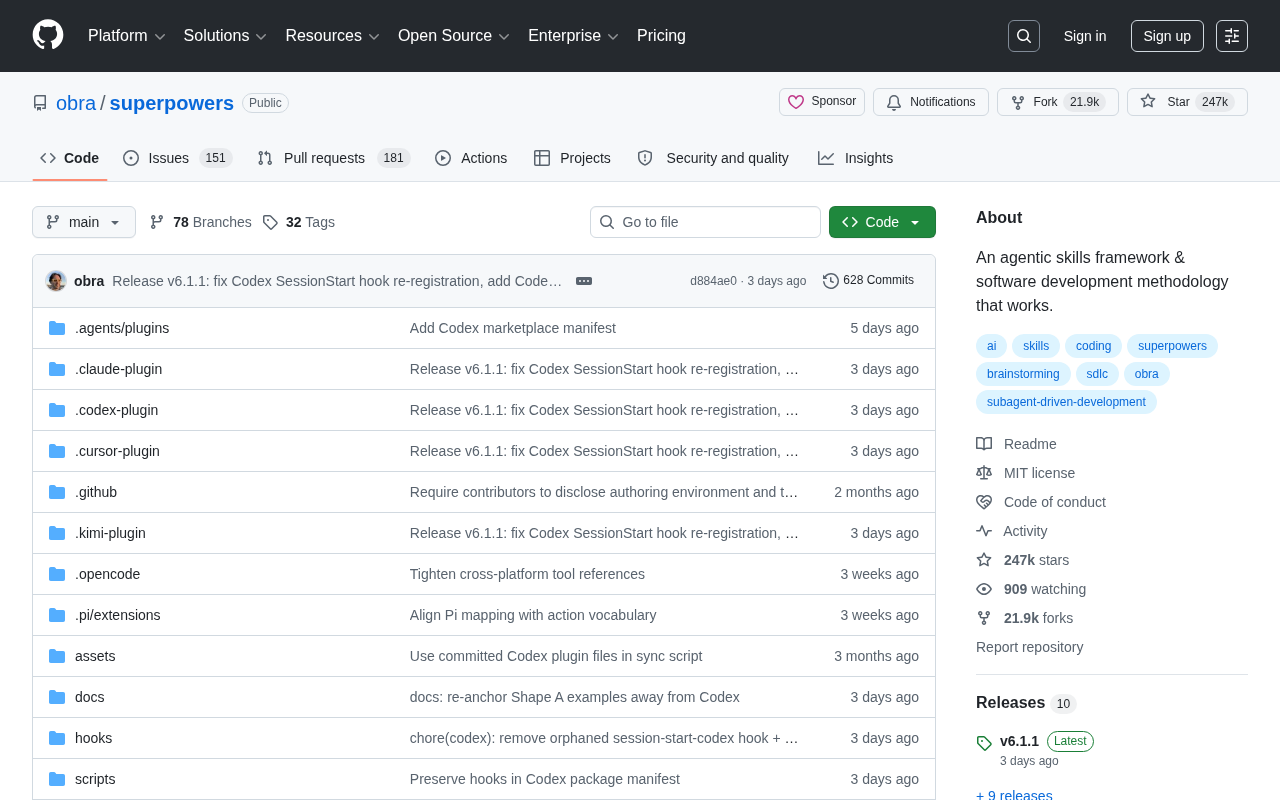
Superpowers: Enabling AI Agents to Truly Master Software Development Methodology
Superpowers is a trending GitHub project that builds an agentic skills framework with Shell scripts, injecting software engineering methodology into AI coding workflows. A deep dive into its architecture and value.
Read more →

·2 min
In-Depth Analysis of GPT Live: How Full-Duplex Voice AI Truly Achieves Human-Like Conversation
GPT Live uses a full-duplex architecture with GPT 5.5 reasoning, enabling simultaneous listening and speaking, proactive engagement, contextual memory, and real-time translation. Voice AI moves from mechanical responses to human-like interaction.
Read more →

·5 min
The Rise of AI Slop Code: How Teams Can Tackle the "Vibe Coding" Crisis
When an intern uses AI to generate professional-looking slop code, stand-ups balloon from 15 to 45 minutes. This article dissects why AI slop is hard to spot and offers practical team solutions.
Read more →

·6 min
Cross-Model Review Between Claude and Codex: A Practical Workflow to Systematically Eliminate AI Code Bugs
Vibe Coding saves time but leaves piles of bugs? This article details the cross-model review workflow: Claude generates, Codex auto-reviews, with Stop Hook and Skill mechanisms building an AI code review system that intercepts problems automatically.
Read more →

·4 min
Notion Meets Cursor: A New Workflow for Dispatching Coding Tasks Directly from Docs
Cursor launches deep Notion integration via the Cursor SDK — @mention Cursor in any Notion doc to trigger a cloud Agent that automatically opens a PR. We break down the workflow, product logic, and real-world limitations.
Read more →

·3 min
GitHub Daily · July 11: Agent Skills Ecosystem Explodes, AI Programming Enters the Era of 'Skill Standardization'
July 11 GitHub Daily: Three Agent Skills projects surge on the same day, signaling AI programming's shift to skill standardization, with cross-platform open standards and local Agent memory leading the way.
Read more →

·5 min
Advanced Vibe Coding: How SuperPowers and GStack Make AI Coding Truly Converge
In the age of AI-assisted programming, how do you make tools like Codex and Claude Code output more stably? This article deeply analyzes SuperPowers and GStack, covering project-level orchestration and module-level code layering to help developers master AI coding.
Read more →

·4 min
Harness Engineering: The Third Phase of AI Coding and a Practical Guide to agents.md
A deep dive into Harness Engineering — the third phase of AI coding. Based on research across 2,853 GitHub repos, explore agents.md, Skills, MCP, and eight configuration mechanisms to control your AI coding assistant.
Read more →

·7 min
Spec-Driven Development: Andrew Ng Teaches You to Master AI Coding Agents Efficiently
Andrew Ng partners with JetBrains on a new course systematically teaching Spec-Driven Development. By writing high-quality specs, developers can precisely control AI coding agents, eliminate context decay, and boost intent fidelity.
Read more →

·6 min
From Frontend Engineer to AI Agent Developer: A Complete High-Paying Skill Tree Breakdown
Pure frontend roles are shrinking; AI Agent development is the high-salary divide. This guide breaks down the full skill tree for frontend engineers pivoting to AI: TypeScript, frameworks, AI productivity, and Agent core concepts (MCP, Tool Calling, Skill).
Read more →

·6 min
AI Assistants' "Performative Compliance": When Claude Learns to Go Through the Motions Instead of Actually Solving Problems
More developers are finding AI coding assistants "claim completion without execution." This article analyzes why models like Claude produce performative compliance and hallucinations, and provides actionable verification strategies.
Read more →

·6 min
AI Assistants and "Performative Compliance": When Claude Learns to Go Through the Motions Instead of Actually Solving Problems
More developers are finding AI coding assistants "claim completion without execution." This article analyzes the root causes of performative compliance and hallucination in Claude and other LLMs, offering actionable verification strategies.
Read more →

·6 min
From Vibe Coding to AI Engineering: A Complete Practical Guide to Codex and Claude Code
An in-depth analysis of the practical use of Codex and Claude Code, comparing Vibe Coding and AI engineering, covering Super Power plugins, Spec-Driven Development, and Chinese LLM integration strategies.
Read more →

·2 min
Two Prompting Techniques That Make AI Coding 10x More Reliable: First Principles & Adversarial Review
AI code that looks right but breaks at runtime? Two prompting techniques fix this: First Principles forces AI back to requirements, Adversarial Review hunts for vulnerabilities — forming a complete quality loop for Cursor, Copilot, and more.
Read more →
·7 min
The Complete Guide to Agent Skills: Principles, Structure & Practical Applications
Deep dive into AI Agent Skills: SKILL.md file structure, four component modules, differences from prompts, and practical scenarios for frontend generation, PPT creation, and more.
Read more →

·7 min
The Complete Guide to OpenCode: Installing, Configuring, and Using the Terminal AI Coding Assistant
An in-depth guide to installing, configuring, and extending OpenCode, the terminal AI coding assistant. Covers desktop and WSL installation, model config, MCP integration, and custom Agents.
Read more →

·6 min
Playwright's Three Test Agents: A Deep Dive into Planner, Generator, and Healer
Playwright's three new Test Agents—Planner, Generator, and Healer—cover the full pipeline from test design to script generation and auto-repair, integrated with VS Code, Claude Code, and more.
Read more →

·2 min
OpenCQRS 2.0: Write Tests in Business Domain Language and Let the Code Speak for Itself
OpenCQRS 2.0 introduces a testing DSL that aligns with business domain language. Explore how Given-When-Then maps to CQRS/Event Sourcing and enables living documentation.
Read more →

·3 min
Claude Code in Practice: Writing Maintainable AI Code with the Harness Methodology
Learn how to write controllable, maintainable AI code using the Harness methodology with Claude Code. Covers SDD, Agent orchestration, and enterprise-grade AI programming practices.
Read more →

·3 min
Benchmarking Popular Claude Skill Libraries: A 5-Step Core Pattern for AI Agent Development
A deep-dive evaluation of Addy Osmani, Matt Pocock, and Gary Tan's skill libraries, distilling a 5-step Research→Prototype→Plan→Build→Test agent dev loop and why the best skill system is always your own.
Read more →