#Vim AI programming
74 related articles

·2 min
Cursor Restricts Third-Party Extension Panel Layout, Long-Time Users Consider Switching to Alternatives
Cursor reserves its right-side panel exclusively for its own Agent, blocking third-party extensions like Codex and Claude. A two-year user considers leaving, sparking debate about openness vs. commercialization.
Read more →

·2 min
neocursor.nvim: Bringing Cursor's Tab Completion to NeoVim
neocursor.nvim connects directly to Cursor's StreamCPP backend, bringing its iconic Tab Tab next-edit prediction to NeoVim with zero config. We analyze the tech, compliance risks, and ecosystem impact.
Read more →

·3 min
Reference: A Local Semantic Search Engine Built for AI Agents
Reference is a local semantic search tool for AI Agents that uses tree-sitter code-aware chunking, real-time indexing, and MCP Server integration to eliminate inefficient grep loops in AI coding assistants—all data stays on your machine.
Read more →

·4 min
Tiling Window Management: A New Interaction Paradigm for Multi-Agent Conversations
Exploring tiling window management for multi-agent AI conversations: how it solves parallel monitoring and observability challenges, real-world limitations, and the evolution from chat boxes to control consoles.
Read more →

·2 min
GitHub Daily · July 30: A Triple Act of AI Education, Terminal Tools, and the WhatsApp Ecosystem
GitHub Trending July 30: Microsoft AI-For-Beginners holds #1, Rust terminal code review tool tuicr surges 338 stars, WhatsApp API library Baileys shows strong real-world adoption.
Read more →

·2 min
FindDiskKiller: Catch the Mac Apps Secretly Thrashing Your Disk
FindDiskKiller is a free open-source macOS disk activity monitor that tracks per-process I/O, monitors AI coding assistants' disk usage, and includes SMART/NVMe health checks to protect your Mac SSD.
Read more →

·2 min
Capsomnia: An Open-Source Tool That Uses Caps Lock to Prevent Mac Sleep When Closed
Capsomnia is a free open-source Mac sleep-prevention tool that turns Caps Lock into a physical switch, keeping MacBook awake with lid closed for AI agents, builds, and SSH sessions.
Read more →

·3 min
Merkle Trees + Tree-sitter: A Fresh Approach to Localized Code Indexing
Explore how combining Merkle trees with Tree-sitter enables localized, incremental code indexing for AI coding assistants—no code uploads required.
Read more →

·2 min
Vimgolf.ai: Learn Vim Through a Level-Based Game
Vimgolf.ai is a gamified Vim learning tool that helps users progressively master Vim commands through level-based challenges. We analyze its approach and compare it with VIM Adventures and similar tools.
Read more →
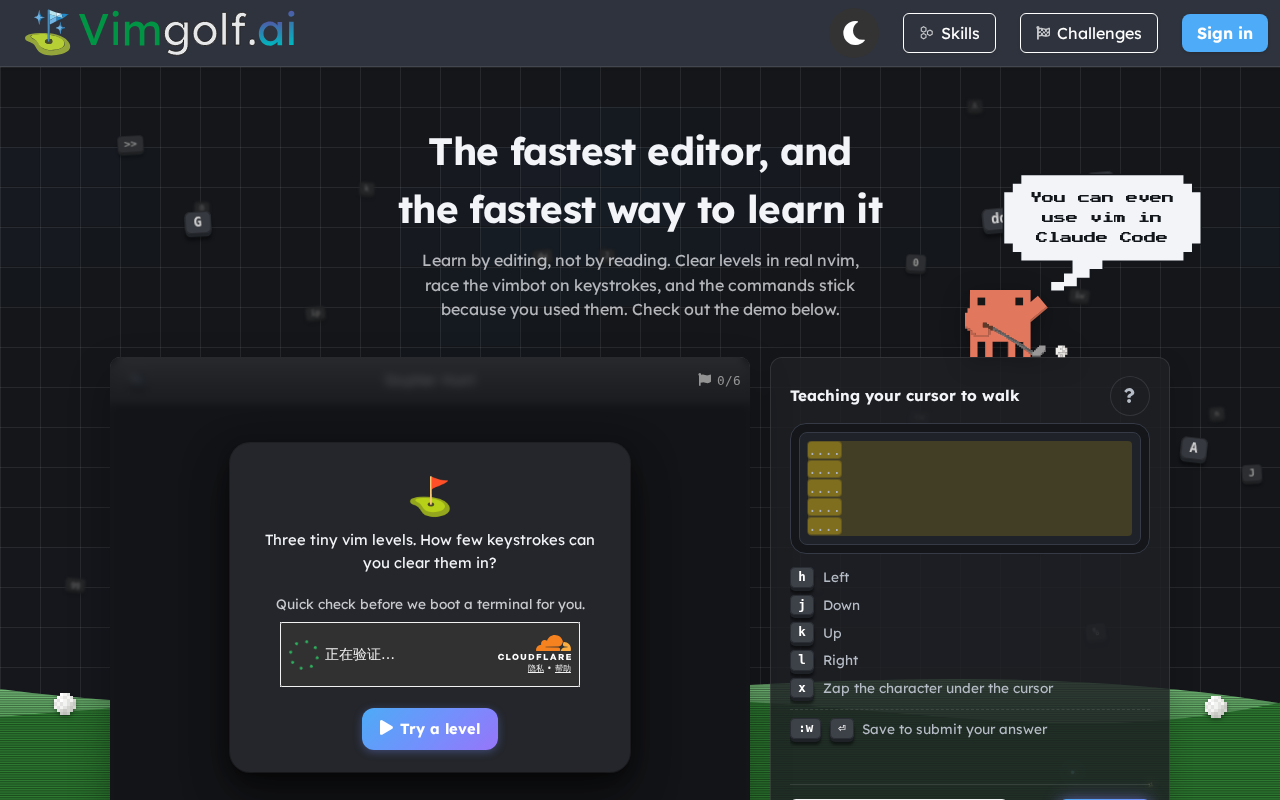
·2 min
Vimgolf.ai: Learn the Vim Editor Through a Level-Based Game
Vimgolf.ai is a gamified Vim learning tool that helps users progressively master Vim commands through level-based challenges. We explore its core philosophy, gamification advantages, and compare it with tools like VIM Adventures.
Read more →

·4 min
Advice from the Creator of Claude Code: Automation Is an Engineer's True Moat
Claude Code creator Boris argues top engineers should embrace AI-era automation leverage. By encoding domain knowledge into infrastructure, preview environments, and lint rules, engineers multiply output—the core path to Staff Engineer.
Read more →

·3 min
Codex Practical Guide: A Complete Roadmap from Beginner to Advanced AI Programming
Master Codex AI programming assistant with this complete guide: CLI setup, slash commands, agents.md governance, MCP protocol, multi-agent systems, and enterprise plugin development.
Read more →

·6 min
A Deep Dive into OpenAI Codex: How AI Engineers Are Reimagining Software Development with Agents
OpenAI Codex is redefining how AI engineers work: from code completion to autonomous Agents, from single-threaded to parallel Value Maxing. A deep dive into the Codex App architecture, open ecosystem, and Manager of Agents practice.
Read more →

·4 min
MCP Protocol Deep Dive: Its Relationship with Function Calling and Agents, Plus a Practical Guide
Deep dive into MCP (Model Context Protocol): clarifying the three-layer relationship between MCP, Function Calling, and Agents, covering protocol roles, call flows, transport choices, and production security for AI developers.
Read more →

·3 min
Does Vim Still Matter in the AI Era? Three Strategies to Find Your Answer
As Cursor and GitHub Copilot redefine programming, where do Vim users go? This article analyzes the tension between AI tools and Vim, and three key strategies.
Read more →

·3 min
A Full-Stack Deep Dive into Terminal Technology: From Character Encoding to GPU Rendering
A comprehensive analysis of the terminal technology stack: PTY mechanisms, ANSI escape sequences, terminfo compatibility, Unicode rendering, and GPU acceleration explained.
Read more →

·4 min
The Death of Codex: How OpenAI Buried Developers' Favorite Coding Brand With Its Own Hands
OpenAI merged Codex into ChatGPT, killing a developer-beloved AI coding brand. A deep dive into the gains and losses of this brand consolidation.
Read more →
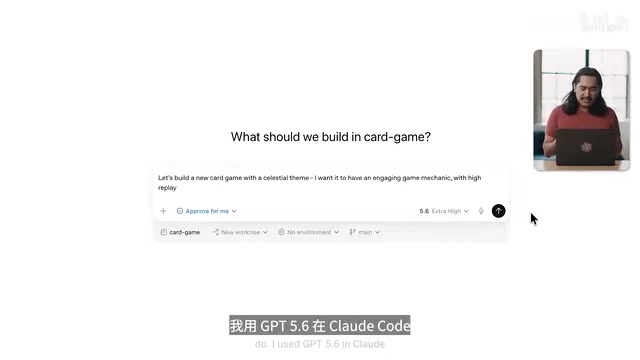
·5 min
GPT-5.6 Released: Hands-On Analysis of Programmatic Tool Calling and Autonomous Agents
GPT-5.6 is officially released with core upgrades including programmatic tool calling, autonomous subagent delegation, and higher token information density. A hands-on card game build reveals its Agentic power.
Read more →

·5 min
ECC: An Agent Enhancement Framework for AI Coding Assistants — Five Core Capabilities Explained
ECC is an agent optimization framework for AI coding assistants like Claude Code, Cursor, and Codex, enhancing them with skills, memory, security, and research-first development capabilities.
Read more →

·5 min
The Complete OpenCode Tutorial: Installation, Commands, and Advanced Practice
Systematically learn the OpenCode AI programming tool: covering both desktop and WSL installation, core commands, model and rule configuration, MCP integration, and Agent Skills.
Read more →