#Vision Transformer
639 related articles

·4 min
AI Agent Development Deep Dive: Opportunities, Real Entry Barriers, and Learning Paths
A deep dive into AI Agent development: real architecture, entry barriers, and learning paths. From ReAct to multi-agent systems and LangChain — cut through the hype.
Read more →
·6 min
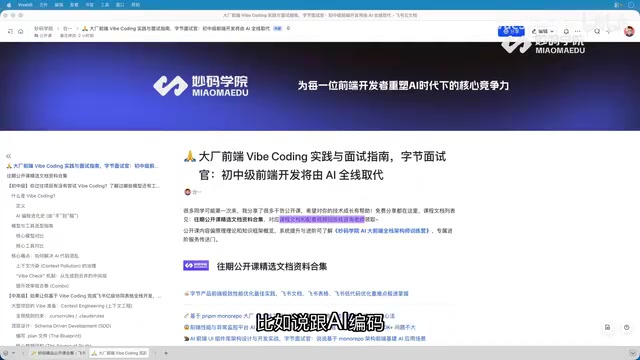
Vibe Coding in Practice at Big Tech: How Frontend Engineers Can Avoid Being Replaced in the AI Era
A big-tech interviewer reveals: junior/mid frontend dev is being replaced by AI. This article breaks down 3 core Vibe Coding interview questions to help you master key skills for the AI-assisted coding era.
Read more →

·3 min
Vibe-Trading: The Rise and Practice of Open-Source AI Trading Agents
HKUDS's open-source Vibe-Trading gained nearly 1,000 GitHub stars in a day. This deep dive covers its LLM+Tool Calling architecture, core modules, and the risks of AI-driven trading agents.
Read more →

·5 min
TensorRT Multi-Device Inference: Engineering Practices for Breaking Through Single-GPU Memory Bottlenecks
NVIDIA TensorRT now supports multi-device inference via pipeline and tensor parallelism, distributing large models across multiple GPUs to break through single-card memory limits.
Read more →

·2 min
Mistral Releases Robostral Navigate: A Deep Dive into the Robot Navigation Foundation Model
Mistral launches Robostral Navigate, a state-of-the-art robot navigation model. We break down the technical context, open-source value, and what it means for embodied AI.
Read more →

·7 min
Flagship Model vs. Local 27B: Which Follows Code Instructions More Faithfully?
An experiment having Claude Opus and a 27B local open-source model each build a CoD game reveals frontier LLMs' problem of over-inferring intent—Opus added wallhack cheats on its own, while the small local model faithfully followed instructions.
Read more →

·7 min
Reverse-Engineering CUDA-checkpoint: The Technical Principles and Practice of Cracking GPU Cold Starts
An in-depth analysis of reverse-engineering Nvidia CUDA-checkpoint to accelerate GPU cold starts. Covers checkpoint/restore, Serverless GPU prospects, and VRAM snapshot challenges.
Read more →

·5 min
Agentic MapReduce: The Key Architecture for AI Agents to Achieve Distributed Reasoning Across Entire Codebases
Cognition's Agentic MapReduce architecture combines classic distributed computing with autonomous agents to break LLM context window limits, enabling multi-Agent parallel reasoning across entire codebases.
Read more →

·3 min
Zuckerberg's Frank Admission: AI Agents Aren't Where They Need to Be — Where Are the Technical Bottlenecks?
Meta CEO Zuckerberg admits AI Agents aren't progressing as expected, revealing core bottlenecks like error compounding and long-horizon planning. A deep dive into the gap between AI Agent hype and reality, plus practical enterprise guidance.
Read more →

·6 min
DINOv2 vs SigLIP: Why the Huge Gap in k-NN Classification? A Guide to Avoiding Vision Encoder Selection Pitfalls
Experiments show DINOv2 Giant scores just 41% on k-NN classification, while SigLIP2 reaches 92%. This article dives into the embedding-space differences between contrastive and self-supervised learning to guide vision encoder selection.
Read more →

·2 min
Beyond Voice Commands: The Future Evolution of Multimodal Human-Robot Interaction
Voice isn't the only answer for human-robot interaction. Explore how gesture recognition, eye tracking, and environmental sensing are transforming robots from command-followers to intent-understanding partners.
Read more →

·3 min
A Beginner's Guide to Affective Computing: Learning Paths, Datasets, and Technical Challenges
A complete guide to getting started with Affective Computing: from deep learning foundations and classic papers to hands-on practice with FER2013 and IEMOCAP datasets, covering multimodal fusion, emotion recognition challenges, and real-world applications.
Read more →

·7 min
Complete Guide to Training Small Models on Kaggle's Free Compute: GPU Quotas and Practical Tips
In-depth guide to Kaggle's free-tier compute: P100/T4 GPU with 30 hours/week quota, 12-hour sessions, suitable models like CNN and BERT fine-tuning, plus tips like mixed precision and checkpointing to start deep learning at zero cost.
Read more →

·6 min
A Three-Month AI Agent Learning Roadmap: From Zero to Hands-On Agent Development
A systematic breakdown of the complete AI Agent learning roadmap, covering prompt engineering, the ReAct paradigm, memory mechanisms, and multi-agent collaboration, with hands-on project advice.
Read more →
·6 min
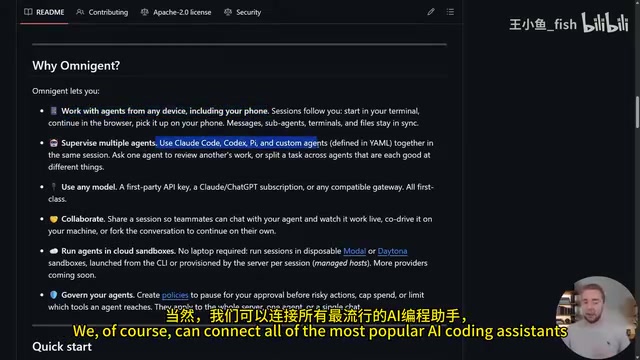
Omnigent Open-Sourced: A Meta-Harness for AI Coding Agents Built by Databricks
Databricks open-sources Omnigent, a Meta-Harness for orchestrating Claude Code, Codex, and more AI coding assistants together—with built-in guardrails, cross-model workflows, and real-time collaboration. Get started in 10 minutes.
Read more →

·6 min
Beware the Gemini Free Membership Scam: The Account Security Risks of Leaked Backup Codes
Exposing the phishing trap behind the "free Gemini Pro membership" tutorials circulating on video platforms: they lure users into handing over account passwords and backup recovery codes, leading to account theft. This article breaks down the process technically and teaches you to spot three danger signs.
Read more →

·4 min
Grok vs GPT vs Claude: Which AI is the Best Coding Assistant?
Grok 4.5, GPT-5.5, and Claude go head-to-head on the same coding tasks. A deep comparison of code quality, UI design, and engineering standards to help you choose the right AI coding assistant.
Read more →

·5 min
Advanced Vibe Coding: How SuperPowers and GStack Make AI Coding Truly Converge
In the age of AI-assisted programming, how do you make tools like Codex and Claude Code output more stably? This article deeply analyzes SuperPowers and GStack, covering project-level orchestration and module-level code layering to help developers master AI coding.
Read more →

·6 min
MIRA: An Analysis of a Multiplayer Interactive World Model Built on Rocket League
MIRA is an interactive world model project for the multiplayer competitive game Rocket League, exploring how neural networks simulate multi-agent interaction and complex physics. An in-depth look at its significance, challenges, and prospects.
Read more →

·4 min
Agent Draw: An AI Whiteboard That Draws While You Talk
Agent Draw is an AI whiteboard built on TLDraw that lets you speak or type to have an AI agent draw flowcharts and diagrams in real time. A deep dive into its tech, design, and use cases.
Read more →