#Web Streams API
194 related articles

·1 min
shadcn/typeset: One CSS File to Solve All Your Markdown Typography Problems
shadcn/typeset uses a single customizable typeset.css file to handle Markdown typography for blogs, docs, and AI chat — with native streaming support.
Read more →

·3 min
Dify + MCP in Practice: Building a Multi-Scene Life Assistant Agent with ModelScope MCP Marketplace
Build a multi-scene life assistant Agent using ModelScope MCP Marketplace and Dify. Integrates Amap, LeetCode, recipe, and news MCP Servers with Qwen3 via Chatflow.
Read more →

·3 min
AgentScope 2.0 Deep Dive: Six Core Upgrades for Production-Grade Multi-Agent Development
AgentScope 2.0 by Alibaba's Tongyi Lab delivers six major upgrades: typed event streaming, dangerous instruction interception, human-in-the-loop, concurrent execution, workspace system, and agent-as-a-service for production-grade multi-agent development.
Read more →

·2 min
SentinelCV: An Open-Source AI Fall Detection Solution Using Your Existing Cameras
SentinelCV is an open-source YOLOv8-based fall detection system that works with existing CCTV and IP cameras. Get real-time alerts via Telegram — no new hardware needed.
Read more →

·2 min
GPT Live Full-Duplex Voice AI: Speak and Listen at Once, Reason and Translate
OpenAI unveils GPT Live One voice model with full-duplex conversation—AI listens and responds while you speak. Real-time reasoning, web search, multitasking, and bidirectional translation redefine voice AI.
Read more →

·4 min
Hands-On with GPT-5.6: A Single Prompt Builds a Real-Time Voice Anime App
Hands-on with GPT-5.6 Sol: auto-generate real-time voice anime characters from one prompt, write physics engines from scratch, and build unfamiliar toolchains autonomously. In-depth review of coding, agentic tasks, benchmarks, and its hallucination weakness.
Read more →
Deep Dive: What Data Does Grok CLI Act…
·3 min
Deep Dive: What Data Does Grok CLI Actually Send? — Analyzing xAI's Command-Line Tool
Packet capture analysis reveals what xAI's Grok Build CLI actually transmits — covering telemetry, environment variable risks, and privacy boundaries. A must-read security guide for developers.
Read more →

·6 min
Netflix Brings in Digital Media Videos from BuzzFeed and Others to Compete with YouTube for Viewing Time
Netflix is bringing video content from dozens of digital media brands like BuzzFeed, Condé Nast, and Hearst onto its platform, marking a direct challenge to YouTube in the battle for user viewing time.
Read more →
Anti-AI Fonts: Adversarial Typography …
·3 min
Anti-AI Fonts: Adversarial Typography That Humans Can Read but Machines Can't
Anti-AI fonts use adversarial glyph design to exploit the perceptual gap between human and machine vision, blocking OCR and LLM scraping. A deep dive into the tech, limits, and data sovereignty implications.
Read more →

·3 min
Deep Dive into gRPC: Building High-Performance Microservice Communication with HTTP/2 + Protobuf
An in-depth analysis of gRPC's core architecture: HTTP/2 multiplexing, Protocol Buffers serialization, and unified multi-language implementation, covering microservice communication and cloud-native integration.
Read more →

·5 min
Browser Use: A Deep Dive into the Event-Driven Browser AI Agent Framework
Browser Use is an open-source AI Agent framework that lets LLMs autonomously drive browser operations via natural language. This article breaks down its four-layer architecture, core Agent loop, CDP perception layer, dynamic Tools dispatch, and its Skills, Sandbox, and MCP extension capabilities.
Read more →

·4 min
YCloud June Update: A Deep Dive into Five Core Capability Upgrades for WhatsApp AI Agent
YCloud's latest update: AI Agent with structured messaging & self-optimizing recommendations, Inbox-Calling context coordination, Meta's official template analytics API, expanded Shopify fields, and ChatLink full-chain attribution—boosting WhatsApp marketing & service.
Read more →

·4 min
INT4 ConvRot W4A4 Quantization: Running Large Image Models on Low-VRAM GPUs in ComfyUI
An in-depth look at INT4 ConvRot W4A4 quantization, covering conversions of Krea2, Qwen-Image, and other diffusion models to help ComfyUI users run large image models on 8GB GPUs.
Read more →

·6 min
Home Self-Hosting Server Setup Guide: Building a Private Cloud Ecosystem from Scratch
One 32GB server, 8 hours to build a complete home self-hosting ecosystem. This article details the selection logic behind core services like Jellyfin, Forgejo, Immich, and Ollama, plus infrastructure setup essentials for Nginx Proxy Manager and Podman Compose.
Read more →

·7 min
GPT-5.6 Full Model Lineup Hands-On Guide: A Deep Dive into API Relay Stations and Their Risks
The full GPT-5.6 model lineup is live. How can domestic developers access it at low cost via API relay stations? This article explains the principles, registration, token setup, client integration, and key risks.
Read more →
·2 min
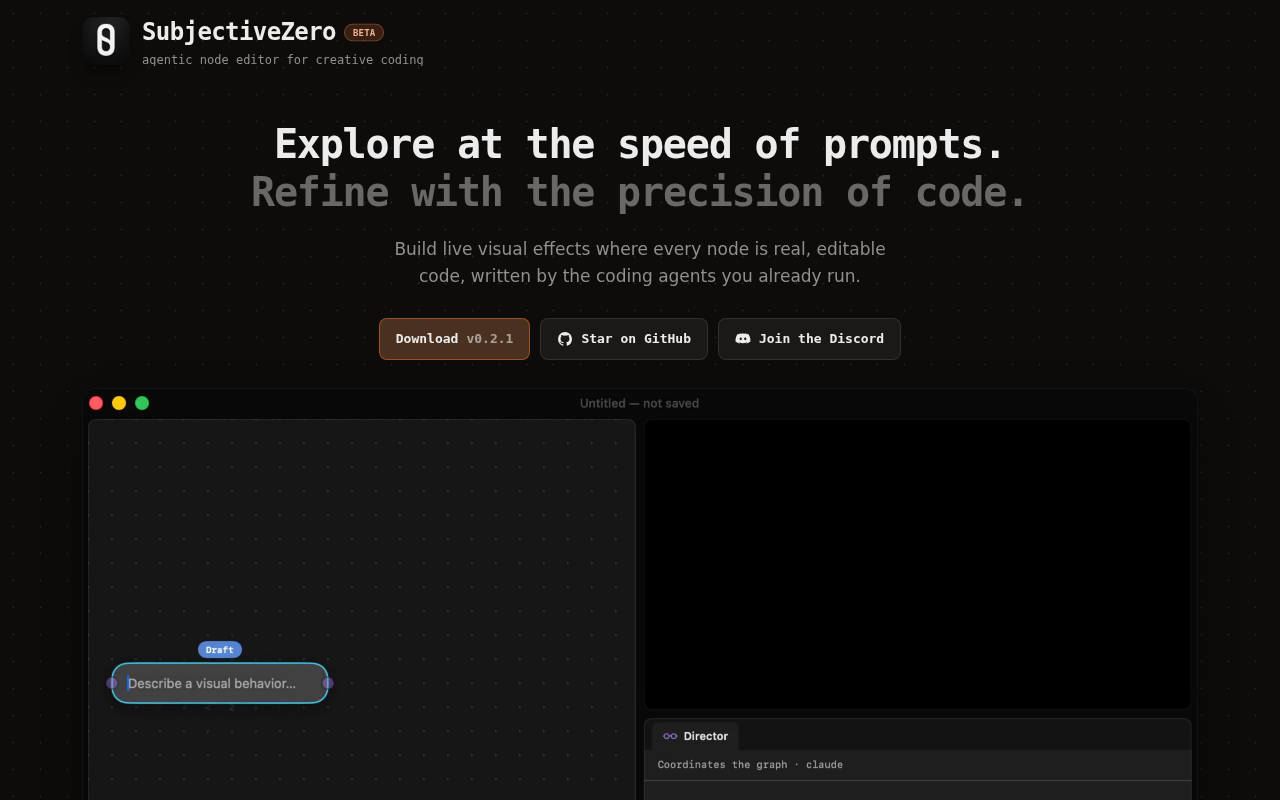
SubjectiveZero: A New Creative Coding Paradigm with AI Agents and Node Editors
SubjectiveZero is an open-source agentic node editor for creative coding, merging AI agents with visual node programming. Explore its technical vision and value for digital artists.
Read more →

·5 min
Building Your Own Reading Tracker: Craig Mod's Digital Garden and the Case for Data Sovereignty
Why did Craig Mod abandon Goodreads to build his own reading tracker? A deep dive into the motivations, benefits, and trade-offs of self-hosting, data sovereignty, and the IndieWeb movement.
Read more →

·4 min
GPT-5.6 Sol vs Grok 4.5: Same $20 Subscription — Which One Is Actually Worth It?
GPT-5.6 Sol or Grok 4.5 — both at $20/month, but which delivers more value? We break down use cases, intelligence benchmarks, and ecosystem tradeoffs to help you decide.
Read more →

·2 min
Three AI Giants Tested: Seedream 5.0, GPT-Live, and Grok 4.5 — A Comprehensive Breakdown
ByteDance Seedream 5.0 Pro, OpenAI GPT-Live, and xAI Grok 4.5 — three major AI releases dissected with hands-on testing across image generation, voice interaction, and coding agents.
Read more →

·5 min
28 Enterprise-Grade AI Agent Projects: A Complete Guide That Even Beginners Can Deploy
A collection of 28 fully reproducible enterprise-grade AI Agent projects covering code debugging, financial analysis, customer service, and multi-agent collaboration—deployable even for beginners.
Read more →