#Windsurf Rules
173 related articles
·3 min
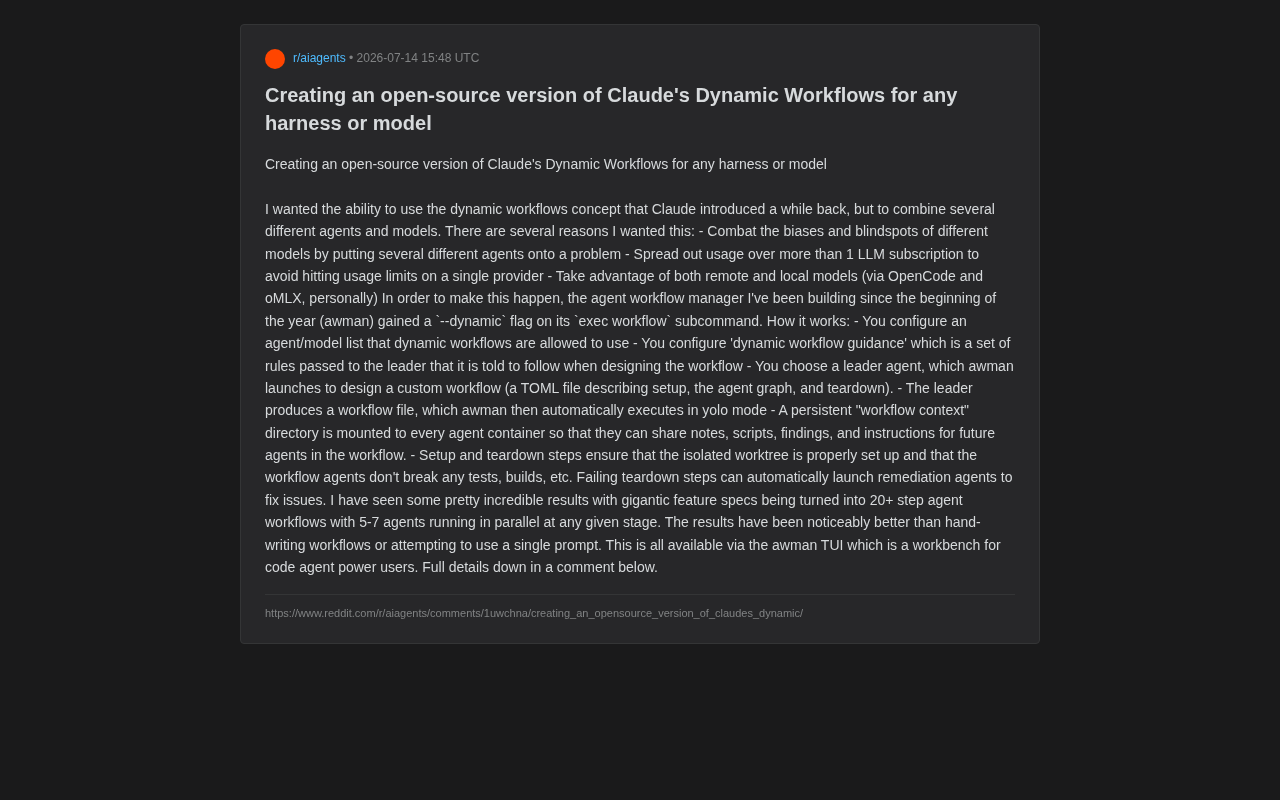
Open-Source Dynamic Workflows: How awman Enables Multi-Model Collaborative AI Programming
awman's --dynamic flag enables cross-framework dynamic workflows with multi-model collaboration. Explore its leader agent architecture, shared context design, and auto fault-tolerance mechanisms.
Read more →

·4 min
BrowserWing: A Browser Action Recorder That Offers a Pragmatic Approach to AI Web Automation
BrowserWing is an open-source browser action recorder (1300+ GitHub stars) with 78 built-in scripts for GitHub, Bilibili, Zhihu, and more. Record once, run repeatedly, and let AI Agents reliably execute fixed web workflows.
Read more →

·6 min
The Eight-Step Method for Agent Development: A Practical Path from Pitfalls to Production
Many enterprises fail at AI Agents due to choosing the wrong tools and lacking methodology. This article outlines an eight-step Agent development method—from cognitive foundations, scenario selection, hand-writing ReAct, and structured output to Tool Use, RAG, evaluation sets, and production fallback.
Read more →

·6 min
GPT-5.6 Released: Codex Officially Integrated into ChatGPT, Ushering in a New Era of AI Programming
OpenAI releases GPT-5.6 and integrates Codex directly into ChatGPT, letting developers invoke code generation and debugging within conversations. A deep dive into the product logic and ecosystem impact.
Read more →

·4 min
Why General-Purpose Agents Don't Work: How a Job Interview Reshaped One Developer's Thinking
An Agent developer's three-round interview reveals why general-purpose Agents are a dead end for startups. The path forward: vertical Agents, domain context, and iteration speed as a moat.
Read more →

·6 min
Getting Started with Vibe Coding: Building Software with Natural Language from Scratch
Vibe Coding lets you build software with no coding background—just talk to AI in natural language. Learn its core ideas, learning path, and practical tools.
Read more →

·5 min
OfficeCLI: A Command-Line Tool for AI Agents to Read and Write Office Documents
OfficeCLI is a command-line office suite for AI agents, supporting reading and writing of Word, Excel, and PowerPoint files—enabling efficient Office document automation without complex glue code.
Read more →

·6 min
Escaping AI Agent Skill Hell: A Complete 4-Step Guide to Writing High-Quality Skills
Matt Pocock's 4-step framework for AI Agent Skill design: Trigger, Structure, Steering, Pruning. Escape skill hell and learn to write high-quality skills.
Read more →

·6 min
Escaping AI Agent Skill Hell: A Complete 4-Step Guide to Writing High-Quality Skills
Matt Pocock's 4-step framework for AI Agent Skill design: Trigger, Structure, Steering, Pruning. Escape skill hell, tell good skills from bad, and master leading words to make Agents follow your intent.
Read more →

·7 min
The Complete Guide to OpenCode: Installing, Configuring, and Using the Terminal AI Coding Assistant
An in-depth guide to installing, configuring, and extending OpenCode, the terminal AI coding assistant. Covers desktop and WSL installation, model config, MCP integration, and custom Agents.
Read more →

·6 min
Vibecoding in Practice: Architecture Trade-offs and Implementation of a Dual-Engine TTS Router
Alibaba Cloud vs Volcano Engine TTS: why "I want both" is the mature engineering decision. Dual-engine routing design, priority trap debugging, and vibecoding-powered implementation.
Read more →

·6 min
Java Developer's Guide to AI Application Development: Building an Airline Intelligent Customer Service System
A practical guide for Java developers to build AI apps without switching to Python. Learn LangChain4j, RAG, Function Calling, and MCP through an airline customer service project.
Read more →

·7 min
Engineering Vibe Coding in Practice: Taming AI Programming with Superpowers and gstack
A deep dive into engineering Vibe Coding: using Superpowers for project-level decomposition and gstack for module layering and constraints to tame AI coding assistants like Codex and Claude Code.
Read more →

·3 min
Meta Open-Sources Astryx: The First Design System Built for AI Agents
Meta open-sources Astryx on GitHub — an Agent Ready design system built for AI coding assistants. 5,600+ Stars and growing. Learn how it tackles AI hallucination in UI code generation.
Read more →

·7 min
A New Core Skill for Programmers: How to Effectively Lead Your AI Agent Dev Squad
Coding alone isn't enough anymore. Learn the 5 key steps to commanding AI Agents—define outcomes, split tasks, provide context, iterate small, and keep humans in the loop.
Read more →

·4 min
AI Keeps Failing at Writing Code? You Need Knowledge Bases, Skills, MCP, and Agents — All of Them
AI coding failures in enterprise aren't about weak models — they're about missing frameworks. Learn how Knowledge Bases, Skills, MCP, and Agents work together.
Read more →
·3 min
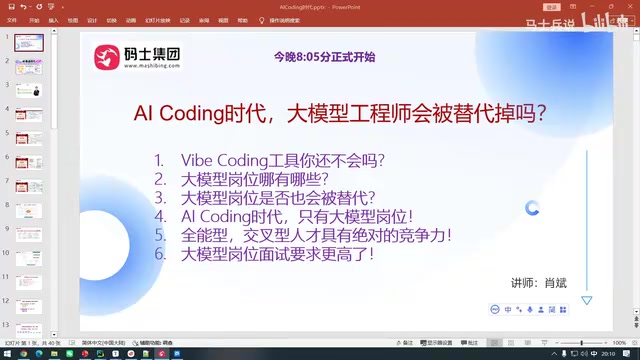
Vibe Coding in Practice: How Four Tools Work Together to Make AI Programming More Convergent and Controllable
Explore the four-layer AI programming architecture: SuperPrompt for project-level decomposition, Gstack for module-level code layering, and Cursor/Claude Code for execution. Master this workflow to make Vibe Coding truly engineering-grade.
Read more →

·3 min
How Is Codex Different from ChatGPT? Breaking Down the Core Differences of the AI Coding Agent
Compare OpenAI Codex vs ChatGPT: ChatGPT handles Q&A while Codex acts as an AI coding agent that autonomously writes code, fixes bugs, and runs tests.
Read more →

·3 min
Vibe Coding: The New AI Programming Paradigm for Full-Stack Development with Zero Coding Experience
Explore Vibe Coding's core concepts and practical applications across frontend UI generation, backend APIs, and one-click deployment, with a zero-to-hero guide for non-programmers.
Read more →

·3 min
Claude Code + Harness AI Engineering in Practice: From Methodology to Enterprise-Level Implementation
Deep dive into Claude Code + Harness AI engineering methodology, covering tech stack selection, enterprise e-commerce implementation, task decomposition, and Prompt templatization.
Read more →