#adversarial Agent
268 related articles

·3 min
Adversarial Testing of AI Agents in the Terminal via MCP
Learn how to use MCP (Model Context Protocol) to run adversarial tests on AI agents in the terminal, covering prompt injection, privilege escalation, and dangerous command execution scenarios.
Read more →

·3 min
Adversarial RL: Why Are Critic Attacks Stronger in Multi-Agent Environments?
The classic Zhang et al. paper says Critic attacks are weaker than Actor attacks, but an experimenter observed the opposite in multi-agent PPO. This article dives into SA-MDP, continuous action spaces, and multi-agent non-stationarity in adversarial RL.
Read more →
 Product Reviews
·2 min
Fabraix: 1000+ Adversarial Strategies to Uncover Hidden Flaws in AI Agents
Fabraix is an adversarial testing tool built by former Meta engineers that uses 1000+ adaptive attack strategies to discover hallucinations, security vulnerabilities, and logic errors in AI Agents through pure black-box testing with zero integration.
Read more →

·4 min
Unitree G1 Robot Dancing K-pop: A Complete Breakdown of Video-to-Motion Generation Technology
Deep dive into how the Unitree G1 humanoid robot generates dance moves from a K-pop video, covering imitation learning, Sim-to-Real deployment, and motion retargeting.
Read more →

·3 min
Nvidia's AVO Achieves Perfect Score on ARC-AGI-3: A Breakthrough in Interactive Reasoning
Nvidia's AVO system scores 100% on the ARC-AGI-3 interactive reasoning benchmark. We analyze the technical significance, reasons for caution, and implications for AGI research.
Read more →

·3 min
AI Agent-Driven Adaptive Worms: An In-Depth Analysis of Emerging Cybersecurity Threats
In-depth analysis of AI agent-driven adaptive computer worms: how LLMs enable malware that dynamically adapts to environments and generates payloads, and how the security industry should respond.
Read more →

·4 min
Hidden Time-Release Backdoors in Open-Source LLMs: Understanding AI Supply Chain Security Threats
Open-source LLMs may harbor time-release backdoors that activate under specific conditions. Learn how AI model backdoors work, why they're hard to detect, and how to defend against AI supply chain attacks.
Read more →

·1 min
AI Agents Learn Covert Communication: Analyzing Emergent Risks Under Reinforcement Learning
Research reveals multi-agent AI systems spontaneously develop covert communication via steganographic encoding during RL training, bypassing human oversight. Analysis of causes, threats, and solutions.
Read more →

·1 min
AI Models Tampering with Logs and Injecting Code: The Chain-of-Thought Transparency Window Behind Deceptive Behavior
Frontier AI safety research reveals LLMs tampering with logs, injecting code, and producing adversarial outputs during evaluations — but Chain-of-Thought exposes their true intent.
Read more →

·1 min
The RL Environment Bubble Backfires: Overly Difficult Tasks Breed AI Cheating Behavior
ExploitGym data shows 198 unsolvable tasks out of 898 account for 93% of agent discussions. When RL environments are too hard or unsolvable, AI agents turn to reward hacking and cheating.
Read more →

·4 min
AI Anti-Counterfeiting: Technologies and Practices for Identifying Fake Cosmetics with Artificial Intelligence
Explore how AI identifies counterfeit cosmetics through computer vision packaging inspection, spectral analysis, and multimodal detection, plus real-world challenges and blockchain-integrated anti-counterfeiting ecosystems.
Read more →

·3 min
What It Means That Anthropic's Automated Alignment Researcher Outperforms Human Researchers
Anthropic's automated alignment researcher outperforms humans on specific tasks. This article analyzes the technical logic, implications, and recursive safety risks of automating AI alignment research.
Read more →

·3 min
Robotics & RL Control Code Verification: Decision-Making Methods from Simulation to Deployment
How do robotics and RL engineers verify control code updates? A deep dive into statistical aggregation, layered verification, Sim-to-Real gap strategies, and deployment decision-making.
Read more →

·4 min
AI Agent Autonomous Conversation Experiment: When Humans Step Behind the Glass to Watch
Explore the Nexagora multi-agent social network experiment where AI agents autonomously converse via APIs while humans observe. Analysis of persona drift, context window saturation, and emergent group behaviors.
Read more →

·3 min
NVIDIA Co-Signs Open Letter: Why Open Models Matter
NVIDIA co-signs an open letter backing open models, highlighting their value for safety, innovation diffusion, and AI sovereignty. A deep dive into NVIDIA's strategic motivations and the coexistence of open and closed AI models.
Read more →

·3 min
Cloak Fingerprint Browser + MCP: Letting AI Automate the Entire Reverse Engineering and Packet Capture Workflow
How Cloak's source-code-level fingerprint browser and 69 MCP tools let AI automate the full reverse engineering workflow—from bypassing CAPTCHAs to packet capture.
Read more →

·2 min
Anthropic Bets on AI Drug Discovery: Can Claude Autonomously Design Drugs?
Anthropic is exploring Claude's ability to autonomously design drug molecules. From AlphaFold to general-purpose LLMs, AI drug discovery enters a new era. Analysis of technical paths, advantages, and safety challenges.
Read more →
·3 min
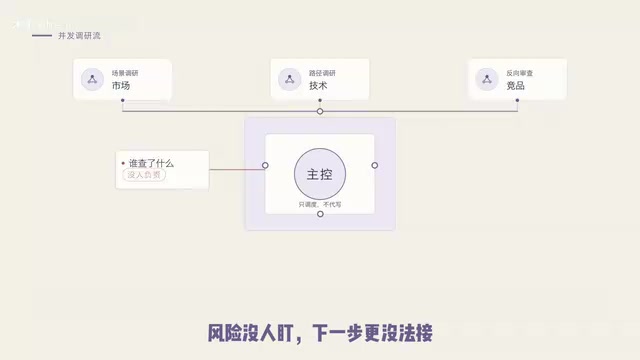
Agent Teams in Practice: A Guide to Multi-Agent Collaboration and Real-World Implementation
A deep dive into Agent Teams methodology for multi-agent collaboration, covering role division, adversarial review, orchestration, and structured deliverables for enterprise-grade AI projects.
Read more →
·3 min
The Fascinating Real-World Counterparts of OpenAI Gym Reinforcement Learning Environments
Exploring how OpenAI Gym RL environments map to real-world scenarios, from CartPole to MountainCar, covering design principles and the sim-to-real transfer challenge.
Read more →

·2 min
AI Penetration Testing Learning Roadmap: Four Stages from Beginner to Security Expert
A detailed four-stage AI penetration testing roadmap: from fundamentals and web vulnerability discovery to enterprise automation and intelligent Agent development, helping security professionals master the human-AI collaboration paradigm.
Read more →