#automation
2189 related articles

·2 min
Ego Lite Review: AI Browser Automation That Won't Steal Your Mouse Focus
Ego Lite is a browser built for AI collaboration. Based on Chromium, it uses login state reuse and isolated Spaces so AI Agents can autonomously handle web operations, form filling, and data scraping—solving the human-machine focus conflict. macOS only.
Read more →

·2 min
Multi-Agent Collaborative Paper Writing System: End-to-End Automation with FastAPI + Vue 3
An in-depth look at an intelligent paper writing platform built on FastAPI + Vue 3, combining LLM, RAG, and multi-Agent collaboration for full-process automation—an excellent case study for AI developers.
Read more →

·8 min
A Complete Guide to Agent Testing: Five Core Dimensions and Automation in Practice
In-depth analysis of the five core dimensions of AI Agent testing: command safety, tool-calling accuracy, task planning, output consistency, and error self-repair. Master automated testing and the transition path for test engineers.
Read more →

·8 min
The Complete Guide to Agent Testing: Five Core Dimensions and Automation in Practice
An in-depth analysis of the five core dimensions of AI Agent testing: command safety, tool-calling accuracy, task planning, output consistency, and error self-repair. Master automated testing methods and the transition path for test engineers.
Read more →

·4 min
Claude Code Getting Started: Environment Setup, Core Commands, and Git Workflow Automation
A practical guide to Claude Code covering installation, Chinese LLM switching, project analysis, key commands, and conversational Git workflow automation for developers.
Read more →

·3 min
How to Monetize AI Automation Skills: A Practical Path from Tools to Business Results
Learned Claude, n8n, or Coze but unsure how to monetize? This article breaks down the core logic of AI automation monetization: prove business value with data, build case studies, and develop a credible personal brand.
Read more →

·3 min
Getting Started with Jenkins: The Core Hub of CI/CD Automation Explained
A beginner's guide to Jenkins: its role as the CI/CD and DevOps hub, JDK requirements, and the four plugin categories (source control, build, security scanning, deployment) that power automation pipelines.
Read more →

·2 min
Getting Started with n8n: A Deep Dive into the Open-Source Workflow Automation Platform
A deep dive into n8n: 500+ integration nodes, low-code visual workflows, and AI capabilities. How it compares to Dify and Coze, plus China localization challenges.
Read more →
·2 min
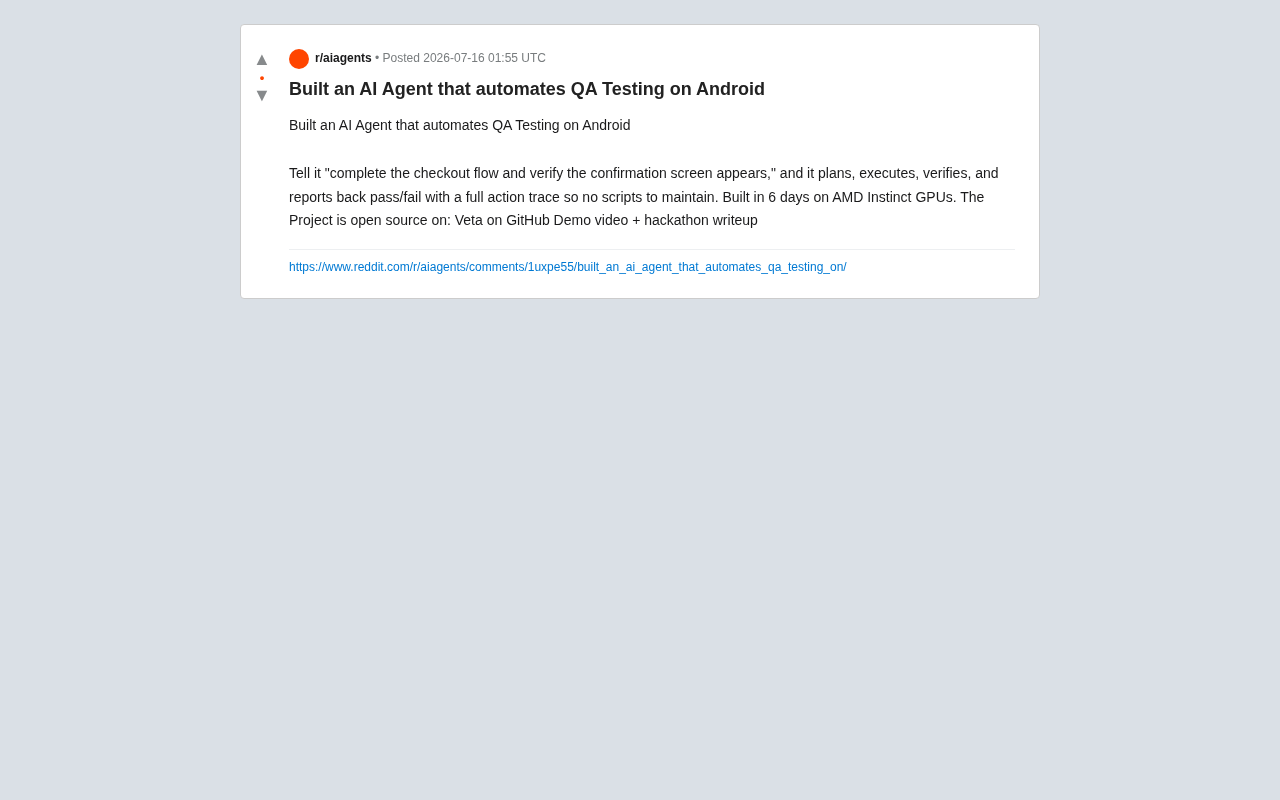
6-Day Open Source AI Agent: Natural Language-Driven Android Automation Testing
Veta is an open source AI testing agent: just describe your test goal in natural language and it autonomously plans, executes, verifies, and reports Android test results — no scripts needed.
Read more →

·2 min
Cursor + Appium: Building a Full Mobile Automation Testing Workflow with AI
Learn how to combine Cursor AI with Appium in a 4-step workflow—environment check, test planning, project generation, and reporting—to build mobile automation fast.
Read more →

·3 min
AI Testing End-to-End in Practice: A Complete Guide from Test Case Generation to Agent Automation
A deep dive into AI testing workflows: API capture, test case generation, Agent orchestration, and automated execution. Learn the two core challenges — incomplete information and mandatory human review.
Read more →
SendLang: Rethinking Email Automation …
·3 min
SendLang: Rethinking Email Automation with a Domain-Specific Language
SendLang is a DSL for email automation that uses declarative syntax to separate trigger conditions, content templates, and send timing — tackling logic coupling in traditional email systems.
Read more →

·4 min
No-Code Guide to Claude Code: Building Your Personal AI Automation OS
No coding needed: master Claude Code workflows with folder structure, sub-agents, third-party connectors, and scheduled routines to build your own AI automation OS.
Read more →

·4 min
Agent Loop in Practice: A Guide to Building Self-Improving Automation with Guardrails
A deep dive into building verifiable, self-evolving Agent automation loops with Claude Code and Codex — covering Loop Contracts, four trigger types, three-phase execution architecture, and Evolve Loops.
Read more →

·3 min
The Complete Guide to OpenAI Codex: AI Agent Programming and Automation in Practice
A deep dive into OpenAI Codex: browser automation, Goal execution, plugins, Skills ecosystem, and coding power. Master 90% of Codex's features and transform your workflow.
Read more →

·1 min
Gemini Empowers Solopreneurs: Task Automation, Data Insights, and Content Creativity in Action
Google's Gemini live demo for solopreneurs and small businesses covers three core scenarios: personalized data insights, task automation, and content creativity—helping one-person companies cut costs, boost efficiency, and focus on core business.
Read more →

·2 min
A Deep Dive into Ansible: The Essential Guide to Agentless IT Automation
A comprehensive guide to Ansible, the open-source IT automation platform: core architecture, design philosophy, and use cases. Learn about agentless mode, YAML Playbook syntax, idempotency, and best practices for DevOps and Infrastructure as Code.
Read more →

·6 min
OraAgent Hands-On Review: End-to-End Automation of Foreign Trade Prospecting Emails — From Finding Customers to Sending Emails in One Click
A hands-on review of how OraAgent (AI assistant Aura) automates the entire foreign trade prospecting email workflow: auto-searching customers, prioritizing quality leads, batch-generating personalized emails, and one-click sending to cut acquisition costs.
Read more →

·4 min
Baidu AI Automation System: Trigger Skill Chains with a Single Sentence, Say Goodbye to Manual Workflows
The Baidu AI Automation System uses departmentalized skill libraries and Agent-style orchestration to let managers trigger multi-skill workflows with one sentence—no tech background needed.
Read more →
·6 min
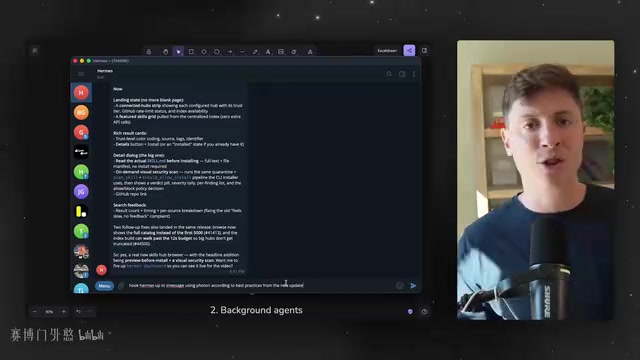
Hands-On With Hermes Agent's Eight Major Updates: A Complete Guide to AI Automation and Self-Evolution
The Hermes Agent gets a major upgrade with eight new features: native iMessage, parallel background sub-agents, Unreal Engine MCP support, a self-evolving Skill Hub, and more. A hands-on breakdown of the core changes and their real impact on personal AI automation workflows.
Read more →