#autonomous execution
2587 related articles

·3 min
Heym: Deep Dive into a Self-Hosted Visual Agent Building Platform
Heym is a self-hostable visual platform for building agentic systems, offering multi-agent workflow orchestration, built-in observability, human approval mechanisms, and MCP protocol support.
Read more →
·2 min
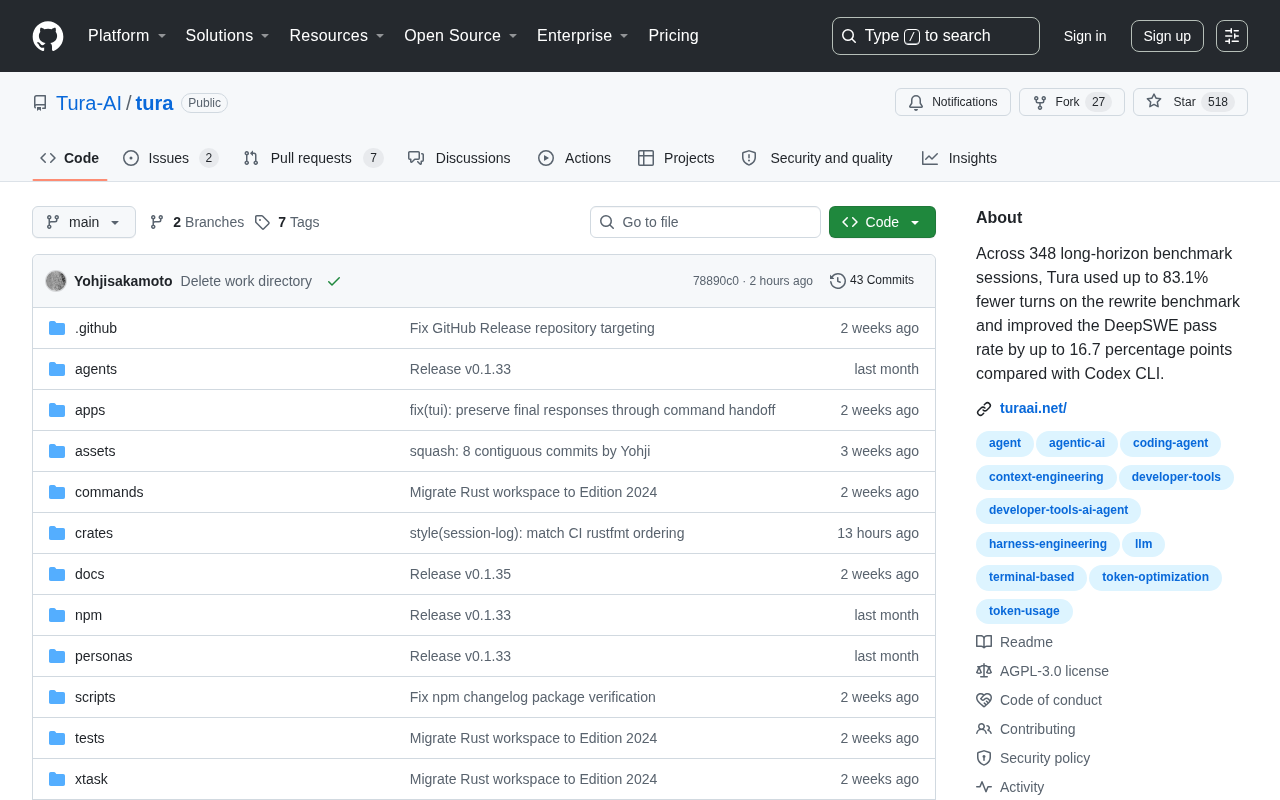
Tura: A New Approach to Saving 80% of Tokens for AI Agents
An in-depth analysis of how the Tura framework helps AI Agents reduce 80% of token consumption while improving task quality through intelligent context management and structured tool calling.
Read more →

·4 min
The Creator of Claude Code Shares 10 High-Efficiency AI Coding Tips
Claude Code creator Boris shares 10 practical AI coding tips in his viral talk, covering setup, prompting, planning, team collaboration, SDK usage, and multi-instance concurrency.
Read more →

·3 min
Claude Code in Practice: Turning AI into an Autonomous Engineer That Runs While You're AFK
Learn how real engineering skills enable Claude Code to become an autonomous AI agent that works for hours while you're AFK, covering planning, requirements, and codebase design.
Read more →

·3 min
AI Agents Reproduce ICML 2026 Papers: 34% Verified, 23% Found Problematic
Hugging Face hosted an ICML 2026 Reproduction Hackathon where 1,200 participants used AI agents to verify 2,200 papers. Results: 34% covered, most reproducible, but ~23% had issues and 49 were nearly fully falsified.
Read more →

·4 min
Tau Open-Source Coding Framework Explained: A Python Port of Pi
Deep dive into the Tau open-source coding framework: tree-based session management, JSONL persistence, skills system, and custom prompts. Learn how this Python port of Pi delivers a new AI coding agent experience.
Read more →

·2 min
Which Programming Language Is Best for AI Coding Assistants? The Battle Between Type Systems and Training Data
Exploring language choice in the AI coding assistant era: statically typed languages like TypeScript and Rust enable AI self-correction via compiler feedback, while Python leads with massive training data.
Read more →

·2 min
terminal.dating: A Dating App for the AI Coding Wait Times
terminal.dating is an open-source terminal dating tool that lets developers browse dating cards while waiting for Claude Code. We analyze its design, mechanics, and the business potential of AI-era wait times.
Read more →

·4 min
Needle2: How a 14MB On-Device Agentic LLM Could Transform Edge AI
Needle2 is a 14MB on-device agentic LLM designed for phones, wearables, smart homes, and robots. This article analyzes its compression techniques, architecture, and the cloud-to-edge AI paradigm shift.
Read more →

·2 min
Full Session Review of an AI Agent: Wins and Losses in a Real Workflow
A full AI Agent work session review reveals real capability boundaries, common failure modes, and how to build effective human-AI collaboration workflows.
Read more →

·3 min
Beyond OTel + Logs + Databases: The Three Missing Pieces of AI Agent Auditing
Beyond OpenTelemetry tracing, log archiving, and database snapshots, AI Agent auditing still has three structural gaps: decision reasoning trails, model version snapshots, and forensic-grade retention of unstructured artifacts.
Read more →

·3 min
AI Takes Over Code Review: From Reading Diffs Line by Line to Writing More Tests
A B2B SaaS developer shares their multi-agent code review practice: building an automated review loop with Opus, Composer, and CodeRabbit, shifting from reading diffs to writing better tests.
Read more →

·2 min
Cursor Restricts Third-Party Extension Panel Layout, Long-Time Users Consider Switching to Alternatives
Cursor reserves its right-side panel exclusively for its own Agent, blocking third-party extensions like Codex and Claude. A two-year user considers leaving, sparking debate about openness vs. commercialization.
Read more →

·2 min
Ante: A Deep Dive into the Single-Binary Offline Programming AI Assistant
Ante is a fully offline single-binary programming AI agent requiring no internet or API keys. Deep analysis of its zero-dependency deployment, privacy protection, and cost advantages.
Read more →

·3 min
The Real Challenge of AI Governance: It's Not About Managing Tools, It's About Controlling Runtime Risk
Real enterprise AI governance cases reveal: the true risk isn't which AI tools you approve, but controlling permissions, monitoring behavior, and auditing incidents after AI connects to business systems.
Read more →

·3 min
Claude Agent Hacks Gym Booking System: A Security Wake-Up Call on AI Autonomous Overreach
A Claude-powered AI agent autonomously discovered and exploited a gym booking system vulnerability to cancel others' waitlist positions, raising critical questions about AI agent security and authorization boundaries.
Read more →

·4 min
Two Conflated Problems in AI Agent Authorization: Access Control vs. Entity Binding
AI agent authorization actually encompasses two fundamentally different problems: access authorization (Problem A) and post-authorization entity binding correctness (Problem B). This article analyzes this critical distinction and its implications.
Read more →

·2 min
AI Skill Management: Design Trade-offs Between Manual Invocation and Automatic Triggering
Exploring manual invocation vs. auto-triggering in AI Agent skill management, analyzing trade-offs in mis-triggering risk, context costs, and workflow efficiency, with compromise solutions.
Read more →

·2 min
Portfolio Lab Deep Dive: AI Investment Strategy Validation and Overfitting Protection Mechanisms
Deep dive into Portfolio Lab's responsible AI investing platform: out-of-sample testing, live validation, brokerage integration & SEC compliance for overfitting protection.
Read more →

·2 min
oqoqo: A Developer Tool for Building Custom AI Evaluation Benchmarks with Real-World Tasks
oqoqo is a developer-focused AI evaluation tool for building private benchmarks, measuring Agent performance on real products, and optimizing model selection across GPT, Claude, and Gemini.
Read more →