#cascading failures AI
97 related articles

·4 min
Proactive AI Agent Monitoring: Stop Fighting Fires, Catch Bugs Before Your Customers Do
A real case study: team builds AI Agent "Oogway" to auto-patrol after every job, investigate anomalies, create tickets, and update a knowledge Wiki — catching bugs before customers do.
Read more →

·4 min
OpenWiki: A CLI Tool That Automatically Generates AI Agent Documentation for Codebases
OpenWiki is an open-source CLI tool that automatically generates and maintains structured documentation for AI agents. It addresses the context gap in AI coding assistants like Claude Code and Cursor, helping teams build effective context engineering workflows.
Read more →

·5 min
5 Things You Must Do Before Deploying AI Agents to Production (With a Banking POC Case Study)
Over 60% of AI Agent projects die between demo and production. This article breaks down Databricks lead Sandy's five-pillar methodology and a bank POC case study to help you avoid the most common deployment pitfalls.
Read more →

·7 min
From Vibe Coding to Engineered AI Programming: A Practical Guide to Enterprise Development
AI coding tools are changing development, but Vibe Coding hides risks in code quality and maintenance. This article explores Engineered AI Programming, compares Codex and Claude Code, and reveals real enterprise development paths.
Read more →

·3 min
SwitchBot Bot Rechargeable In-Depth Review: Smart Switch Control Without Rewiring
SwitchBot Bot Rechargeable real-world review: a mechanical arm robot that presses your existing switches without rewiring—perfect for renters seeking affordable smart home control.
Read more →
·6 min
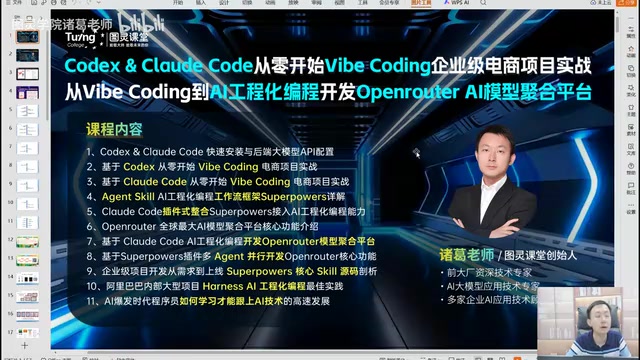
Understanding the Limits of Vibe Coding: A Practical Guide to AI Engineering-Grade Programming
An in-depth look at the difference between Vibe Coding and AI engineering-grade programming. Can AI replace programmers? From Claude Code and Codex to Cursor, revealing the real limits, enterprise pain points, and engineering solutions of AI coding tools.
Read more →

·7 min
LangSmith Engine: An Intelligent Operations Tool That Automatically Diagnoses and Fixes Agent Failures
LangChain's LangSmith Engine is an intelligent agent tool for tracking Agent failures, prioritizing issues, and auto-drafting fixes. Deep dive into its core capabilities, sandbox isolation, sub-Agent architecture, and continuous evaluation challenges.
Read more →

·7 min
Metacognitive Feedback: Using Reinforcement Learning to Help LLMs Accurately Express Uncertainty
LLMs are often overconfident and prone to hallucination. How can AI learn to say "I'm not sure"? This article explains the reinforcement learning approach with metacognitive feedback and how calibrating confidence boosts LLM trustworthiness.
Read more →

·5 min
Agent Skills Specification: Standardization and Reusability Practices for AI Agent Capabilities
The agentskills open-source project aims to solve AI Agent ecosystem fragmentation through standardized skill specifications enabling portable, composable, and reusable agent capabilities.
Read more →
·3 min
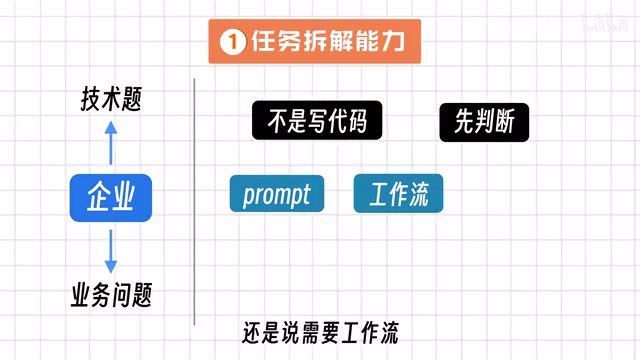
4 Core Competencies Every High-Value LLM Application Engineer Must Have
Why can't companies find qualified AI engineers? Discover the 4 core competencies every high-value LLM application engineer needs: task decomposition, tool calling, observability, and production readiness.
Read more →

·7 min
Agentic AI Development in Practice: Evaluation and Error Analysis Are the Real Competitive Edge
Cut through the Agentic AI hype to see the real value of agentic applications. Based on Andrew Ng's course, learn why Evals and error analysis—not framework choice—separate top developers.
Read more →

·5 min
Claude Drives the sqlite-utils 4.0 Release: The Real Cost and Collaboration Methodology of AI-Assisted Refactoring
Developer Simon Willison used Claude to ship sqlite-utils 4.0: 37 prompts, 34 commits, $149 API cost — revealing coding agents' real capabilities, cross-model review, and agentic engineering best practices.
Read more →

·5 min
OfficeCLI: A Command-Line Tool for AI Agents to Read and Write Office Documents
OfficeCLI is a command-line office suite for AI agents, supporting reading and writing of Word, Excel, and PowerPoint files—enabling efficient Office document automation without complex glue code.
Read more →

·7 min
Harness Engineering: Core Methodology and Practical Guide for Enterprise-Level AI Programming
Can AI really replace programmers? This article explains Harness Engineering principles and its three evolutionary stages, revealing real pain points of enterprise AI programming.
Read more →

·6 min
Vibecoding in Practice: Architecture Trade-offs and Implementation of a Dual-Engine TTS Router
Alibaba Cloud vs Volcano Engine TTS: why "I want both" is the mature engineering decision. Dual-engine routing design, priority trap debugging, and vibecoding-powered implementation.
Read more →

·3 min
VibeCoding in Practice: A Field Alignment Methodology Before Migrating Demo to Main Project
VibeCoding best practice: never migrate a Demo directly to your main project. Learn the 3-step field alignment methodology — manual review, AI scanning, and architectural refactor.
Read more →

·3 min
Light-Skills: Open-Source Research AI with 28 Skill Modules Covering the Full Workflow
Light-Skills is an MIT-licensed open-source research AI with 28 interconnected Skills, 9 knowledge bases, 317 knowledge cards, and 49 scripts covering the full research workflow — with a hard rule against fabricating citations or data.
Read more →
How OpenAI Used Core Dumps to Track Do…
·2 min
How OpenAI Used Core Dumps to Track Down an 18-Year-Old Bug
How OpenAI's engineering team used large-scale core dump analysis and an epidemiological approach to identify a hidden hardware fault and fix an 18-year-old software bug.
Read more →

·7 min
Cost Optimization for AI Agent Fleets: Why an Expensive Commander + Cheap Workers Is More Cost-Effective
Deep analysis of multi-agent system cost optimization: why the 'expensive commander + cheap workers' combination outperforms all-frontier fleets, covering decision-intent cost logic and Sonnet 5 tokenizer traps.
Read more →

·3 min
Complete Guide to Codex /goal Command: Making AI Execute Long Tasks Without Cutting Corners
Deep dive into OpenAI Codex's /goal slash command: four core mechanisms that prevent AI "fake completion," enforce stop conditions, and support task resumption. Includes full prompt structure and permission configuration for complex automation tasks.
Read more →