#composable tools
224 related articles

·4 min
Agent Skills Deep Dive: A Complete Guide to Modular Agent Development Architecture
A deep dive into Anthropic's Agent Skills architecture — clarifying its difference from MCP, and how modular Skill packages enable scalable, maintainable enterprise agent development.
Read more →

·7 min
Geosql: A Vertical Skill Pack That Teaches AI Geospatial Data Analysis
Geosql is a geospatial SQL skill pack designed for AI coding assistants like Claude and Codex, enabling LLMs to accurately generate PostGIS queries and handle coordinate transformations and spatial analysis.
Read more →

·6 min
LangChain 1.3 in Practice: A Complete Guide to DeepAgent Architecture and the Harness Philosophy
An in-depth look at LangChain 1.3's core modules and DeepAgent architecture—covering the Harness philosophy, LangGraph internals, HITL, memory management, and guardrails to master production-grade AI Agent development.
Read more →

·7 min
Single-Responsibility Component Design: Learning Abstraction and Reuse from message-scroller
Through the practical case of the message-scroller component, this article delves into applying the Single Responsibility Principle in front-end component design—how to abstract scrolling logic independently and balance cost with long-term returns.
Read more →

·7 min
The Birth of Claude Code: Design Philosophy from Internal Tool to AI Programming Assistant
An in-depth look at Claude Code's development and design philosophy: why the CLI form, how the "minimal scaffolding" architecture works, and how it balances safety with autonomy in AI programming.
Read more →

·7 min
Otari: A Comprehensive Look at the Open-Source LLM Control Plane Tool
An in-depth analysis of the open-source LLM control plane tool Otari—covering unified multi-model access, cost observability, and security compliance governance to help teams build manageable, production-grade AI infrastructure.
Read more →

·5 min
OfficeCLI: A Command-Line Tool for AI Agents to Read and Write Office Documents
OfficeCLI is a command-line office suite for AI agents, supporting reading and writing of Word, Excel, and PowerPoint files—enabling efficient Office document automation without complex glue code.
Read more →
TaskPeace: An AI Coding Agent Task Que…
·2 min
TaskPeace: An AI Coding Agent Task Queue System Built on the MCP Protocol
TaskPeace is a task queue system for AI coding agents that uses the MCP protocol to let Claude, Cursor, and other AI assistants autonomously claim and execute tasks.
Read more →

·3 min
shadcn/ui Switches Default Component Library: What Base UI Replacing Radix Actually Means
shadcn/ui has officially made Base UI its default underlying library, replacing Radix. Learn the technical background, team lineage, and what this means for your projects.
Read more →
·7 min
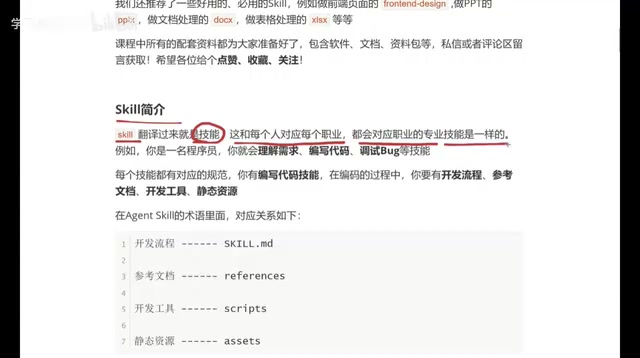
The Complete Guide to Agent Skills: Principles, Structure & Practical Applications
Deep dive into AI Agent Skills: SKILL.md file structure, four component modules, differences from prompts, and practical scenarios for frontend generation, PPT creation, and more.
Read more →

·4 min
Enterprise AI Agent Development Guide: Multi-Task Recognition and Dynamic Tool Calling in Practice
A deep dive into AI Agent architecture and enterprise deployment. From LangChain and ReAct design to dynamic tool calling and multi-task recognition — build autonomous enterprise AI assistants.
Read more →

·6 min
Agent Skills Deep Dive: Concepts, Structure, and Real-World Examples
A comprehensive guide to Agent Skills: what Skills are, how they differ from Prompts, and how to design SKILL.md files. Learn modular AI Agent development through a real restaurant branding example.
Read more →

·5 min
Deep Dive into Vercel's eve Framework: How AI Agents Are Becoming an Entirely New Form of Software
Vercel's Chief of Software Andrew Qu explains the eve Agent framework's design philosophy, covering Skills modularity, Sandboxes security, and agent-readable websites—revealing the paradigm shift from instruction-driven to goal-driven software.
Read more →

·6 min
Post-Quantum Cryptography in Python: A Deep Dive into the ML-KEM Key Encapsulation Mechanism
NIST has officially standardized the ML-KEM (CRYSTALS-Kyber) post-quantum algorithm. This article covers ML-KEM principles, Python ecosystem implementation, hybrid deployment strategies, and critical challenges like constant-time execution and memory safety.
Read more →

·3 min
Herdr: A Terminal AI Agent Multiplexer Built with Rust
Herdr is an open-source Rust-written terminal tool positioning itself as an AI Agent multiplexer, unifying Claude Code, Cursor, and more in one CLI interface.
Read more →
Autoresearch: How Self-Evolving AI Age…
·2 min
Autoresearch: How Self-Evolving AI Agents Are Reshaping the Software Factory
Autoresearch lets AI agents automatically explore and refine better solutions during task execution. This article breaks down agent recipes, self-improvement loops, and human-AI collaboration boundaries.
Read more →

·4 min
12 Open-Source AI Agent Projects Worth Exploring: Frameworks, Skill Packs, and Toolchains
A roundup of 12 trending open-source AI agent projects on GitHub, covering video generation, agent frameworks, skill packs, code engines, security scanning, and voice processing.
Read more →

·3 min
AI Agent 101: Understanding Perception, Decision-Making, and Action Through Team Collaboration
New to AI Agents? This article uses a startup team analogy to break down the three core capabilities — Perception, Decision-Making, and Action — helping you build a mental model from scratch.
Read more →

·7 min
Vibecoding in Practice: How to Guide AI to Precisely Borrow from Open-Source Projects Without Going Off Track
In AI-assisted coding, having AI borrow from open-source projects often leads to wholesale copying. This article uses the GapGun audio tool as a case study to show how to set borrowing boundaries and guide AI precisely.
Read more →

·6 min
Agent Studio: A Unified Platform for Authoring AI Roles and Skills
Agent Studio unifies AI Agent role definition (Subagents) and Skills on one platform, enabling coordinated orchestration through a shared MCP endpoint, progressive disclosure, and moderated community publishing.
Read more →