#context amnesia
87 related articles

·2 min
Getting Started with Claude Code: How AI Coding Assistants Went from Chatting to Actually Getting Things Done
What is Claude Code? This guide covers 5 core differences from ordinary AI chat tools, including context reading, code execution, MCP tool calls, and a Cursor comparison.
Read more →
Adaptive Recall: A Deep Dive into Pers…
·2 min
Adaptive Recall: A Deep Dive into Persistent Memory for AI Assistants via MCP
Adaptive Recall uses MCP (Model Context Protocol) to give AI assistants like Claude persistent memory across sessions, featuring vector storage, semantic retrieval, and adaptive forgetting.
Read more →

·5 min
From CNN to Transformer: How AI Evolved to Understand Human Language
From CNN and RNN to Transformer, a complete breakdown of the core evolution of AI natural language processing. Understand attention, BERT vs. GPT, and the architecture behind large models.
Read more →

·3 min
Building a Local AI Coding Agent on Mac: A Complete Guide with Ollama, OpenCode, and MCP
A complete guide to building a local AI coding agent on a 32GB Mac: Ollama for local inference, OpenCode as the agent framework, and MCP memory servers for cross-session context. Code stays on-device, no subscription fees.
Read more →

·5 min
ECC: An Agent Enhancement Framework for AI Coding Assistants — Five Core Capabilities Explained
ECC is an agent optimization framework for AI coding assistants like Claude Code, Cursor, and Codex, enhancing them with skills, memory, security, and research-first development capabilities.
Read more →

·6 min
The Complete Beginner's Guide to Claude Code: From Installation to Advanced Usage
Claude Code is one of the most powerful AI coding agents, running in the terminal to write code, batch operations, build web projects, and more. This guide covers installation, connecting local models via CC Switch, permission modes, CLAUDE.md, Skills, MCP, Subagents, and more.
Read more →

·3 min
Hermes Agent Stability Mega-Patch: Three P0 Fixes and a 60x Speed Boost Explained
Deep dive into Hermes Agent v2026.7.7.2: fixes for Cron silent kills, TUI context loss, and config corruption (3 P0 bugs), plus 60x faster WhatsApp install.
Read more →

·3 min
GitHub Daily · July 10: The Agent Skills Ecosystem Explodes — AI Coding Enters the 'Skills Library' Era
July 10 GitHub Daily: The Agent Skills ecosystem explodes as over half of trending projects revolve around AI coding Agent skill libraries, with MCP as the standard interface.
Read more →

·5 min
Context Graphs: The Key Technology for AI Agents to Remember and Reuse Past Decisions
Context Graphs use graph structures to store decisions, causal relationships, and outcomes, enabling AI agents to accumulate experience and reuse historical decisions without modifying model weights.
Read more →

·4 min
Claude Code /cd Command: The Hidden Trick for Switching Directories Without Losing Context
Learn how Claude Code's /cd command lets you switch working directories without losing conversation context — perfect for microservices, monorepos, and multi-module development.
Read more →

·3 min
Three Fatal Flaws of AI Script Writing — and How MCP Services Fix Them
AI script development plagued by amnesia, blindness, and repeat errors? This article examines how MCP service tools — history nodes, node preprocessing, and an error library — systematically fix AI programming's structural flaws.
Read more →

·7 min
Harness Engineering: Core Methodology and Practical Guide for Enterprise-Level AI Programming
Can AI really replace programmers? This article explains Harness Engineering principles and its three evolutionary stages, revealing real pain points of enterprise AI programming.
Read more →

·3 min
Harness Engineering: The Core Methodology for Advanced AI Programming
Can zero-experience users replace programmers with AI tools? This article breaks down 4 core AI coding pain points and the 3-stage evolution from Prompt Engineering to Harness Engineering.
Read more →

·2 min
Three Standout AI Open Source Repos This Week: Animation Generation, UI Design, and Self-Learning
Three trending AI open source repos this week: Text to Lottie for animations, BioDesign local engine for UI mockups, and Self-Learning Skill for persistent AI memory. Install each with one command.
Read more →

·3 min
Loop Engineering Fully Deconstructed: The Paradigm Shift from Operator to System Designer
Deep dive into Loop Engineering's five building blocks: scheduling, worktrees, skills, plugins & connectors, and subagent separation, with three practical cases from minimal loops to enterprise-grade applications.
Read more →
·3 min
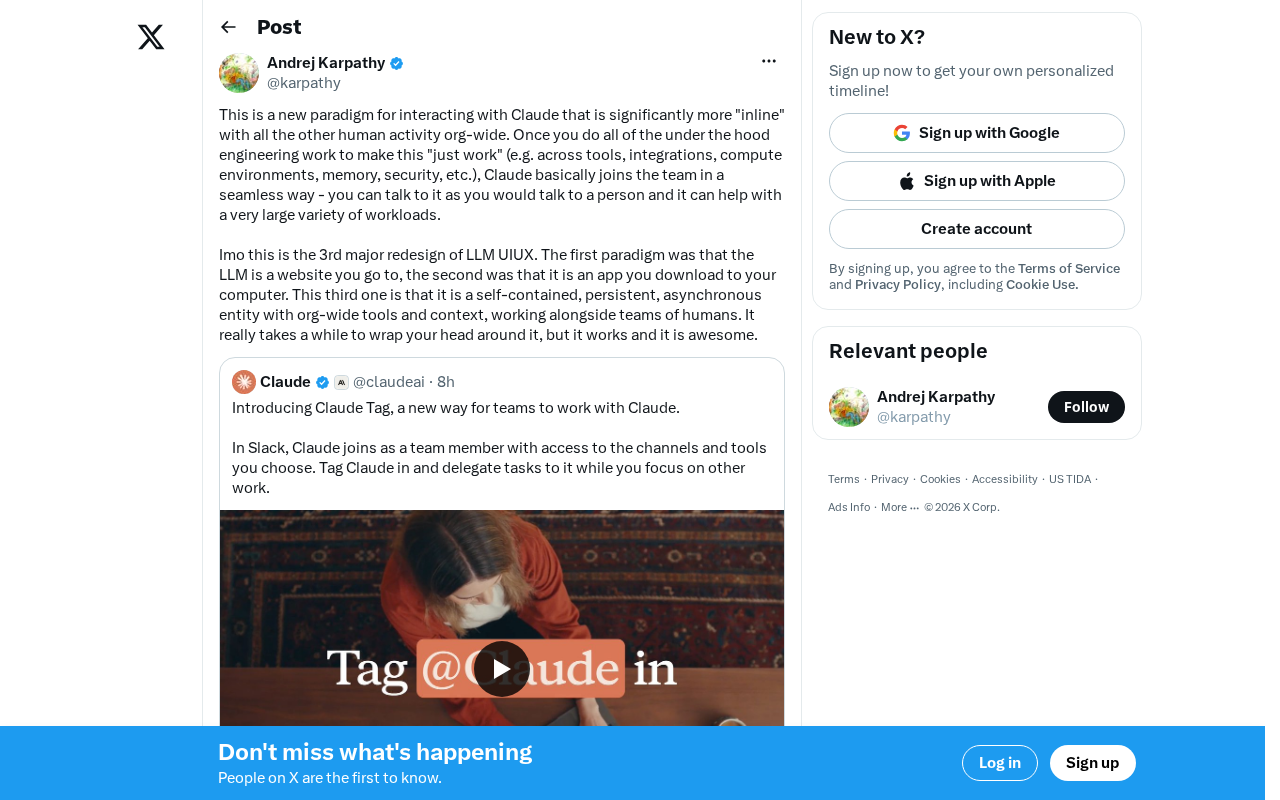
Three Paradigm Shifts in LLM Interaction: From Website to Desktop App to Team Member
Explore the three paradigm shifts in LLM interaction: from ChatGPT as a website, to desktop apps, to autonomous AI team members that collaborate asynchronously with humans.
Read more →

·3 min
1FlowBase in Practice: Adding Vision Tools to DeepSeek V4 for Multimodal Capabilities
Learn how to use 1FlowBase to mount MIMO 2.5 as a vision tool on DeepSeek V4, creating a Fusion multimodal endpoint with step-by-step orchestration guide.
Read more →

·3 min
Workstyle Memory Bridge: Making AI Remember How You Work
Explore how Workstyle Memory Bridge uses Slot+Scope unique keys, provenance tracking, and verifiable deletion to solve AI coding assistants' persistent memory loss of collaboration preferences.
Read more →

·3 min
Xiaomi Open-Sources MiMo Code: Cross-Session Memory System Tackles AI Coding's Amnesia Problem
Xiaomi open-sources MiMo Code with SQLite FTS5-powered cross-session memory, solving AI coding assistants' context loss. Supports multi-Agent collaboration, million-line codebases, and OpenAI-compatible APIs.
Read more →

·3 min
Claude-mem: The Open-Source Memory System That Stops AI from Forgetting
Claude-mem is an open-source AI memory tool that gives Claude Code, Codex, and other AI coding assistants cross-session memory via semantic compression and vector retrieval — just 50 tokens of overhead, fully local storage.
Read more →