#deep learning binary classification
42 related articles

·3 min
K-means vs Random Forest: How to Choose the Right Algorithm from First Principles
A machine learning exam question pitting K-means against Random Forest sparks debate. Learn the core difference between supervised and unsupervised learning, and how to choose the right algorithm for mixed-feature tasks.
Read more →
·6 min
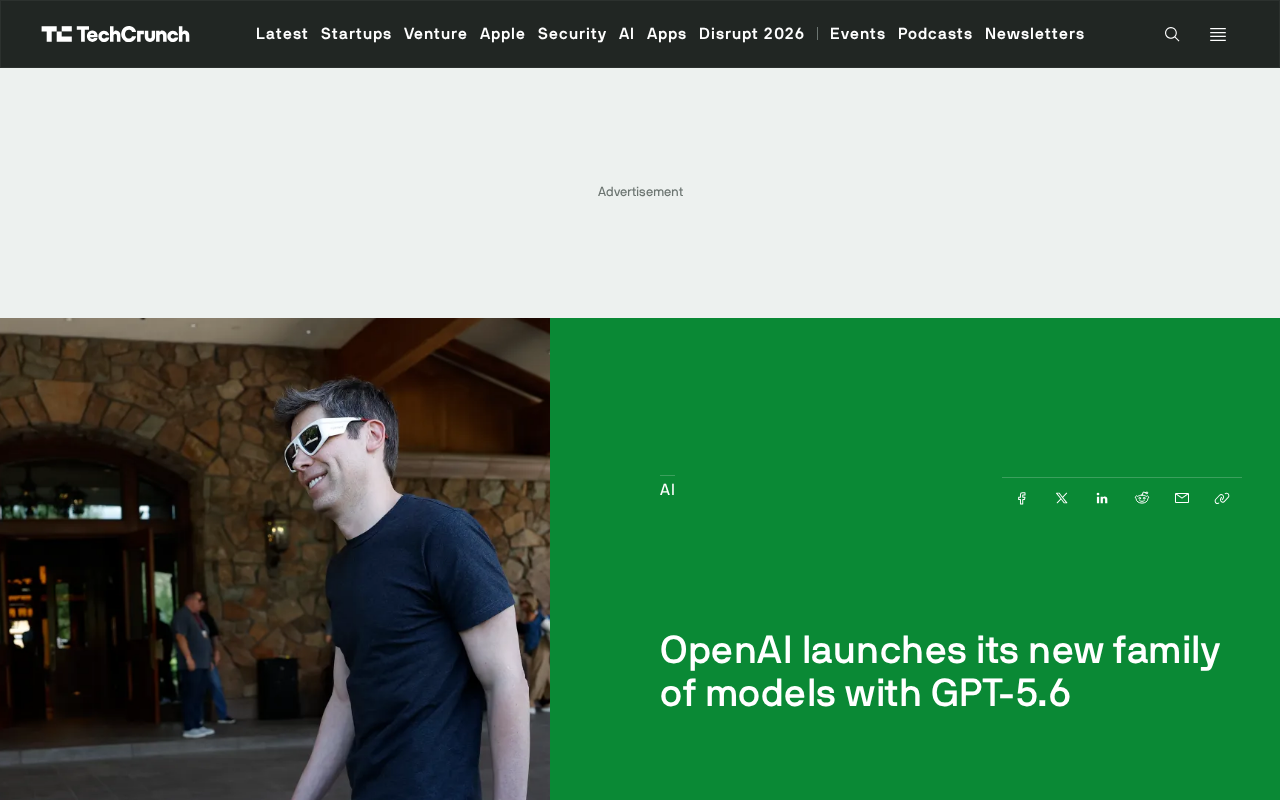
OpenAI Releases GPT-5.6: Cybersecurity Capabilities Take Center Stage
OpenAI launches the GPT-5.6 model family with cybersecurity as its biggest highlight. A deep analysis of GPT-5.6's differentiation, double-edged-sword effect, and enterprise strategy.
Read more →

·4 min
IMGNet: A New Face Verification Approach Challenging Cosine Similarity with Sign Pattern Matching
IMGNet is a face verification model by an independent Indonesian researcher that replaces cosine similarity with sliding window sign pattern matching. At just 10.58MB, it outperforms cosine on LFW and other benchmarks, introducing metric-loss co-design.
Read more →

·6 min
DINOv2 vs SigLIP: Why the Huge Gap in k-NN Classification? A Guide to Avoiding Vision Encoder Selection Pitfalls
Experiments show DINOv2 Giant scores just 41% on k-NN classification, while SigLIP2 reaches 92%. This article dives into the embedding-space differences between contrastive and self-supervised learning to guide vision encoder selection.
Read more →

·3 min
IMGNet: A New Face Verification Approach Where Sign Pattern Matching Challenges Cosine Similarity
IMGNet is a 10MB face verification model replacing cosine similarity with sliding window sign pattern matching. Sign metrics outperform cosine on LFW and other benchmarks, suggesting sign consistency may be intrinsic to quality face embeddings.
Read more →

·7 min
Tencent DiscoBench: The First Benchmark for Evaluating LLM Search Agents' Ambiguity Clarification Capabilities
Tencent Hunyuan and Tsinghua jointly release DiscoBench, the first benchmark evaluating search agents' dynamic ambiguity clarification. Covering 463 ambiguity instances across 11 domains, it reveals real weaknesses of mainstream LLMs.
Read more →

·6 min
OpenAI's Head of Evals: We've Been Consistently Underestimating What AI Models Can Really Do
OpenAI Frontier Evals lead Tejal Patwardhan reveals AI models are systematically underestimated — reasoning breakthroughs, wet lab records, the internal AGI Index, and a progress curve far steeper than most realize.
Read more →

·7 min
Harness Engineering: The Six-Layer Engineering Framework for Enterprise AI Agent Deployment
From Prompt Engineering to Harness Engineering, a deep dive into the core challenge of truly deploying AI Agents in enterprises. This article breaks down the six-layer architecture and shares real-world Hermes Agent practice.
Read more →

·7 min
Discord Wrongfully Bans 8,000 Accounts: Why an AI Moderation System Mistook Chessboards for Violating Content
Discord admits a safety-system bug wrongfully banned over 8,000 accounts, triggered by chessboards, Minecraft screenshots and other grid images. A deep dive into AI moderation false positives and the efficiency-vs-accuracy dilemma.
Read more →

·7 min
Agentic AI Reshapes Genomic Interpretation: A SOTA Case Study in Interstitial Lung Disease Diagnosis
How Agentic AI achieves SOTA performance in interstitial lung disease (ILD) genomic interpretation through autonomous planning, multi-step reasoning, and tool calling—and its clinical impact.
Read more →
Morph Reflexes: Building Real-Time Beh…
·4 min
Morph Reflexes: Building Real-Time Behavioral Guardrails for AI Agents with Multi-Head Classifiers
Morph Reflexes is an open-source AI agent monitoring tool that uses multi-head classifiers for real-time trace classification — enabling safety guardrails, quality scoring, and training data filtering.
Read more →

·7 min
PP-OCRv6 Deployment Deep Dive: Invoice Recognition Results and the Font-Missing Pitfall Explained
PP-OCRv6 is PaddlePaddle's SOTA-level OCR model. This article covers Docker deployment, invoice recognition testing, and the critical font-missing pitfall causing entire regions to be skipped.
Read more →

·3 min
Claude Code Misclassification Appeals Guide: Three Feedback Channels for Optimizing AI Classifiers
Encountering false positives in Claude Code? Learn how to use the /feedback command, thumbs buttons, and other channels to appeal misclassifications and improve AI safety classifiers.
Read more →

·4 min
AI Weekly: Top Coding Model Returns, Google's New Flash Checkpoint, and the Video Generation Race
This week in AI: Anthropic's flagship coding model returns globally with new safety classifiers, Google tests a new Gemini Flash checkpoint, video generation heats up, and Figure AI robots enter BMW factories.
Read more →

·3 min
Four Prompts to Remove the AI Smell from Your Articles, Plus Detection Tools and a Complete Workflow
Four tested prompts to fix AI-generated articles: remove clichés, simplify structure, add conversational tone, and adjust voice. Includes detection tools and a complete workflow.
Read more →

·4 min
Neural Networks from Scratch: A Deep Dive into the Fundamentals from Linear Regression to Gradient Descent
From linear regression and logistic regression to gradient descent, this guide derives the core mechanisms of neural networks step by step, covering Sigmoid, cross-entropy, activation functions, and backpropagation.
Read more →
 Industry Insights
·4 min
In-Depth Analysis of the AI Large Model Job Market: Two Core Directions and Future Trends
In-depth analysis of the AI large model job market, breaking down the two core directions—algorithm research and engineering deployment—covering requirements, barriers, and career prospects.
Read more →
 Industry Insights
·3 min
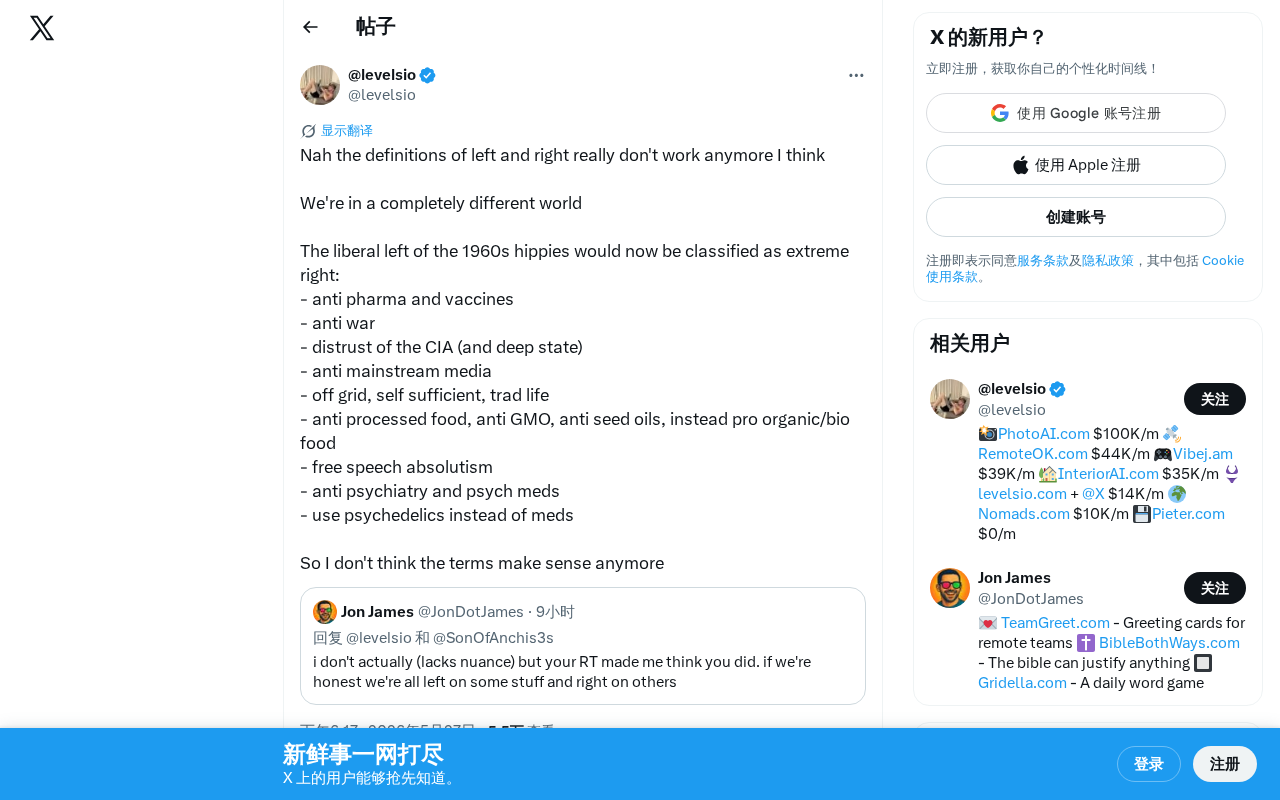
Is the Left-Right Divide Obsolete? The Political Spectrum Is Being Restructured in the Information Age
1960s hippie positions are now labeled far-right. This article explores why the left-right political divide has failed, examining algorithmic tribalization, AI's reshaping of information power, and the need for multidimensional frameworks.
Read more →
 Tutorials
·2 min
Python Machine Learning in Practice: A Complete Guide from Algorithm Derivation to Code Implementation
A systematic Python ML course using a 3-stage framework: algorithm derivation, code implementation, and experimental analysis. Covers logistic regression, decision trees, and ensemble learning.
Read more →
 Research
·3 min
AI Agents vs. Humans in First Wet-Lab Showdown: No Significant Difference in Protein Binder Design Hit Rates
First wet-lab comparison: 6 LLM Agents vs 9 human teams in TREM-2 Binder design show no significant Hit Rate difference (P=0.83). Analysis of tool convergence, in-silico bottlenecks, and designer transformation.
Read more →